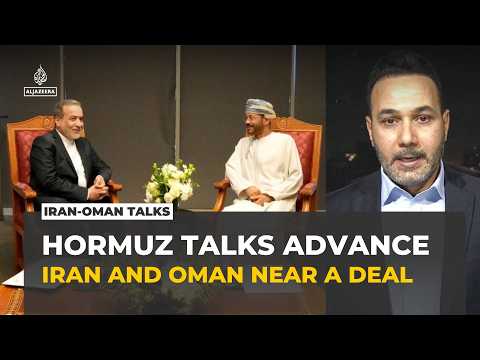
- Esmail Baghaei, Iran's foreign ministry spokesperson, said Tehran discussed a temporary route through the strait of Hormuz and stressed the talks with Oman were bilateral and did not involve the US.
- The negotiations with Oman lasted seven to eight days, and Iran aimed to determine a route at the earliest opportunity with Oman's consultation.
- One proposal is an Omani-Iranian joint company for maritime services; a route is a precondition for the ceasefire memorandum of understanding signed on 18 June.
- Baghaei described a temporary round-trip corridor as an alternative to the prewar UN transport separation scheme.
- Iran's deputy foreign minister Kazem Gharibabadi said Iran was demanding that ships entering the strait take a route to the north close to Iran, while Baghaei warned an agreement would not solve all problems because of the US naval blockade.
- Baghaei blamed the US for disregarding the memorandum by pushing a southern route and cited US attacks on 21 and 22 June.
- The Assembly of Experts warned against trusting the US, while President Masoud Pezeshkian said the memorandum would be the centre of gravity of foreign relations.
Iran is currently negotiating with Oman to create a temporary shipping route through the Strait of Hormuz, a critical passage for global oil trade.12345
Esmail Baghaei, Iran's foreign ministry spokesperson, confirmed that these discussions are strictly bilateral and do not include the US, despite President Trump's assertions that US-Iran talks could resume soon.8910111213
The negotiations, which have lasted seven to eight days, aim to establish a corridor for safe shipping traffic, with Baghaei stating, “We are focused on reaching an understanding on a route that will ensure safe shipping traffic through the strait of Hormuz.”
The proposed route is seen as a temporary measure until a permanent solution is agreed upon. Baghaei noted, “This intermediate route is to be used temporarily until a decision is made on a fixed route.”
Iran's deputy foreign minister, Kazem Gharibabadi, indicated that while an agreement on a route is essential, it will not resolve all issues, particularly the ongoing US naval blockade of Iranian ports.
He emphasized that unless the US changes its approach, significant improvements in the Strait of Hormuz situation are unlikely.
The Iranian leadership remains skeptical of US intentions, with a statement from the Assembly of Experts warning against trusting the US, stating, “Hope for understanding and agreement with this bullying regime will lead nowhere.”1415
“Baghaei blamed the US for disregarding the 18 June memorandum by pushing a southern route through Omani waters, citing US attacks on 21 and 22 June. Iran's president Masoud Pezeshkian called the memorandum "the centre of gravity of our foreign relations," while the Assembly of Experts warned against trusting Washington.”

 The Guardian



