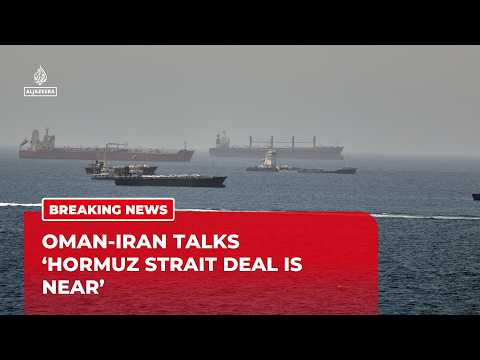
- Iran says it has reached an understanding with Oman on the geographical coordinates of a new shipping route in the Strait of Hormuz, bringing weeks of negotiations closer to a formal agreement.
- Discussions are now at the final drafting stage, pending a joint final statement to be finalized.
- Oil prices are declining as investors consider whether progress in discussions between Iran and Oman might lead to a US-Iran peace agreement to halt the five-month conflict and unblock the Strait of Hormuz.
- Brent crude futures dropped 37 cents, or 0.5 percent, to $79.08 a barrel as of 00:24 GMT, while US West Texas Intermediate (WTI) crude futures went down 53 cents, or 0.7 percent, to $74.69 a barrel.
- The Houthis have attacked tankers amid ongoing conflict.
- Iranian officials argue that these discussions are exclusively with Oman, without any foreign or outside interference, and that any agreement does not mean a return to pre-war conditions, blaming the US naval blockade for the disruption of navigation in the Strait of Hormuz.
- Washington rejects reports suggesting Iran would have control over traffic in the Strait of Hormuz, stating that any temporary route should not require any permits, approvals, or fees.
- While a final agreement on a temporary route in the Strait of Hormuz is now in the making, the dispute remains unresolved, meaning any agreement on a shipping route does not necessarily mean the end to the crisis.
- A source said talks between Washington and Tehran could prevent a US military strike on Iran, adding that oil prices are expected to come down and stay down.
- The source expressed confidence that the outcome will be good for the United States, using all tools military, economic, diplomatic to bring the situation to the right resolution.
Oil prices are declining as Iran and Oman finalize a new shipping route in the Strait of Hormuz, with Brent crude futures dropping to $79.08 a barrel. This development raises hopes for a US-Iran peace agreement to resolve ongoing tensions and conflicts in the region.134
Iranian officials confirmed they have reached an understanding with Oman regarding the geographical coordinates of the new route, with discussions now at the final drafting stage. However, they emphasize that these talks are strictly bilateral, without foreign interference.2
Despite the progress, the situation remains complex. Iranian officials argue that any agreement does not restore pre-war conditions, citing ongoing military actions and a US-imposed naval blockade as key factors disrupting navigation in the Strait.67
Washington, on the other hand, disputes claims that Iran would control traffic in the Strait, asserting that any temporary route should not require permits or fees.
While a formal agreement is anticipated, experts caution that it does not signify an end to the crisis. “It’s going to be messy, and it’s going to take some time to get there,” one analyst noted, highlighting the uncertainty surrounding the situation.
As negotiations continue, the potential for a US military strike on Iran looms, with officials asserting that diplomatic efforts are crucial for a peaceful resolution.10
“Brent crude fell 37 cents to $79.08 a barrel, while WTI dropped 53 cents to $74.69, as investors bet on a deal to unblock the strait. Washington rejects any Iranian control over traffic, insisting temporary routes require no permits or fees.”