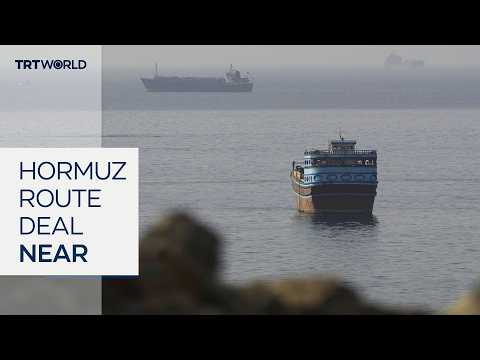
- Iran said it was nearing a final pact with Oman to define new shipping lanes through the Strait of Hormuz, but reiterated that the U.S. must meet conditions including compensation, an end to sanctions and military threats before the waterway is reopened.
- A U.S. official told *Reuters* on August 7, 2026, that Iran and Oman were close to a deal that could restore safe passage through the strait, a major oil and gas conduit before Iran blocked it in response to U.S. and Israeli attacks on Tehran that began in late February.
- Iranian Foreign Minister Abbas Aragchi said on August 9, 2026, that an agreement with Oman on the strait was in its final stages, but reiterated that Tehran would not reopen the channel unless the U.S. met certain demands.
- Iran and the U.S. are not engaged in direct talks, and Tehran will not start them as long as Washington breaches an interim deal signed in June, with messages exchanged through intermediaries.
- Iran and Oman are working to finalize a temporary deal that would reopen the strait, with ships entering near Iran and exiting near Oman, according to two people familiar with the talks; ships would transit without paying fees or tolls during the interim period.
- The agreement is endorsed by Gulf Cooperation Council members and is expected to be jointly announced by Iran, Oman, the U.S., and the UN’s International Maritime Organization, though terms could still change.
- The Iranian parliament's National Security Committee approved 'general outlines' of a plan to manage the strait, but a lawmaker said transits by vessels belonging to 'hostile countries' would be prohibited, and countries that have 'caused damage' to Iran cannot transit until they compensate.
- The Supreme National Security Council said the strait will not reopen until the U.S. 'corrects its behavior,' demanding no future threats, a permanent end to the war, lifting the naval blockade, withdrawal of U.S. military, complete compensation for war damage, lifting sanctions, and unconditional release of frozen assets.
Iran and Oman are finalizing a temporary agreement to reopen the Strait of Hormuz, crucial for global oil shipping, but Iran insists on U.S. concessions first.1
Iranian Foreign Minister Abbas Aragchi stated the deal is in its final stages, yet emphasized that the U.S. must meet demands for compensation, an end to sanctions, and a cessation of military threats.3
The U.S. is not directly negotiating with Iran, which has blocked the strait since February 2026 in response to attacks from the U.S. and Israel. The agreement would allow ships to transit without fees during an interim period, with the expectation of a joint announcement by Iran, Oman, the U.S., and the UN’s International Maritime Organization.567
The Iranian parliament's National Security Committee has approved a plan to manage the strait, but transits by vessels from “hostile countries” will be prohibited until compensation is made for damages.89
The Supreme National Security Council has stated that the strait will not reopen until the U.S. “corrects its behavior”, which includes lifting the naval blockade and withdrawing military forces from the region. The U.S. has not commented on these demands.1011
“The temporary deal would let ships enter near Iran and exit near Oman without fees or tolls, and is endorsed by Gulf Cooperation Council members. Iran's Supreme National Security Council also demands a permanent end to the war, lifting the naval blockade, and unconditional release of frozen assets.”