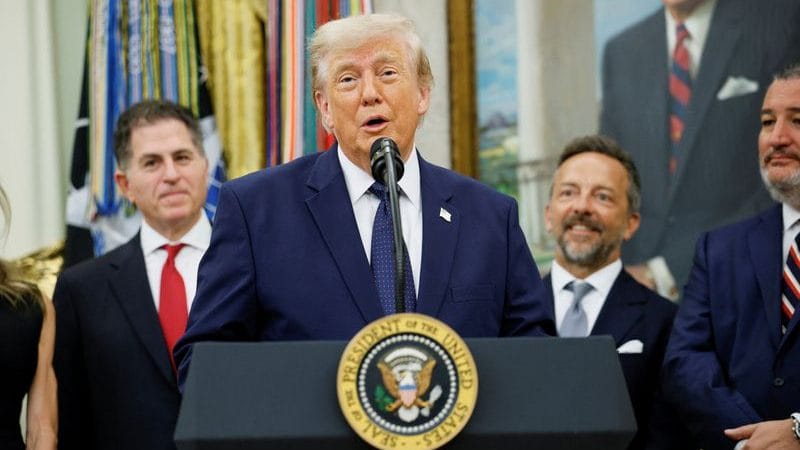
- Trump said he’d agreed to cancel the attack, “subject to being able to rapidly make a DEAL,” in a Truth Social post, and urged: “Get to work, everybody, and get it DONE.”
- Trump said the proposed agreement would include the “Immediate, Complete, and Total OPENING OF THE HORMUZ STRAIT” and an end to Iran’s nuclear threat.
- Israel agreed to join Trump’s commitment, while Prime Minister Benjamin Netanyahu’s office had no immediate comment.
- The US military had been ordered to carry out fresh attacks as soon as this weekend, and Trump said at a cabinet meeting that the US would be hitting Iran “very hard” in an effort to bring an end to the war.
- The prospect of more attacks raised worries across the Middle East; stop-start fighting has repeatedly disrupted traffic through the Strait of Hormuz, and Brent crude ended last week above $90 a barrel versus below $72 at the start of July.
- A US-Iran truce brokered in June collapsed last month, and the lull ended Tuesday night when Tehran carried out a surprise attack, firing multiple ballistic missiles at a US military base in Jordan.
- Iranian Foreign Minister Abbas Araghchi held separate calls with regional counterparts before Trump’s announcement and warned against “adventurous actions by the US military,” saying Iran was “fully prepared” to respond; Iranian-backed Houthis in Yemen have opened a new front threatening shipping near Bab el-Mandeb.
President Donald Trump stated that the U.S. will delay military action against Iran if a swift agreement is reached, following discussions with Middle Eastern leaders, including Saudi Arabia's Crown Prince Mohammed bin Salman. Trump emphasized the importance of a deal that ensures the opening of the Strait of Hormuz and addresses Iran's nuclear ambitions.678
In a post on Truth Social, Trump noted, “Get to work, everybody, and get it DONE,” indicating urgency in negotiations. He mentioned that the U.S. was asked to “hold off any attack” as the terms of a deal were being finalized. The proposed agreement aims to halt hostilities that have escalated since the U.S. and Israel initiated military actions against Iran in February.13
The situation remains tense, with a recent surprise attack by Iran on a U.S. military base in Jordan, which Trump described as a significant escalation. Iranian Foreign Minister Abbas Araghchi warned against any “adventurous actions by the U.S. military,” asserting that Iran is “fully prepared” to respond decisively.111213
The conflict has disrupted traffic through the Strait of Hormuz, a critical shipping route for global oil, leading to fluctuations in energy prices, with Brent crude recently surpassing $90 a barrel. The ongoing war has raised concerns across the Middle East, as the U.S. military was reportedly prepared to launch new strikes as early as this weekend.
Despite a truce attempt in June, hostilities resumed, highlighting the fragile state of diplomacy in the region. Trump’s latest announcement reflects a potential shift towards negotiation, contingent on Iran's compliance with the proposed terms.
“Trump said the proposed agreement would include the 'Immediate, Complete, and Total OPENING OF THE HORMUZ STRAIT' and an end to Iran's nuclear threat. Israel agreed to join his commitment, while Prime Minister Benjamin Netanyahu's office had no immediate comment.”






