- The biggest exchange of fire between Tehran and Washington since July occurred, with U.S. forces striking Iran's southern coast and Iran firing at American bases across the region.
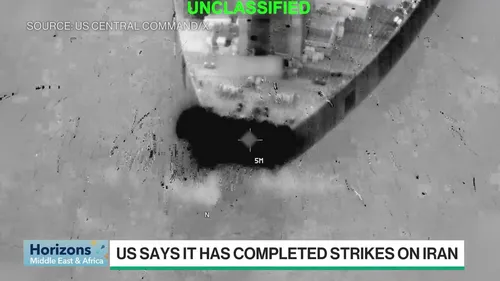
- The U.S. military said it struck air defences, radar systems, maritime assets, mine-laying capabilities and communications sites on Tuesday, while Iran reported hits on multiple targets near the Strait of Hormuz.
- Iran responded by striking what it said were U.S. assets in Bahrain, Jordan, Kuwait and Iraq, and said its aim was now to drive U.S. forces from the vast network of military bases they have occupied for decades across the Middle East.
- Iran's military command warned that "American evil in the region will be met with heavier, more widespread, and devastating responses," and that any country cooperating with the U.S. must accept consequences.
- Iran claimed it killed U.S. forces in Jordan and at a base in northern Iraq, but U.S. officials told Reuters there had been no casualties according to initial assessments.
- Iran said it carried out a missile and drone attack on the U.S. Ali Al Salem Air Base in Kuwait and targeted a U.S. commander's accommodation; Kuwait's fire service put out a blaze at a residential complex hit by a drone.
- Qatar, home of the largest U.S. airbase in the Gulf, held Iran responsible for attacks and their repercussions; Bahrain, which houses the U.S. Navy's regional headquarters, said Iranian drones were intercepted and destroyed.
- Iran reported at least 12 deaths from the night of U.S. strikes, including four people (one a four-year-old) killed at a wedding in Sirik; a witness described the night as "like the end of the world."
The U.S. military launched strikes on Iranian air defenses and maritime assets, while Iran retaliated with missile and drone attacks on U.S. bases in the region, marking a significant escalation in hostilities.235689
Iran's military claimed responsibility for attacks on U.S. assets in Bahrain, Jordan, Kuwait, and Iraq, asserting its goal to expel U.S. forces from the Middle East.7
"American evil in the region will be met with heavier, more widespread, and devastating responses," warned Iran's military command, emphasizing the potential for broader conflict.4
The U.S. strikes reportedly targeted key Iranian military capabilities, including radar systems and communications sites, while Iran claimed to have inflicted casualties on U.S. forces, although U.S. officials reported no initial casualties.
In Kuwait, Iranian attacks on the Ali Al Salem Air Base led to a fire at a residential complex, highlighting the risks to U.S. personnel.
The situation has raised alarms among regional neighbors, with Qatar and Bahrain condemning Iran's actions and warning of the repercussions of escalating tensions.
As the conflict intensifies, the potential for a wider war looms, with civilians caught in the crossfire, as evidenced by reports of casualties during the U.S. strikes, including a four-year-old child during a wedding celebration in Sirik.
“Iran reported at least 12 deaths from the night of U.S. strikes, including four people at a wedding in Sirik, with a witness describing it as 'like the end of the world.' Meanwhile, U.S. officials told Reuters there were no casualties from Iran's strikes on bases in Jordan and northern Iraq, according to initial assessments.”