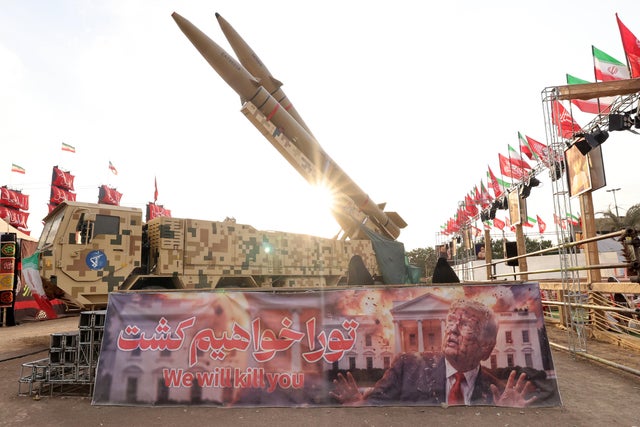
- President Trump said Sunday that negotiations with Iran were set to begin Monday afternoon, saying the "deal is imminent" and would cover the Hormuz Strait and, ultimately, Iran's denuclearization.
- Iran said Monday it had no plans to hold direct talks with Washington; Foreign Ministry spokesperson Esmail Baghaei said, "We are not negotiating with the United States at this time."
- Iran's defense minister said on X that the country was "neither surprised nor passive" after Mr. Trump announced he had called off new strikes, adding that the Islamic Republic remains alert to "concrete threats from the U.S."
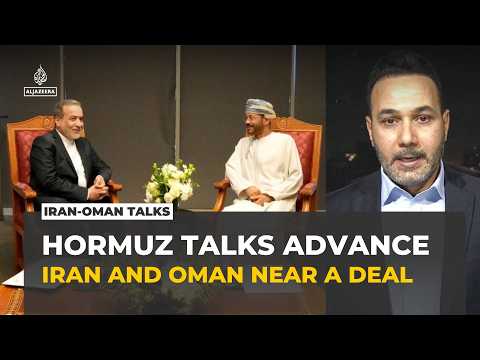
- Iran’s foreign ministry spokesperson Esmail Baghaei said talks with Oman over a temporary shipping route through the Strait of Hormuz were bilateral and not with the US, and that Foreign Minister Abbas Araghchi was not due to hold US talks on Monday.
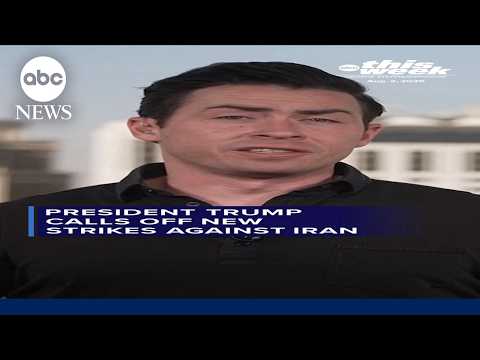
- Mr. Trump called off strikes on Iran that he said would have been the "biggest attacks since World War II", saying Saturday he canceled the attack because a rough framework of a deal had been reached.
- Trump said he called off a major strike after Saudi Arabia’s crown prince, Mohammed bin Salman, urged diplomacy; it is thought to be the 12th time Trump had called off threatened strikes.
Iran's foreign ministry has firmly denied President Trump's assertion that U.S.-Iran negotiations would commence on Monday, clarifying that its only discussions are with Oman regarding the Strait of Hormuz. Spokesperson Esmail Baghaei stated, "We are not negotiating with the United States at this time."3457891213
The focus of the ongoing talks with Oman is to establish a new shipping route that ensures safe passage through the strait, which is vital for global oil transport. Baghaei noted that these negotiations have been ongoing for about eight days, aiming to create a route that allows for both inbound and outbound shipping, rather than multiple separate routes.
Trump had claimed that a deal concerning the Hormuz Strait and Iran's nuclear program was imminent, stating, "It would have been disastrous for them and they didn't want us to do it." However, Baghaei emphasized that the current discussions are strictly bilateral with Oman and do not involve the U.S.12
Iran is asserting its sovereignty over the strait and is negotiating terms that may include charging fees for maritime services. The Iranian government is also seeking to establish a joint company with Oman to provide these services at lower costs.
Despite the ongoing negotiations, Baghaei warned that an agreement on a shipping route would not resolve all issues, particularly the U.S. naval blockade of Iranian ports. He stated, "Unless the U.S. approach changed, there would be no significant improvement in the situation in the strait of Hormuz."
The Iranian president expressed optimism that the memorandum of understanding signed on June 18 would shape future foreign relations.
“Baghaei said Tehran has no plans for direct talks with Washington, insisting 'we are not negotiating with the United States at this time,' while the proposed Oman corridor would be a temporary round-trip route until a fixed route is decided. Trump claimed he canceled strikes after Saudi Arabia's crown prince urged diplomacy.”


 CBS News
 The Guardian



