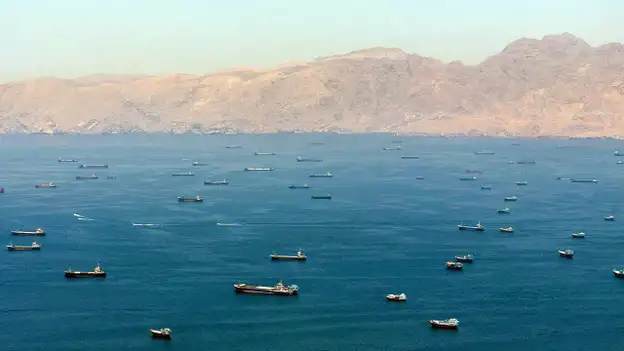
- Iran's Islamic Revolutionary Guard Corps struck a Singapore-flagged commercial vessel in the Strait of Hormuz, a U.S. official confirmed to CBS News.
- The attack on the cargo ship occurred despite a memorandum of understanding (MoU) signed by the United States and Iran that aimed to reopen the strategic waterway.
- President Donald Trump stated that the U.S. is negotiating with Iran from a "position of pure strength" and that Iran "wants to make a deal with us very badly."
- Trump mentioned that the Strait of Hormuz remains open and that Iran could become a new market for U.S. farm goods.
- The UN has paused plans to evacuate sailors from the Strait of Hormuz due to safety concerns.
- UAE foreign minister Sheikh Abdullah emphasized the importance of full commitment to the U.S.-Iran memorandum of understanding during a call with Iranian foreign minister Abbas Araghchi.
- Retired U.S. Navy Commander Kirk Lippold stated that Iran's push to charge fees for ships in the Strait of Hormuz is a violation of international law.
- Iran's deputy foreign minister stated that safe passage through the Strait of Hormuz cannot be guaranteed for vessels transiting "with ambiguous arrangements."
- Hezbollah's leader indicated that the Iranian-backed group would not disarm and insisted that Israeli forces must "withdraw completely" from Lebanon.
The U.S.-Iran deal is under strain as President Trump emphasizes negotiations from a "position of pure strength" while discussing potential agricultural exports to Iran, including wheat and corn, amidst escalating tensions in the Strait of Hormuz.56
The situation intensified following a drone attack attributed to Iran's Revolutionary Guard Corps on a Singapore-flagged vessel, raising concerns over maritime safety. Trump stated that Iran is eager to negotiate, yet he reiterated that Tehran will not be permitted to develop nuclear weapons.

Despite a recent memorandum of understanding aimed at reducing hostilities, Iran's deputy foreign minister warned that safe passage through the Strait cannot be guaranteed, complicating the situation further. The United Nations' International Maritime Organization has paused evacuation plans for sailors stranded in the area due to safety concerns, highlighting the precariousness of maritime operations in the region.11
As tensions mount, Iran has reportedly turned back foreign tankers attempting unauthorized passage, indicating a firm stance on its territorial waters. The U.S. and Iran have established a communication line to prevent military incidents, but the future of the deal remains uncertain as both sides grapple with conflicting interests and regional security challenges.
In summary, the U.S. is navigating a complex landscape of diplomacy and military posturing, with the potential for agricultural trade hanging in the balance amid ongoing threats in the Strait of Hormuz.
“The U.S.-Iran peace deal is under strain following a drone attack on a ship in the Strait of Hormuz. President Trump is promoting U.S. farm goods as part of negotiations, despite ongoing tensions.”


 Fox News
 CBS News



