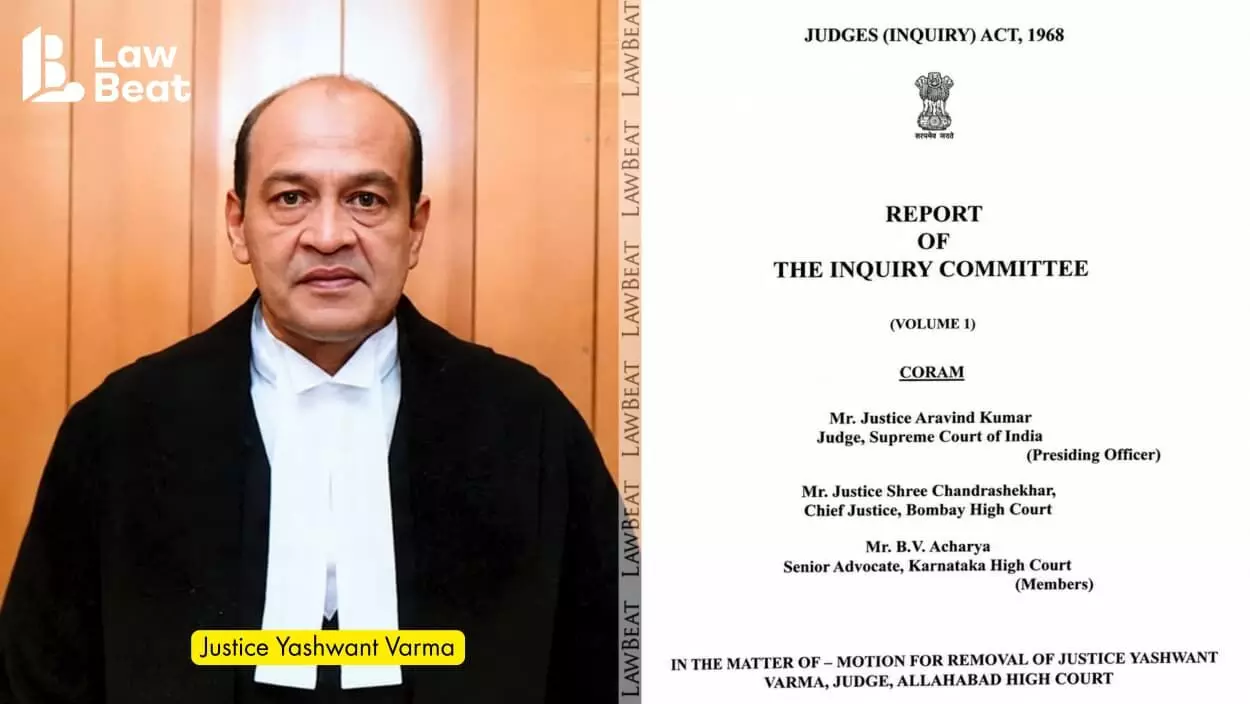
- The committee's report responds to public questions about why it continued its work and submitted the report to Parliament even after Justice Varma ceased to be a judge with his resignation, with immediate effect, on April 9.
- The committee found the charges against Justice Varma proved, holding that his explanations were evasive and unsatisfactory.
- Justice Varma, in his April 9 communication, faulted the inquiry on several counts, including procedural unfairness, reversal of burden, and non-availability of CCTV footage.
- The committee rebutted Justice Varma’s criticisms, stating that silence may permit a partial account to assume the character of the whole.
- The committee noted that the least the judge could have done was to enter the witness box and deny the charge, but he chose to abandon further participation in the inquiry.
- The panel asserted that a statutory inquiry cannot depend on the unilateral decision of a judge under inquiry, especially after the evidence has substantially come on record.
- The committee emphasized that this was not a case where the inquiry had not commenced, or where the judge had not been heard, or where the material had remained untested; the former judge withdrew in the midst of a live, advancing and continuous process.
- The committee detailed that the inquiry had progressed substantially: articles of charges were framed, defence statements received, material supplied, inspection done, applications heard, nine witnesses examined, and documents and electronic material marked; thus, the proceedings had crossed the stage of mere procedural arrangement and entered the evidentiary stage.
- The committee concluded that Justice Varma was given a reasonable opportunity to make his case, noting that he had participated through advocates, contested the procedure, cross-examined witnesses, and inspected records, reaching the stage where he was required to establish his defence.
A Lok Sabha committee has asserted that Justice Varma's withdrawal from the inquiry does not halt the statutory process, emphasizing that the inquiry had progressed significantly before his resignation on April 9. The committee found the charges against him “proved” and described his explanations as “evasive and unsatisfactory.”2
The report detailed that the inquiry had already reached the evidentiary stage, with nine witnesses examined and substantial material presented. The committee stated, “The proceedings had, therefore, crossed the stage of mere procedural arrangement and entered, and substantially completed, the evidentiary stage.”910
Justice Varma's claims of procedural unfairness were rebutted by the committee, which noted that he had participated in the inquiry through advocates, contested procedures, and cross-examined witnesses. The report highlighted that “the least that could have been done by the judge was to enter the witness box and deny the charge.”35
The committee concluded that a statutory inquiry cannot be contingent on a judge's unilateral decision to withdraw, especially when evidence has been gathered and the inquiry is well underway. The report emphasized that Justice Varma had been given a reasonable opportunity to present his case, yet chose to abandon the process.61112
“The committee detailed that nine witnesses had been examined and the evidentiary stage substantially completed before Varma withdrew. It also rebutted his criticisms, noting he could have entered the witness box to deny the charge but chose not to.”