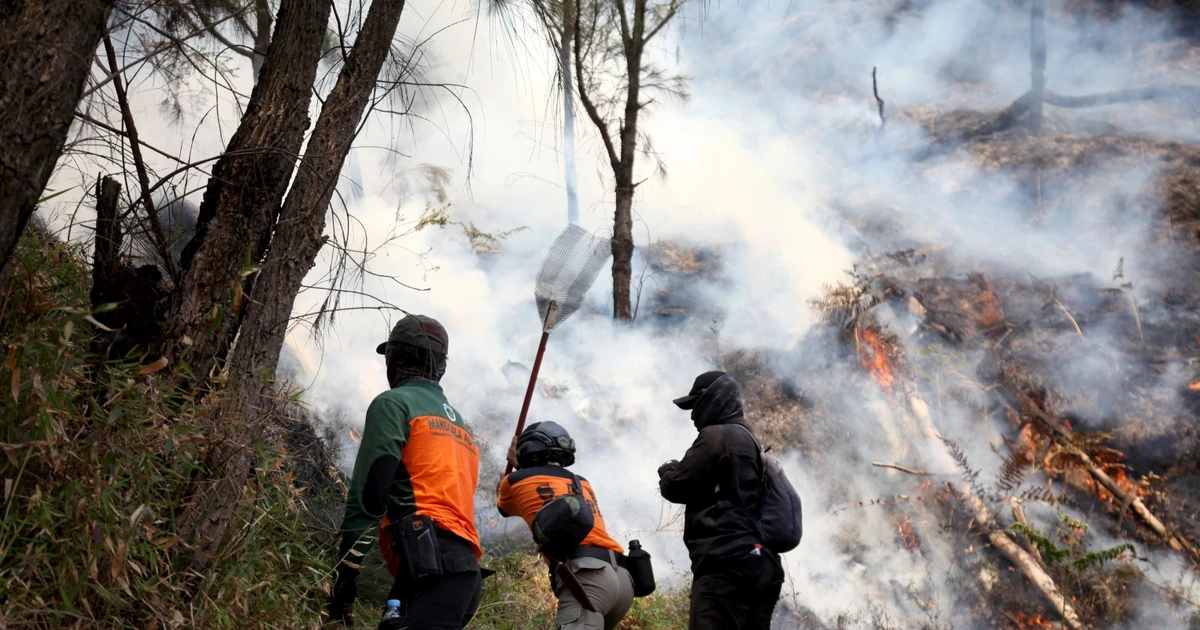
- Fire started on August 3 near Mount Bromo in East Java, one of Indonesia's most visited tourist destinations, which is now closed until further notice.
- Authorities deployed two water-bombing helicopters and ground crews to combat the wildfire.
- Fire has razed at least 127 hectares of national park land as of August 7, equivalent to about 180 soccer fields.
- Park remains closed until further notice, with firefighting efforts heavily dependent on wind conditions.
- BMKG warns that the 2026 dry season will be more intense and prolonged than usual, increasing the risk of wildfires and drought due to El Nino.
- More than 107,000 hectares of land burned in Indonesia between January and June this year, more than double the area destroyed in forest fires in 2023.
Indonesian authorities are currently engaged in a fierce battle against a wildfire that has ravaged over 127 hectares of Mount Bromo National Park, a popular tourist destination in East Java. The fire, which ignited on August 3, has prompted the park's closure until further notice.12345
Local officials have deployed two water-bombing helicopters to combat the flames, but the firefighting efforts are heavily reliant on wind conditions, according to fire official Bambang Setyo Antoko. He noted that many fire hotspots are located in steep, hard-to-reach areas, complicating the response.
The Ministry of Forestry reported that more than 107,000 hectares of land have burned in Indonesia from January to June this year, more than double the area affected by forest fires in 2023. The BMKG weather agency has warned that the ongoing El Nino conditions are expected to lead to a more intense and prolonged dry season, increasing the risk of wildfires and drought.6
The last significant fire at Mount Bromo occurred in 2023, when a flare lit during a pre-wedding photo shoot caused over 500 hectares to burn. As the current situation unfolds, authorities remain vigilant in their efforts to contain the blaze amidst challenging environmental conditions.
“Firefighting efforts rely heavily on wind conditions, with ground crews struggling in steep, cliffside terrain. The BMKG warns the 2026 dry season will be more intense and prolonged, and over 107,000 hectares have burned nationwide since January—more than double the 2023 total.”




