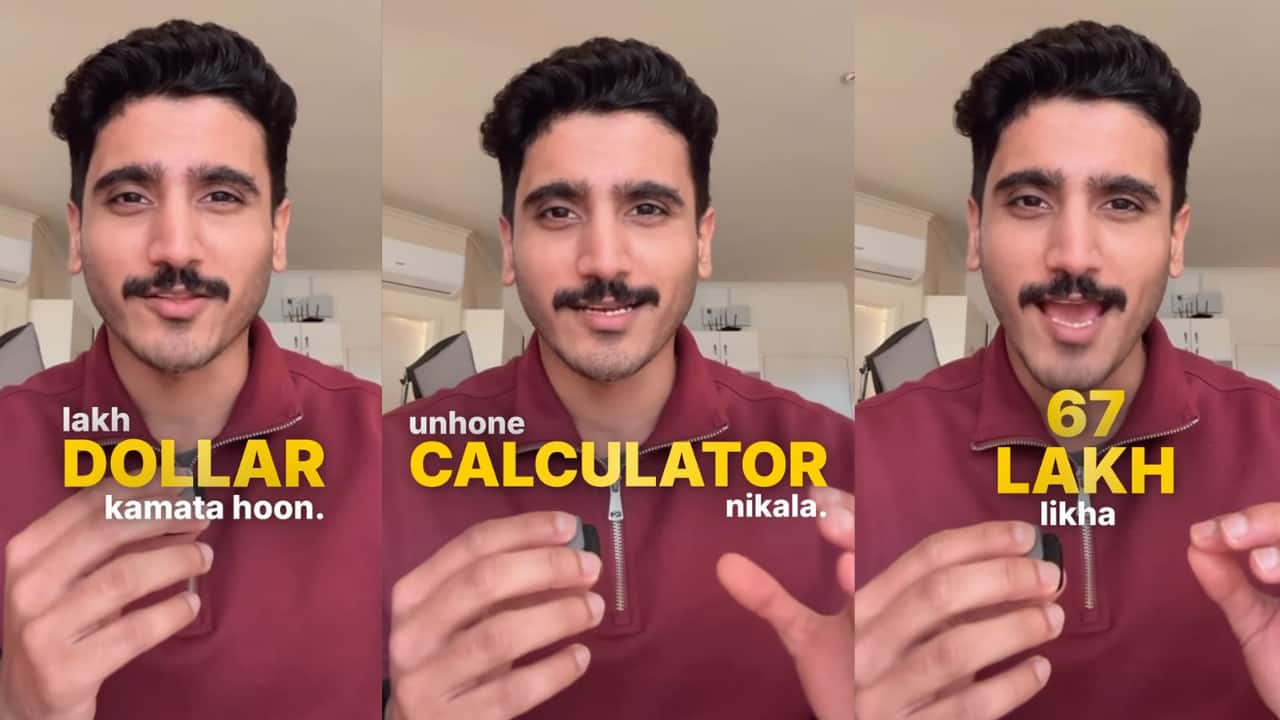
- An Indian man earning AUD 100,000 in Australia stated, 'Mujhe Crorepati Declare Kardiya'.
- He explained that INR conversion is misleading, concluding 'Same salary, different country, completely different math'.
- Viewers commented on lifestyle, peace, and facilities, with some noting the value of living abroad.
- Some users questioned the value of moving abroad for savings, while others added humorous or skeptical takes.
- Another user humorously remarked, 'I guess bhai or ulta indian family se paise chiye haha'.
- One more user stated, 'Save, invest karne wale kese bhi kar lete hai saab, baki to 2 lakh doller se bhi kuch ni hone wala.'
Karan Singh Gill, an Indian expatriate in Australia, recently shared insights on the reality of earning AUD 100,000 annually. He explained that after taxes, rent, and living expenses, the perceived wealth does not translate to being a crorepati in India.1
Gill noted that approximately AUD 22,788 is deducted from his salary for taxes and the Medicare levy, leaving him with about AUD 77,000. After accounting for his estimated annual rent of AUD 26,000, he is left with around AUD 51,000 for other expenses.
He emphasized, “That Rs 67 lakh is not going to be spent in India, it will be spent in Australia,” highlighting the misleading nature of currency conversion. Gill further illustrated the cost of living by comparing prices, stating that a $5 coffee translates to roughly ₹355 and a $40 haircut to about ₹2,700.
Gill concluded, “Same salary, different country, completely different math,” urging others to consider the actual living costs before making assumptions about wealth based on currency conversion. His video sparked discussions among viewers, with one user commenting, “It’s not always about money. It’s about the peace and facilities you get in the country.”2
“Viewers debated the trade-off, with one noting 'It's not always about money. It's about the peace and facilities you get in the country,' while another questioned if moving abroad for savings is worth it. A third joked about needing money from family, highlighting the cultural divide in perceptions of wealth.”
 News18