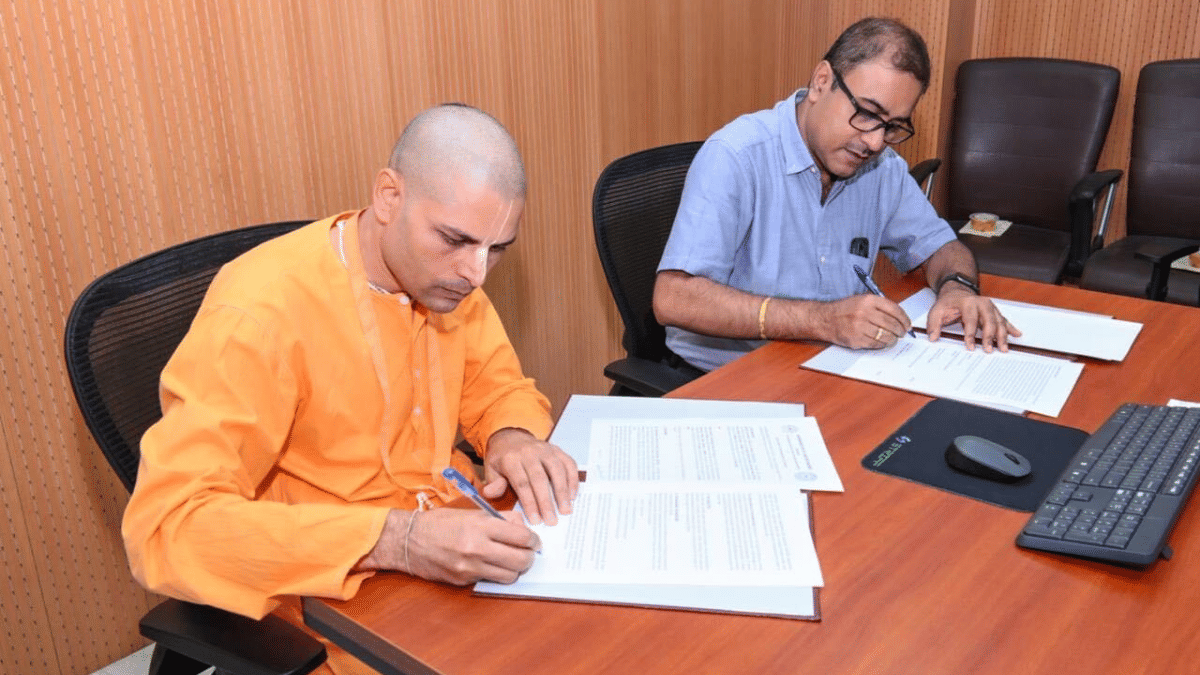
- Researchers at the Indian Institute of Technology (IIT), Kanpur and Ganesh Shankar Vidyarthi Memorial College, Kanpur, conducted a study involving 206 participants, including 144 treatment-naive patients with depression.
- EEG and EGG signals were recorded at the start of treatment and again about a week later, allowing researchers to examine whether these early biological signals could predict treatment outcomes.
- The study found that these early brain-gut signals, combined with clinical symptoms, can predict antidepressant treatment outcomes within 7-10 days of starting treatment.
- The findings were published and announced on Monday, highlighting the potential for earlier and more personalized depression treatment.
- The predictive model achieved 84% sensitivity in accurately spotting non-responders during model evaluation.
- Depression affects an estimated 5% of adults worldwide and around 4.5% of India’s population.
- Over half of patients may not respond adequately to their first antidepressant, often requiring weeks of trial and error before an effective treatment is identified.
- The study examined electrical activity in the brain and stomach using electroencephalography (EEG) and electrogastrography (EGG), respectively, together with clinical symptom data.
Researchers at IIT Kanpur and GSVM Medical College have developed a predictive model that utilizes brain and gut signals to assess antidepressant response within 7-10 days, significantly shortening the typical four to six-week evaluation period.13
The study involved 206 participants, including 144 treatment-naive patients with depression, who underwent electroencephalography (EEG) and electrogastrography (EGG) assessments.68
According to Dr. Pragathi Priyadharsini Balasubramani, the study's corresponding author, “Our study shows that objective non-invasive brain and gut electrophysiological signals collected in about the first week of treatment already contain valuable information about treatment response to precisely guide the intervention.”
The model achieved 84% sensitivity and 78% specificity in identifying non-responders during evaluation, and when tested on an independent cohort, it maintained 77.3% overall accuracy with 80% specificity and 71.4% sensitivity.5
The findings suggest that recognizing biological subtypes can explain varied patient responses to the same medication, paving the way for personalized treatment strategies.
“We found that different symptom profiles were associated with distinct patterns of brain and gut physiology linked to treatment outcomes,” said Amal Jude Ashwin Francis, the first author of the study.
The tools used in this study are accessible through Neuroclinical Innovative Solutions (NCIS) Private Limited, supported by the Biotechnology Industry Research Assistance Council (BIRAC). Further studies are needed to validate these findings across larger patient groups.
“The study, published in a journal, analyzed EEG and EGG signals from 206 participants, including 144 treatment-naive patients, and achieved 77.3% overall accuracy on an independent cohort. The tools are accessible via NCIS, with BIRAC support, but further validation across larger, diverse groups is needed.”
 Deccan Herald
 passionateinmarketing.com