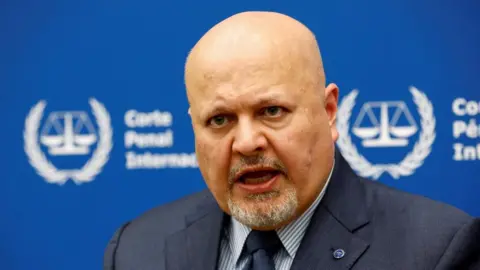
- Karim Khan has been removed as ICC prosecutor following allegations of serious misconduct and a serious breach of duty.
- The court's oversight body found in June that Khan had committed a serious breach of duty by engaging in an improper sexual relationship with a junior ICC staff member.
- Khan has repeatedly denied all allegations against him, stating he will challenge the decision through all available legal mechanisms.
- The ICC emphasized the importance of maintaining a safe, inclusive, and respectful working environment for all personnel following the vote.
- The vote to remove Khan was conducted during a special session of the Assembly of States Parties at the UN headquarters in New York.
- Khan, a prominent British lawyer, has been on voluntary leave since May 2025 to fight the allegations made against him.
- The misconduct investigation has intensified divisions within the ICC and has been accompanied by a campaign to weaken the court.
- Khan's removal follows a series of allegations including claims of coercive and non-consensual sexual behavior.
- The alleged victim, a Malaysian lawyer, described the situation as involving a significant power disparity.
Karim Khan has been removed from his position as chief prosecutor of the International Criminal Court (ICC) following a vote by 82 of its 125 member states, which cited serious misconduct allegations, including sexual abuse. The decision marks a significant moment for the ICC, which has faced scrutiny over its internal processes.12356811
The allegations against Khan, who has denied all claims, include engaging in an improper sexual relationship with a junior staff member and attempting to suppress her complaint. The court's oversight body concluded in June that Khan had committed a "serious breach of duty and serious misconduct".4
Khan's lawyer stated he would challenge the decision, claiming it was procedurally unfair. “Khan’s removal was determined by a process in which he was never given a fair opportunity to be heard,” his lawyer said. The vote followed a closed-door session where only 13 states supported Khan's retention.
The ICC has been under pressure, facing allegations of bias and external threats, particularly from the United States, which has imposed sanctions on Khan and others associated with the court. “The Court will continue to attach the utmost importance to maintaining a safe, inclusive, and respectful working environment for all personnel,” the ICC stated after the vote.7
Khan, who has been on voluntary leave since May 2025, previously gained attention for issuing arrest warrants against high-profile figures, including Israeli leaders. His removal raises questions about the future leadership of the ICC and its ongoing mission to uphold international justice.
“The vote to remove Khan saw 82 member states in favour, 13 against, and 15 abstaining. Khan has denied all allegations and his lawyer stated he will challenge the decision through all available legal mechanisms.”
 BBC
BBC The Guardian



