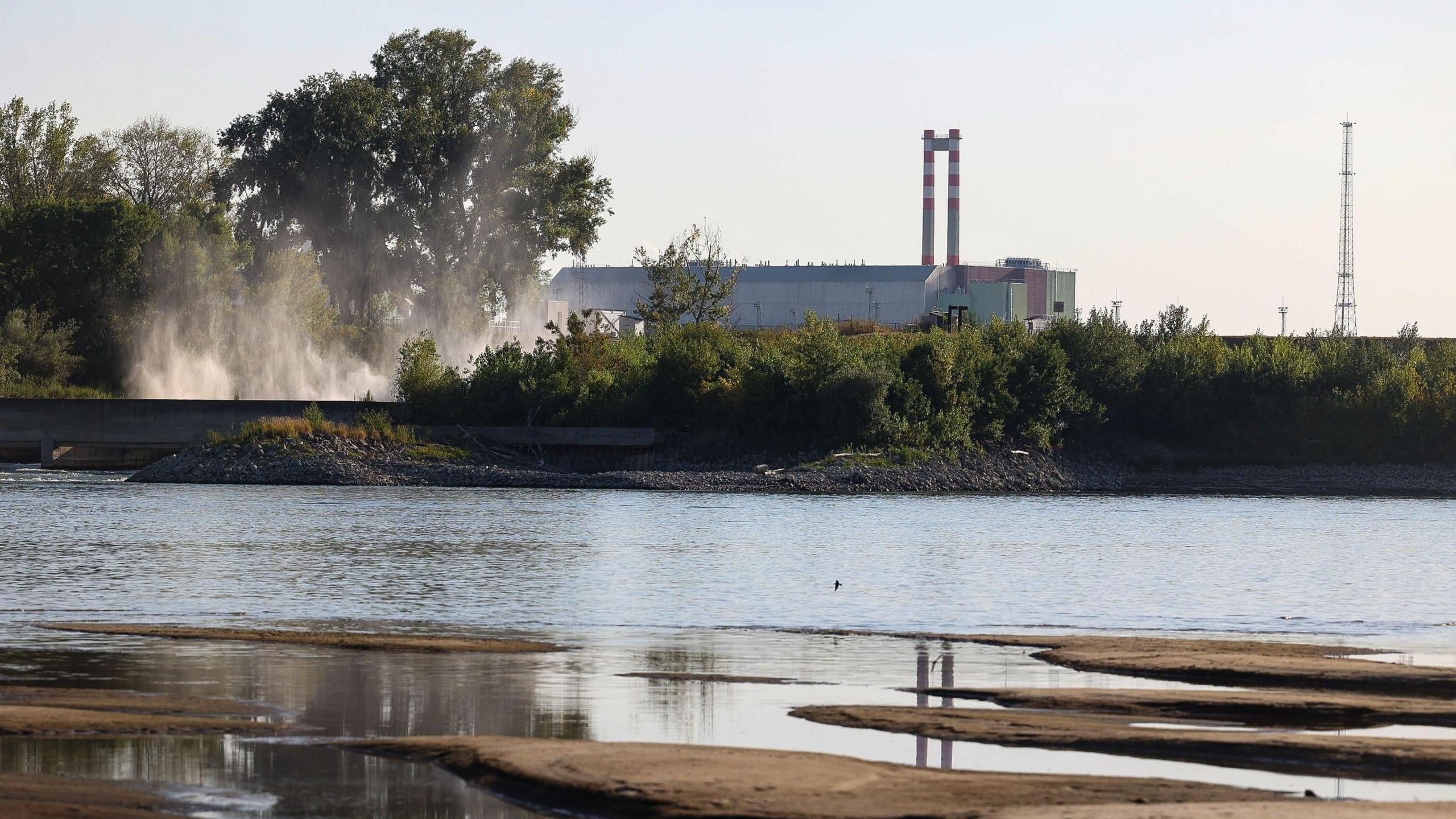
- Hungary's only nuclear power plant will be forced to shut down entirely for the first time due to record low water levels of the River Danube, Prime Minister Péter Magyar has said.
- The Soviet-era Paks power plant uses the Danube for cooling but the water level is so low that the suction nozzles cannot reach it.
- On Wednesday, the Danube's gauge level was measured at 23 centimeters, well below the previous record low of 33 centimeters set in 2018.
- The Paks nuclear plant cut output by 50% at reactor 2 on Thursday morning.
- Prime Minister Magyar announced that for the first time in 44 years, the power plant would be shut down altogether, urging the public to rein in their own power usage.
- An energy crisis situation may arise from Monday due to the Paks shutdown and the ongoing heatwave, which will see temperatures hover around 37C for a week.
- The waters of the Danube have fallen to the lowest levels for 30 years in several countries, including neighbouring Serbia and Romania.
- Romania's National Institute of Hydrology reported that the average river flow where the Danube enters the country was 1,600cm per second on Wednesday, down from 4,700 cubic metres per second in July.
- The institute forecasted that the flow would continue to fall to 1,500cm per second by Tuesday.
- Serbian hydrologist Dejan Vladiković stated that the Danube was down to levels not seen for 50 to 60 years, with no improvement expected until mid-September.
- Water levels in the Danube river are at a record low, drastically reducing output at nuclear power plants due to flow from the river.
Hungary's Paks nuclear power plant, located 120 kilometers south of Budapest, will shut down entirely for the first time in 44 years due to record low water levels in the Danube River, as announced by Prime Minister Péter Magyar.15
The plant relies on the Danube for cooling, but the water level has dropped to historically low levels, with measurements showing just 23 centimeters on Wednesday, below the previous record of 33 centimeters set in 2018.3
Magyar stated that the energy supply could become "critical" starting Monday, coinciding with a heatwave that will see temperatures reach around 37°C for a week.
The Danube's flow has decreased significantly, with Romania's National Institute of Hydrology reporting a drop from an average of 4,700 cubic meters per second in July to just 1,600 cubic meters per second.

The situation is dire, as climatologists predict no improvement until mid-September.10
Earlier this week, the Paks plant had already reduced output by 50% at reactor 2 and cut 254 megawatts from reactor 1.
The shutdown of the Paks plant follows similar actions in Romania, where one reactor at the Cernavoda nuclear plant was also shut down due to low water levels.
As the situation develops, Magyar urged the public to reduce power usage to mitigate the impact of the shutdown.
“The Danube's water flow has dropped to less than a third of its average for July, impacting energy supply across the region. With temperatures expected to remain around 37C for a week, Magyar cautioned that Hungary's energy supply could become 'critical' starting Monday.”

 DW.com



