- Around 860 minors remained in Ceuta after the crossing, according to local officials; they form a large part of the 3,000-5,000 migrants who avoided expulsion from the original 60,000 who came across.
- Spanish authorities confirmed 72 people died, mostly in the water, while Morocco reported 11 deaths not included in the Spanish total.
- The city’s migrant center, with capacity for 600 people, is completely full, and food is scarce among the migrants, according to reporting by AP journalists.
- About 3,000 to 5,000 migrants remained in Ceuta after 60,000 crossed from Morocco, and many said they had not been given food, water or shelter.
- According to The Times, Ceutan residents were actively discouraged from providing aid to migrants in the hope they would return to Morocco.
- A Ceuta shopkeeper said police told him it was better not to give migrants food or drink 'because that’s how they left'.
- The only migrant accommodation was at capacity and in lockdown, and staff prevented those outside from receiving food or water; migrant Dfalla Sliman, 21, from Sudan said he was very hungry and had no water.
- Some residents with Moroccan heritage bought food to distribute, and a few shops defied police orders, though migrants were chased away when police arrived.
- An emergency European Union (EU) meeting was convened for Tuesday in response to the border crisis.
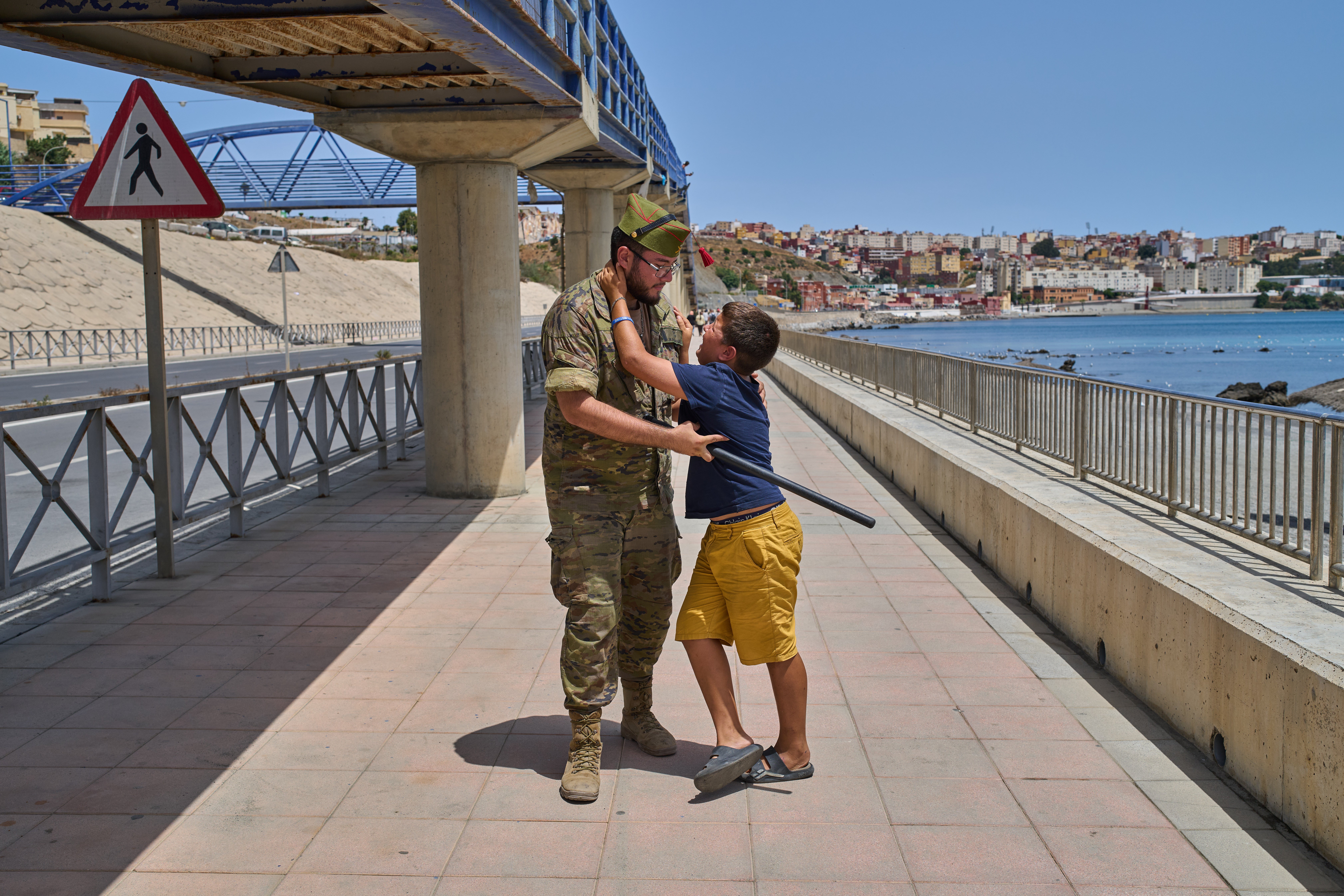
- An AP journalist saw Spanish soldiers escorting a crying unaccompanied Moroccan boy; a lieutenant colonel in the Spanish Army stopped the repatriation and transferred the boy to the Spanish Civil Guard.
- A girl described how Spanish police pulled the body of her 8-year-old brother from the water; she became separated from her mother, spent four days on her own, and found a government-run youth center full.
- The girl said: “I saw people stepping on the dead” and “Now we are children begging on the street.”
- Amnesty International urged the authorities to deploy adequate health and social resources, and the Red Cross said it was working with authorities to organise basic humanitarian assistance.
Hundreds of migrant children are stranded in Ceuta, Spain, following a mass crossing from Morocco, with local officials reporting around 860 minors still present. The total number of migrants who crossed is estimated between 60,000, with 3,000 to 5,000 remaining in dire conditions.1256
Spanish authorities confirmed that 72 people died during the crossing, primarily due to drowning, while Morocco reported an additional 11 deaths. Many of the unaccompanied minors are supposed to receive protection, yet reports indicate they are being denied basic necessities.3
The city’s migrant center, with a capacity for 600 people, is full, and food scarcity is rampant. Local migration activist Ramsés Mohamed Azumik stated, “The strategy is that hunger, thirst and exhaustion forces these people to finally decide to voluntarily return to Morocco.”4

Witnesses describe a tragic scene, with one girl recounting how she saw her 8-year-old brother pulled from the water. “I saw people stepping on the dead,” she said, highlighting the desperation faced by many.1718
Despite the dire situation, some Ceutan residents have shown sympathy, defying police orders to provide aid. However, police tactics have included discouraging local support, with one resident stating, “It was better if we didn’t give them anything.”
Humanitarian organizations are overwhelmed, with the Red Cross stating they cannot sustain the volume of vulnerable people without government support. An emergency EU meeting has been convened to address the crisis.
“Spanish authorities confirmed 72 deaths during the crossing, while some 860 minors remain in Ceuta and the city's 600-person migrant center is full. An emergency EU meeting is set for Tuesday as Amnesty International urges adequate health and social resources.”


 The Independent
 The Times



