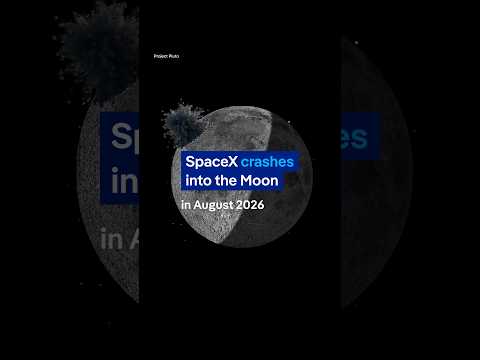
- A large part of a SpaceX rocket is believed to have hit the Moon; its 4,000kg upper section was shed in space as planned but ended up on an accidental collision course with the lunar surface.
- US space agency Nasa said the collision posed "no danger to Earth" and that it will "collect lunar data from the event and refine techniques for tracking objects in space".
- Astronomer Matt Bothwell warned about space debris and crowding in orbit, saying: "It could feasibly be, within a few decades, hard to get past Earth's orbit because space is so crowded,".
A SpaceX Falcon 9 rocket stage, weighing 4,000kg, is on a collision course with the Moon, expected to crash around 07:35 BST. The upper section was intentionally shed in space but inadvertently headed towards the lunar surface.1
NASA is preparing to study the impact, which poses "no danger to Earth". The agency plans to "collect lunar data from the event and refine techniques for tracking objects in space".2
This incident highlights the growing concern over space debris. Astronomer Matt Bothwell warns that "it could feasibly be, within a few decades, hard to get past Earth's orbit because space is so crowded". The crash will be confirmed by specialist telescopes monitoring the event, marking a significant moment in the study of human-made objects in space.3
As space exploration continues to expand, the implications of such collisions become increasingly important, prompting agencies like NASA to enhance their tracking and monitoring capabilities.
“Nasa says the collision poses 'no danger to Earth' and it will 'collect lunar data from the event and refine techniques for tracking objects in space.' Astronomer Matt Bothwell warns, 'It could feasibly be, within a few decades, hard to get past Earth's orbit because space is so crowded.'”