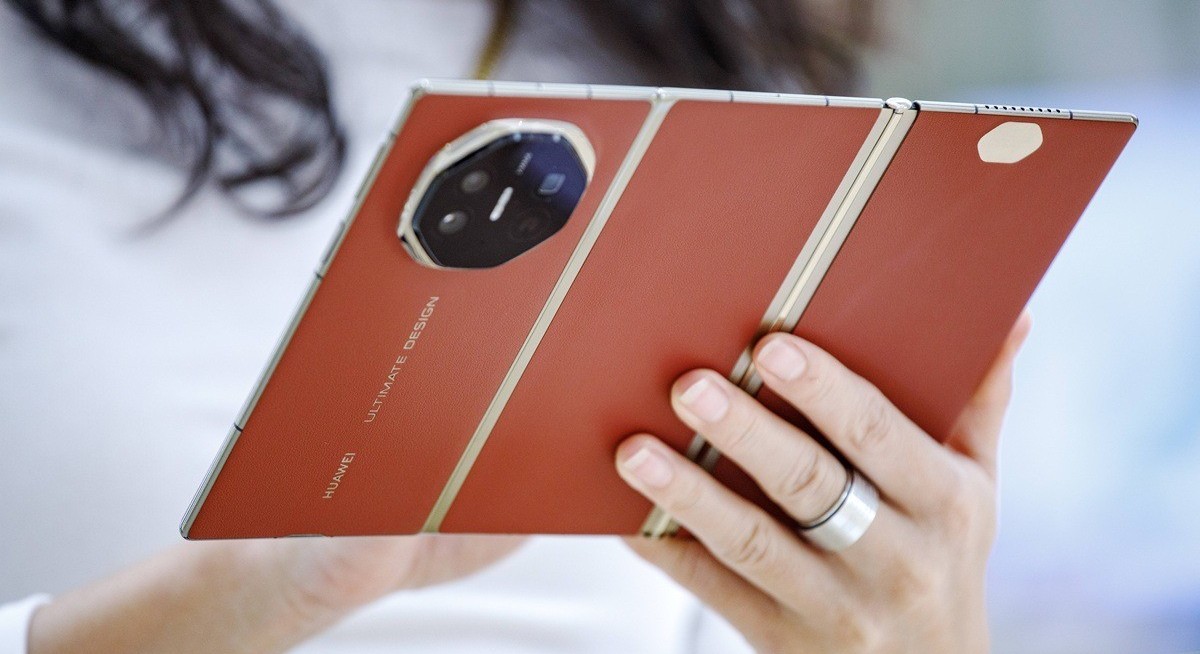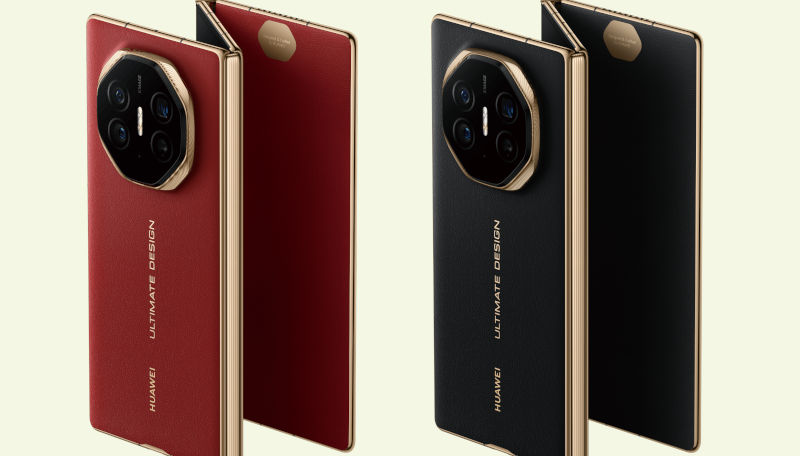
- Huawei has launched its second-generation trifold smartphone, the Mate XT 2, in China with prices starting at CNY 19,999 (around €2,550).
- The device features an upgraded inward-folding trifold architecture, a new Kirin 9050 Pro processor, hardware-level privacy options, and a camera system tuned for more accurate colour reproduction, all running on the company's latest HarmonyOS 7.
- Huawei's new Kirin 9050 Pro delivers a 42% performance leap in overall performance over its predecessor alongside improved power efficiency, according to the company.
- Huawei tests the LogicFolding chip in the handset as high-stakes AI tests loom.
- The new smartphone processor is a crucial test of the firm’s attempt to route around US-led curbs on the most advanced chipmaking technology.
- While existing 3D techniques simply stack largely self-contained dies, Huawei’s LogicFolding splits core computing functions across two active layers designed to operate as a single unit.
- Leslie Wu, CEO of semiconductor consultancy RHCC, noted that LogicFolding is a compensatory route born of external constraints.
- Wu also mentioned that the approach came at a cost, as bonding two active silicon layers requires complex manufacturing steps that can weigh on factory yields.
Huawei's Mate XT 2 trifold smartphone, launched in China, showcases the Kirin 9050 Pro SoC, which offers a 42% performance boost over its predecessor. Priced at CNY 19,999 (around €2,550), it features advanced privacy options and a camera system for enhanced color accuracy.13
The device's architecture includes an upgraded inward-folding trifold design and runs on HarmonyOS 7. The Kirin 9050 Pro is a significant step for Huawei, as it tests its LogicFolding technology, which aims to circumvent US-led restrictions on advanced chipmaking.267
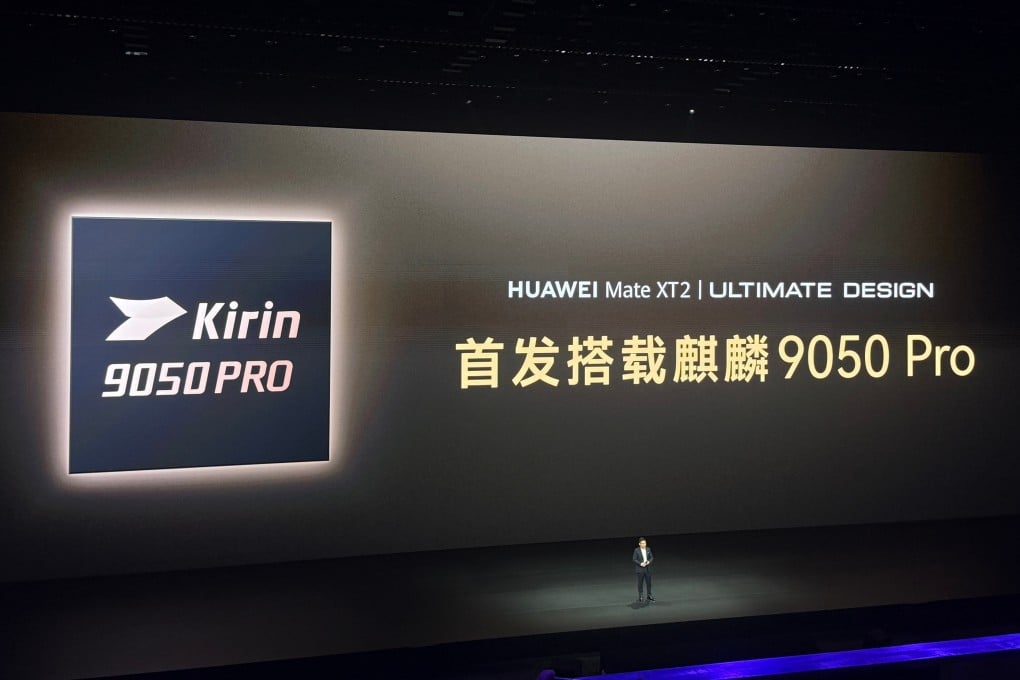
According to Huawei, the new chip's design splits core computing functions across two active layers, allowing for improved efficiency. However, this innovative approach comes with challenges. Leslie Wu, CEO of semiconductor consultancy RHCC, noted, “LogicFolding is first and foremost a compensatory route – a choice born of external constraints.” The manufacturing process for this technology is complex, requiring precise wafer thinning and vertical wiring, which may impact production yields.
As Huawei navigates these challenges, the Mate XT 2 represents a bold move in the competitive smartphone market, emphasizing both performance and privacy in a landscape increasingly focused on AI capabilities.
“The Kirin 9050 Pro delivers a 42% performance leap over its predecessor, according to Huawei. LogicFolding splits core computing functions across two active layers, a compensatory route born of external constraints, said Leslie Wu, CEO of semiconductor consultancy RHCC.”
 South China Morning Post