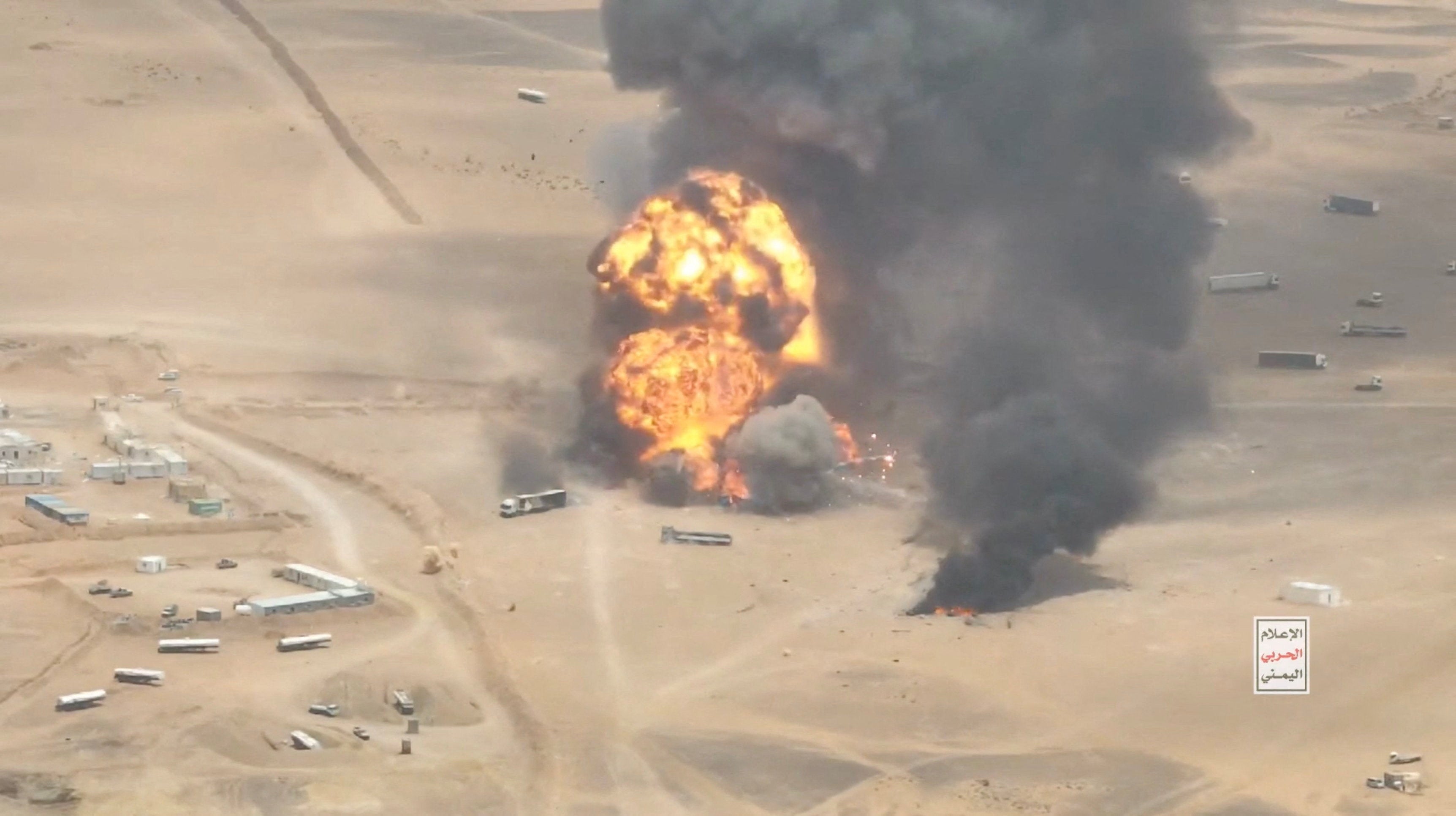
- Houthis attacked Saudi Arabia, resulting in dozens of injuries.
- Houthi spokesperson Yahya Sarea said the group would soon announce a broad military operation deep into Saudi Arabia.
- Iran threatened the US with economic warfare and stated it had fired an advanced missile at US warships.
- Tehran vowed to announce a new restricted zone in the Gulf to further squeeze shipping through the Strait of Hormuz.
- The Saudi energy ministry stated that authorities were dealing with the attacks' repercussions and would take measures to ensure facility safety and continuation of work.
The Iran-backed Houthi rebels launched attacks on several Saudi cities, including Abha and Jazan, resulting in 73 injuries and significant disruptions to energy operations. The Saudi-led coalition condemned the assaults, indicating a potential escalation in the ongoing conflict as diplomatic efforts falter.3
The coalition vowed a firm response to these attacks, which targeted civilian and economic entities, causing fires and halting operations at key energy facilities. The Saudi energy ministry confirmed that firefighting teams were deployed to manage the blazes and assess damage.5
Houthi spokesperson Yahya Sarea announced plans for a broad military operation deep into Saudi territory, suggesting an intensification of hostilities. The Houthis have been increasingly aggressive since declaring a naval blockade against Riyadh in July, targeting Saudi vessels in the Red Sea.2
In a related development, Iran threatened the U.S. with economic warfare, claiming to have fired an advanced missile at U.S. warships. Tehran is also expected to announce a new restricted zone in the Gulf, aiming to increase pressure on shipping through the Strait of Hormuz and potentially driving up oil prices.4
The Saudi coalition's response to the Houthi attacks underscores the growing risks of a wider regional conflict as diplomatic solutions remain elusive.
“Houthi spokesperson Yahya Sarea said the group would soon announce a broad military operation deep into Saudi territory. Tehran vowed to announce a new restricted zone in the Gulf to squeeze shipping through the Strait of Hormuz, driving up oil prices and pressuring President Trump to end the war.”


 The Independent