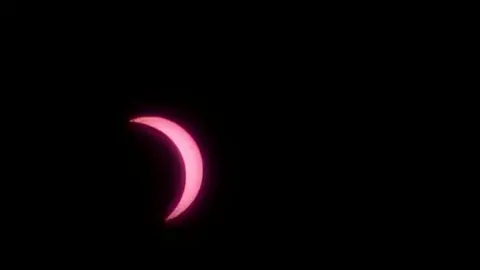
- Eclipse first seen in the remote Arctic region of northern Russia, drawing gasps and cheers from huge crowds just 90 minutes later.
- Eclipse cast shadow through Greenland and moved south to Keflavik, Iceland, before arcing across the Atlantic towards northern Spain.
- Partial eclipse peaked shortly after 19:00 BST in Yorkshire, with many seeing more than 90% of the sun covered by the moon.
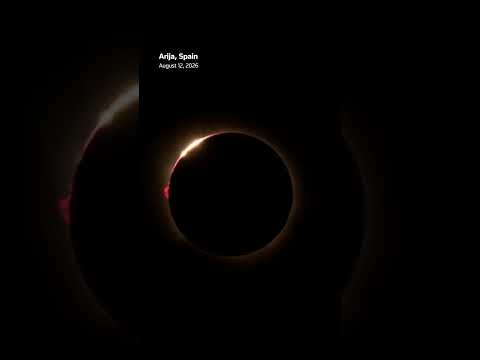
- Spain witnessed its first total solar eclipse in more than a century, with day briefly turning to night and eerie darkness across the country.
- Spectators expressed awe, with Isabel Troyano saying she got goosebumps and Alejandro Cuesta calling it the most beautiful thing he had seen in his entire life.
- Eclipse fever gripped Spain, with predictions of nearly 450,000 extra tourists and a 347-million-euro ($400-million) economic boost, and nearly 25,000 police officers mobilised.
- In Spain, the lunar shadow moved diagonally from the northern coast to the Balearic Islands, where tourists and locals gathered on the beach, many in swimming costumes with protective glasses.
- The event was livestreamed by NASA and the European Space Agency, offering scientists a rare opportunity to study the Sun’s atmosphere and solar winds.
Thousands gathered across Yorkshire and Spain on Wednesday to witness a historic solar eclipse, the first total eclipse in Spain in over a century.9
The event peaked shortly after 19:00 BST, with many in Yorkshire seeing over 90% of the sun obscured.
In Spain, the eclipse plunged the country into darkness, with spectators expressing awe.
Isabel Troyano, a 56-year-old homemaker, said, “I got goosebumps,” while Alejandro Cuesta, a nanoscience researcher, described it as “incredible... the most beautiful thing I’ve seen in my entire life.”
The eclipse, which began in the Arctic, cast its shadow diagonally across Spain, from the northern coast to the Balearic Islands, where many gathered on beaches to watch.
The event was livestreamed by NASA and the European Space Agency, providing a unique opportunity for scientists to study the Sun’s atmosphere.10
Eclipse fever gripped Spain, with predictions of nearly 450,000 extra tourists and a potential €347 million ($400 million) boost to the economy.
Interior Minister Fernando Grande-Marlaska reported that nearly 25,000 police officers were mobilized to ensure safety during the event.
“The eclipse was livestreamed by NASA and the European Space Agency, offering scientists a rare chance to study the sun's atmosphere. Spain's government predicted nearly 450,000 extra tourists and a €347 million economic boost, with about 25,000 police officers mobilized.”




 BBC
BBC CP24
CP24