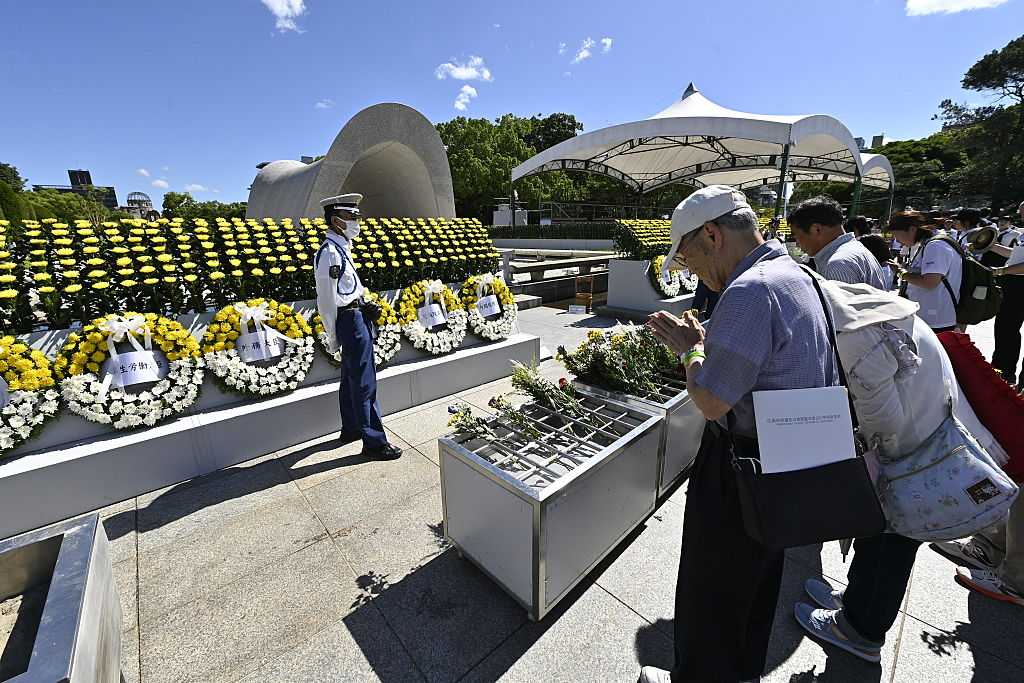
- Hiroshima marks 81 years since the atomic bomb was dropped, with a ceremony attended by about 50,000 people, including representatives from 120 countries.
- A minute of silence was held at 8:15 a.m., the exact time the bomb was dropped.
- Mayor Matsui delivered a peace declaration, warning that political leaders legitimizing violence and considering nuclear deterrence realistic push a world without nuclear weapons further into the distance.
- Prime Minister Sanae Takaichi, attending for the first time as prime minister, stated she will take a realistic approach toward a world without nuclear weapons.
- Speculation looms that Takaichi's government may ease Japan's postwar three non-nuclear principles, with discussions about possibly dropping the third principle.
- Takaichi has advocated a review of the three non-nuclear principles, possibly dropping the third one of not permitting nuclear weapons into the country.
- Takaichi mentioned that Japan has maintained its three non-nuclear principles but did not commit to sticking with that policy in the future.
- Survivors have expressed frustration over growing international support for nuclear deterrence, including in Japan.
- Japan, under the U.S. nuclear umbrella, has rejected survivors' requests to sign the Treaty on the Prohibition of Nuclear Weapons.
Hiroshima marked the 81st anniversary of the atomic bombing, with Mayor Kazumi Matsui urging world leaders to abandon nuclear deterrence. He stated, “Downplaying the inhumanity of nuclear weapons... could ultimately result in another Hiroshima or Nagasaki.” The ceremony drew about 50,000 attendees, including representatives from 120 countries.13
Prime Minister Sanae Takaichi, attending the memorial for the first time as prime minister, pledged a “realistic approach” to nuclear disarmament, while speculation grows that her government may ease Japan's postwar non-nuclear principles. Takaichi has hinted at a review of these principles, particularly the one prohibiting nuclear weapons from being brought into Japan.4
Survivors of the bombing expressed concern over the increasing acceptance of nuclear deterrence, with the number of survivors dwindling to 91,105 and their average age exceeding 86. Japan remains under the U.S. nuclear umbrella, complicating its stance on nuclear disarmament, as the government has rejected calls to sign the Treaty on the Prohibition of Nuclear Weapons.910
“About 50,000 people, including representatives from 120 countries, attended the ceremony, with a minute of silence at 8:15 a.m. Takaichi, attending for the first time as prime minister, said Japan has maintained its three non-nuclear principles but stopped short of committing to them, while survivors expressed frustration over growing support for nuclear deterrence.”
 kcci.com



