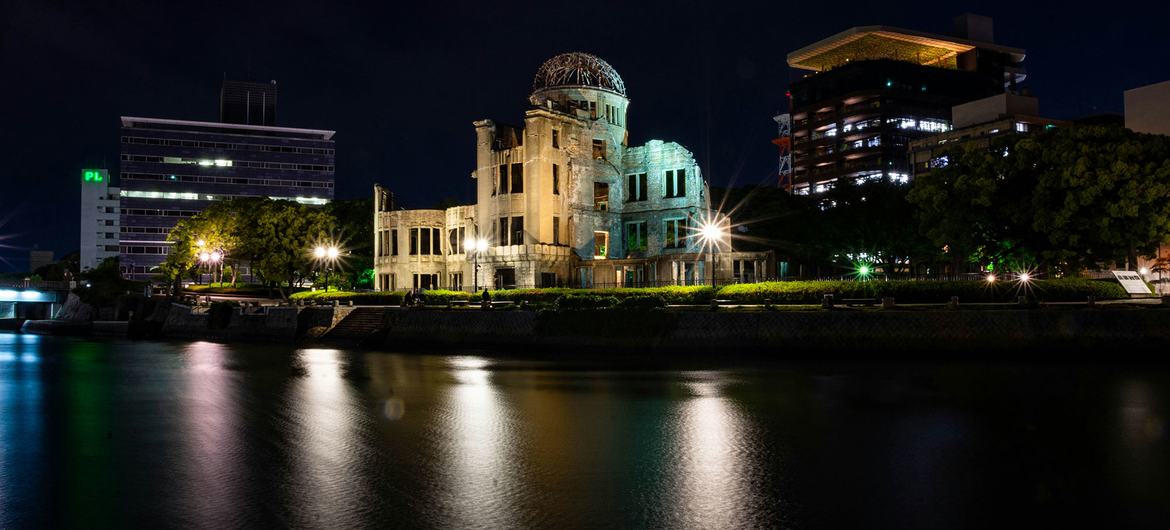
- Hiroshima marked the 81st anniversary of the atomic bombing on August 6, 2026, with Mayor Kazumi Matsui delivering a peace declaration that criticized major powers for justifying the possession of nuclear weapons as a method of deterrence.
- Prime Minister Sanae Takaichi attended the ceremony for the first time as PM but avoided an explicit pledge on maintaining Japan's nonnuclear principles, stating the government is upholding the policy.
- Survivors expressed frustration over the government's consideration of reviewing nonnuclear principles and the possibility of nuclear-sharing with the U.S.
- In 1945, the U.S. atomic bombing of Hiroshima resulted in the deaths of 140,000 people, followed by the bombing of Nagasaki three days later, which killed 70,000.
- Japan surrendered on August 15, 1945, marking the end of World War II and Japan's nearly half-century of aggression in Asia.
Hiroshima marked the 81st anniversary of the atomic bombing on August 6, 1945, with Mayor Kazumi Matsui emphasizing the need for global leaders to reject nuclear deterrence.145
“Downplaying the inhumanity of nuclear weapons... risks cycles of violent retaliation,” Matsui stated, urging a commitment to peace.
Prime Minister Sanae Takaichi attended the ceremony but did not clearly affirm Japan's nonnuclear principles, stating the government “is upholding” the policy while hinting at potential revisions.2
This year’s ceremony drew about 50,000 attendees, including representatives from 120 countries.
Survivors expressed concern over Japan's reliance on U.S. nuclear deterrence and the government's consideration of nuclear-sharing arrangements.

“Such ideas run counter to our wishes and we cannot tolerate them,” survivors lamented, advocating for Japan to join the Treaty on the Prohibition of Nuclear Weapons.
The UN disarmament chief, Izumi Nakamitsu, warned of a “reversal” in nuclear arsenal reductions and called for dialogue over division.
“Let’s choose dialogue over division, cooperation over confrontation,” she urged, emphasizing the need for international cooperation to prevent future tragedies like Hiroshima.
“UN disarmament chief Izumi Nakamitsu warns that nuclear arsenal reductions are reversing and military spending hit $2.9 trillion in 2025, while survivors' numbers have fallen to 91,105 with an average age over 86. Takaichi's government is reportedly considering revising the three nonnuclear principles as it plans to update key security documents by year-end.”

 AP News



