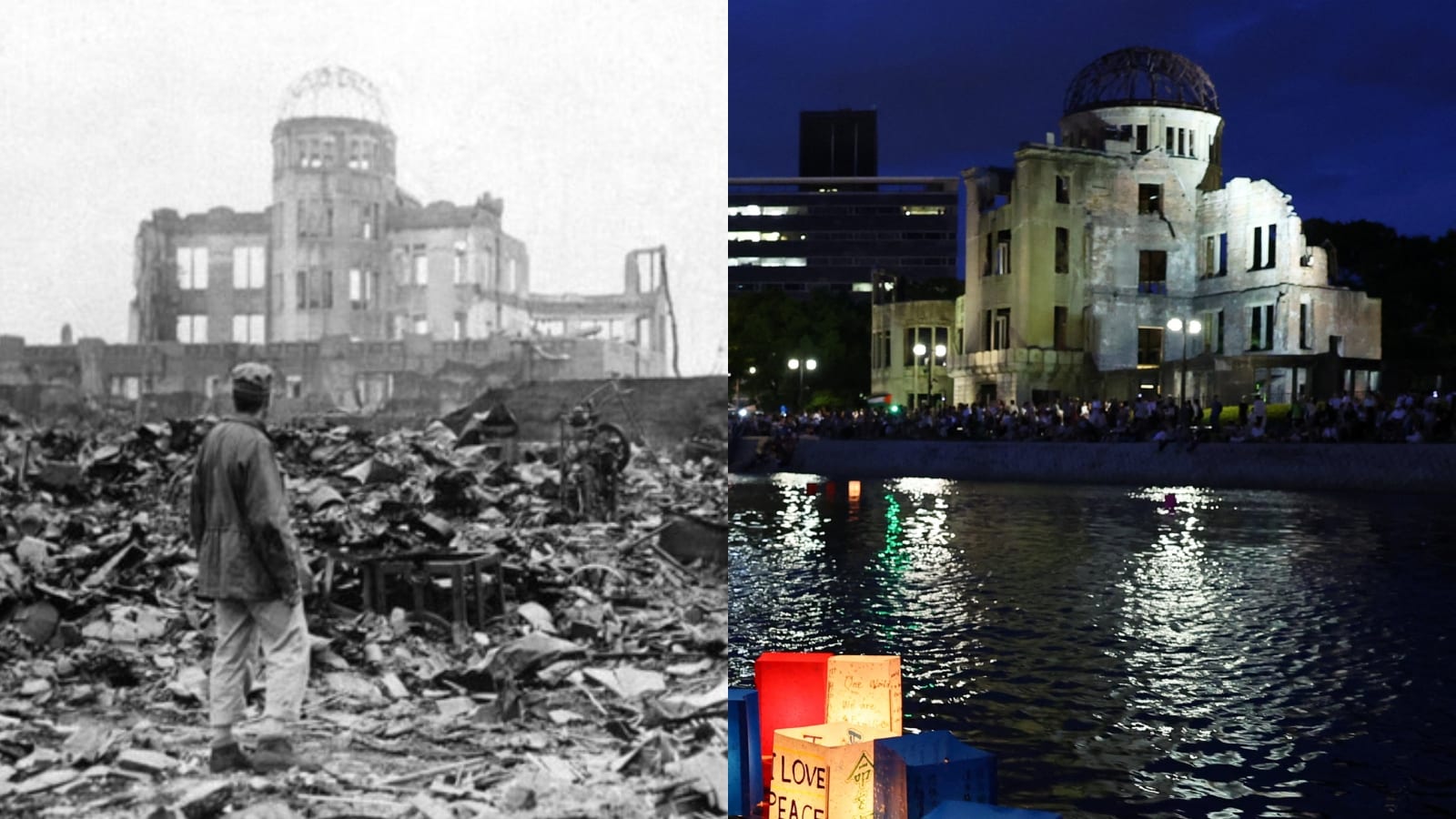
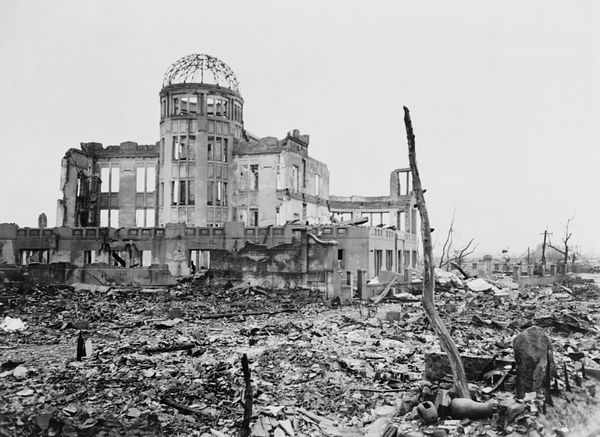
- On August 6, 1945, the US dropped the 'Little Boy' atomic bomb on Hiroshima, causing widespread destruction and thousands of deaths.
- Two days after the bombing, on August 8, 1945, soldiers and civilians walked through the ruins of Hiroshima as the city struggled to recover.
- In September 1945, survivors received medical treatment while an allied correspondent documented the devastation.
- On August 6, 2026, Hiroshima Day commemorations will include bells, sirens, a minute's silence, and calls for nuclear abolition.
- As of March 2026, there are 91,105 hibakusha remaining, with an average age of 87, prompting efforts to preserve their testimonies.
- On February 5, 2026, the New START treaty expired, leaving no legally binding US-Russia nuclear arms control treaty.
- Currently, nuclear-armed states are modernizing their arsenals, as deterrence displaces disarmament and the hibakusha generation fades.
- Hiroshima Day is observed every year on August 6 to remember victims of the atomic bombing, honour survivors and promote peace, dialogue, and nuclear disarmament worldwide.
- Eighty-one years after the atomic bombings, these commemorations remain among the world’s most poignant acts of public remembrance.
- As the hibakusha generation fades, Japan faces a race against time to preserve living memory before it becomes recorded history.
- Public sentiment in Japan strongly favours nuclear abolition, yet the country relies on the American nuclear umbrella for security.
- The nine nuclear-armed states possess 12,241 nuclear warheads, with nearly 9,614 retained in military stockpiles.
- The modernization of nuclear arsenals by all nuclear-armed states has reversed the trajectory of arms control.
Hiroshima marked the 81st anniversary of the atomic bombing on August 6, 1945, with solemn ceremonies at the Hiroshima Peace Memorial Park. Survivors, known as hibakusha, are now in their mid-eighties, and their numbers are rapidly diminishing.1210
As of March 2026, only 91,105 hibakusha remain, raising concerns about preserving their testimonies and experiences.7
Annual observances include a minute of silence at 8:15 a.m., the exact time of the bombing, and calls for global peace and nuclear disarmament.

Hiroshima has become a symbol of peace, with its mayor's Peace Declaration advocating for nuclear abolition and international cooperation.613
However, the world is witnessing a shift from disarmament to deterrence, as evidenced by Russia's nuclear threats during the Ukraine conflict and North Korea's expanding missile program.
The nine nuclear-armed states possess 12,241 nuclear warheads, with many modernizing their arsenals, reversing decades of arms control progress.914
Public sentiment in Japan strongly favors nuclear abolition, yet the country relies on the American nuclear umbrella for security in an increasingly uncertain Indo-Pacific.
As the hibakusha generation fades, the world risks losing sight of the human suffering caused by nuclear weapons, with deterrence now overshadowing disarmament as the primary concern.
“Today, deterrence has displaced disarmament as the dominant concern,” a poignant reminder of the ongoing struggle between security and humanity's moral compass.
“As of March 2026, only 91,105 hibakusha remain, with an average age of 87, prompting Japan to digitize testimonies and train 'memory successors.' Meanwhile, the expiry of New START in February 2026 leaves the US and Russia without a binding nuclear arms control treaty, and nuclear-armed states are modernizing their arsenals.”
 News18
 deccanherald.com



