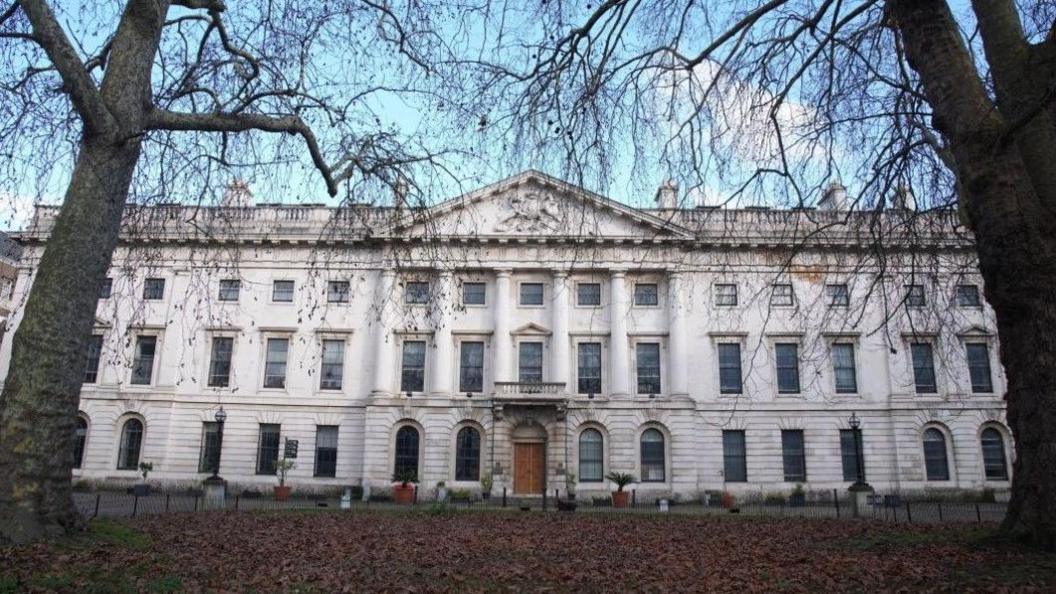
- High Court judges have dismissed the challenge from the Royal Mint Court Residents' Association (RMCRA) against the construction of a Chinese mega embassy in London.
- The court ruled that Britain's approval for China to build a vast embassy was lawful, rejecting the legal challenge brought by local residents.
- The proposed site for the embassy is located at the Royal Mint Court, near the Tower of London.
- The RMCRA expressed concerns about potential espionage threats and the enforcement of Chinese laws in the UK.
- The Ministry of Housing and the London Borough of Tower Hamlets defended the planning decision, stating they considered residents' concerns.
- The RMCRA plans to appeal the High Court ruling.
- The RMCRA raised concerns about a fire risk and the enforceability of safety obligations due to diplomatic immunity.
- A 51-page analysis highlighted potential impacts of various bomb scenarios on nearby buildings, including St Mary Graces Court.
- The court's ruling stated that the RMCRA did not provide convincing evidence of a human rights violation affecting them personally.
The High Court's ruling on the Chinese mega embassy in London has raised significant safety concerns among local residents.19
The court dismissed the Royal Mint Court Residents' Association's (RMCRA) challenge, which argued that the embassy could pose an espionage threat and enforce draconian Chinese laws in the UK.3467

The RMCRA expressed fears that the embassy could create a fire risk and that safety obligations would be unenforceable due to diplomatic immunity. Mark Nygate, treasurer for the RMCRA, stated, “The blast assessment highlights why the residents are so concerned about their safety and security.”
The High Court judges noted that the government had considered the implications of the Chinese government's application. Mrs Justice Lieven remarked that there was “no doubt” the government took the application seriously, and the RMCRA was not disadvantaged by not receiving a blast assessment prior to the planning decision.
The court found that the RMCRA did not provide convincing evidence of a personal human rights violation. The ruling has been met with disappointment, as the RMCRA plans to appeal, arguing that the embassy's planning conditions are ineffective due to the Vienna Convention's protections for diplomatic premises.
The embassy's construction is seen as part of a broader effort to strengthen ties with Beijing, despite warnings from British and U.S. politicians about potential espionage risks. Britain's intelligence agencies have stated that any threats could be mitigated.
“The Royal Mint Court Residents' Association fears the embassy could pose an espionage threat and enforce draconian laws in the UK. Despite these concerns, the court ruled that the government had adequately considered the implications of granting planning permission to the Chinese government.”
 London Evening Standard



