- In 2016, researchers put an age to a Greenland shark that is hard to take in.
- The largest animal in their study was estimated at nearly 400 years old, which would place its birth around the time Shakespeare’s era was drawing to a close.
- Stranger still, by the same research a shark like that would not have reached sexual maturity until it was around 150, more than a century into a life most creatures never get a fraction of.
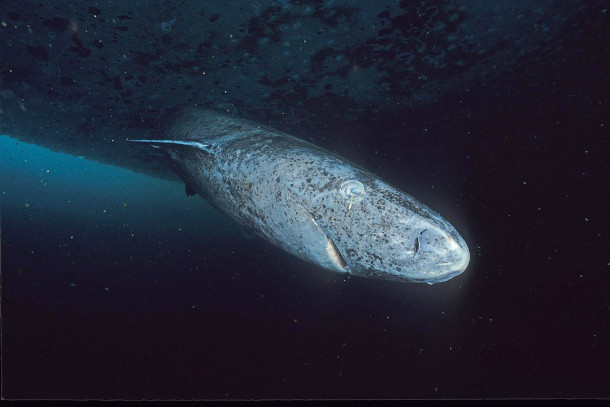
- With a lifespan of several hundred years, Greenland sharks may be the longest living vertebrates on Earth and are estimated to reach sexual maturity at about 150 years old.
- Radiocarbon dating of eye lens tissue of Greenland sharks that died when accidentally caught in fishing nets revealed one specimen that was estimated to be around 400 years old.
- Scientists also estimated that Greenland sharks grow very slowly, approximately 1 cm (0.4 inches) per year, and don’t reach sexual maturity until they’re about 150 years old.
- Fogg and her colleagues analyzed the eye tissue from 10 Greenland sharks, some of which were about 150 years old.
- They found that the cellular and molecular components of their eyes, that the sharks used to see in the dim light of the deep ocean were intact, probably due to enhanced activity of DNA repair genes, which likely keep tissues healthy over the long-term.
- Fogg said that figuring out how Greenland sharks live longer than other vertebrates could possibly help to treat failing organs in aging people someday.
Greenland sharks, known for their extraordinary longevity, may live up to 400 years and reach sexual maturity at approximately 150 years. This groundbreaking research, which involved radiocarbon dating of eye lens tissue, suggests that these sharks grow slowly, at about 1 cm (0.4 inches) per year.134569
The study, led by Fogg and colleagues, analyzed eye tissue from ten Greenland sharks, revealing that their cellular and molecular components remain intact, likely due to enhanced activity of DNA repair genes. This could explain their remarkable lifespan and resilience in the cold waters of the North Atlantic and Arctic Oceans.78
Fogg noted, “figuring out how Greenland sharks live longer than other vertebrates could possibly help to treat failing organs in aging people someday.” This research not only sheds light on the aging process of these unique creatures but also opens avenues for potential advancements in human health and longevity.
As the largest specimen studied was born around the time of Shakespeare, the findings challenge our understanding of vertebrate aging and maturation, highlighting the need for further exploration into the biological mechanisms that allow such extended lifespans.
“Greenland sharks are estimated to live for several hundred years, with one specimen reaching nearly 400 years old. Their slow growth and late sexual maturity could provide insights into aging and organ health in humans.”
 Space Daily