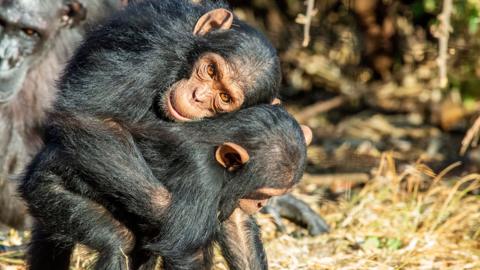
- Great apes have been found to use kissing and cuddling as a means to keep the peace, according to a study from Durham University.
- The research indicates that reassuring touch may date back at least six million years to a common ancestor shared with humans.
- The study observed chimpanzees and bonobos using physical contact to reassure each other before conflicts over food.
- The findings suggest that individuals who engaged in touching and hugging were more likely to access food and eat peacefully together.
- Dr. Jake Brooker, the study's lead researcher, noted that comparing bonobos and chimpanzees offers insight into the evolutionary roots of social behavior.
- The study was conducted at two great ape sanctuaries in the Democratic Republic of Congo and Zambia.
- The researchers designed an experiment to mimic natural feeding scenarios, observing the apes during the five minutes before food was released.
- The study found that female-female pairs in bonobos and male-male pairs in chimpanzees were most likely to show friendly reassurance.
Researchers at Durham University have uncovered that great apes, specifically chimpanzees and bonobos, utilized physical contact such as kissing and cuddling to maintain social harmony and alleviate tension, dating back at least six million years before the emergence of humans.1234
The study, published in Proceedings of the Royal Society B: Biological Sciences, involved observing 116 individuals across five semi-wild groups during a controlled five-minute period before food was released. The findings indicate that apes who engaged in more reassuring touch before feeding spent more time peacefully sharing food with others.
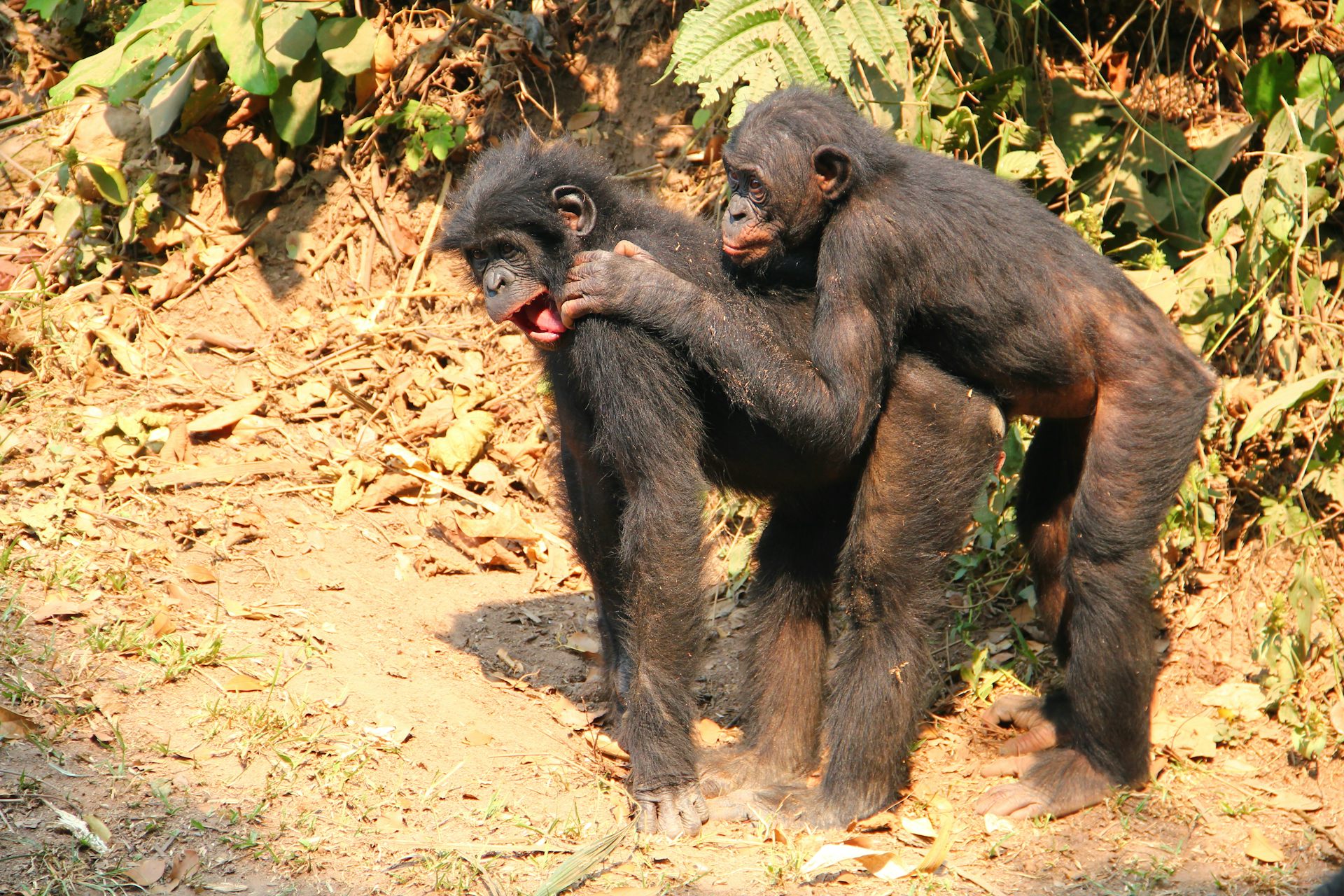
Prof Zanna Clay noted, “Before stressful events, they come together, they reassure each other, they touch each other, they hug each other,”more tolerant groups exhibited higher levels of reassuring touch, including what the team termed “reassurance trains,” where multiple apes embraced in succession.

Interestingly, the study found that female-female pairs in bonobos and male-male pairs in chimpanzees were most likely to engage in friendly reassurance, reflecting core social alliances. Dr. Brooker emphasized that these behaviors reveal a deep level of trust and a willingness to be vulnerable, essential for navigating tense moments.9
The research was conducted at two African great ape sanctuaries: Lola ya Bonobo Sanctuary in the Democratic Republic of Congo and Chimfunshi Wildlife Orphanage Trust in Zambia, analyzing 60 cofeeding sessions over more than 10 hours of observation.7
“The study observed 116 chimpanzees and bonobos at two African sanctuaries during five-minute periods before food was released. In bonobos, female-female pairs were most likely to show reassurance, while in chimpanzees, it was male-male pairs; researchers also identified 'reassurance trains' of multiple apes embracing in succession.”
 The Northern Echo



