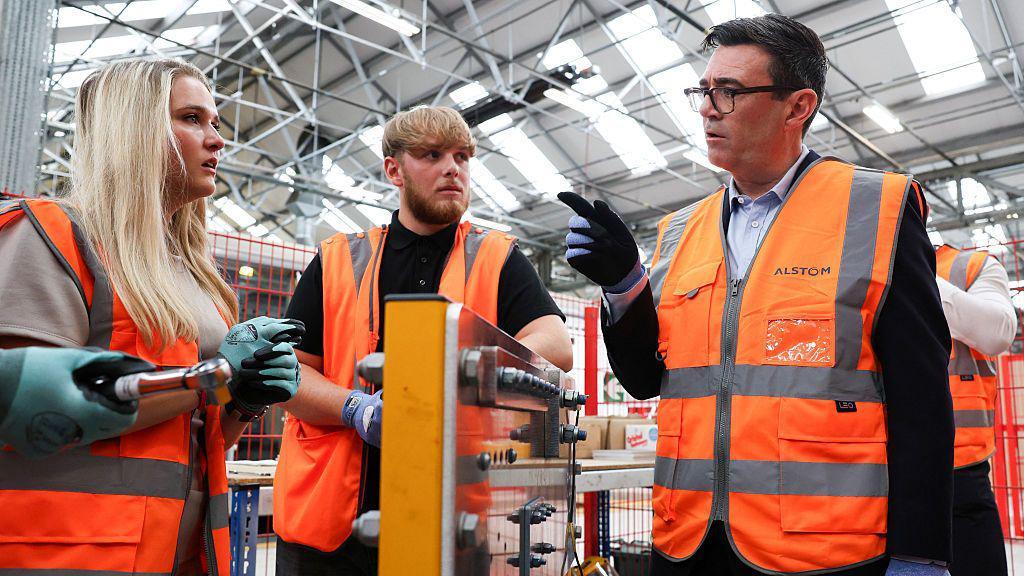
- Parents on benefits can receive up to £4,500 a year if their child starts an apprenticeship.
- The bursary is designed to end a “benefit trap” that can leave parents worse off if their offspring leave education in favour of an apprenticeship.
- The Department for Work and Pensions (DWP) and HMRC classify apprenticeships as paid employment, which means families can lose hundreds of pounds a week.
- A report by the Social Security Advisory Committee found that in the worst-affected scenario, a single parent whose disabled teenager was their only dependent child would be £339 a week worse off if the youngster took up an apprenticeship.
- Apprentices under the age of 19 must be paid a minimum of £8 an hour, meaning those working full-time take home about £258 a week.
- With the loss of benefits, it leaves households facing a shortfall of about £80 a week.
- The DWP said the targeted “the small number of universal credit families for whom the current system disincentivises apprenticeships” and would be funded using the £1 billion additional investment in the growth and skills levy announced in May.
- Pat McFadden, the work and pensions secretary, said: “Every young person deserves the chance to build a future they can be proud of, and our welfare system should be a springboard to opportunity, not a barrier to it.”
- Enver Solomon, chief executive of Nacro, a social justice charity, said: “Action to address the financial disincentives which put young people off taking up apprenticeships is long overdue.”
- A record one million young people, equivalent to one in eight, aged 16-24 are classed as not being in education, employment or training (Neet), and the figure is predicted to reach one in six by 2031.
Parents on benefits can receive up to £4,500 annually if their child takes up an apprenticeship, as part of a new initiative by the Department for Work and Pensions (DWP) aimed at eliminating the 'benefit trap' that discourages work.13
The DWP and HMRC classify apprenticeships as paid employment, which can lead to families losing hundreds of pounds a week. A report by the Social Security Advisory Committee highlighted that a single parent with a disabled teenager could be £339 a week worse off if their child opts for an apprenticeship.4
The initiative is funded through a £1 billion investment in the growth and skills levy announced in May.7

Pat McFadden, the work and pensions secretary, emphasized, “Every young person deserves the chance to build a future they can be proud of, and our welfare system should be a springboard to opportunity, not a barrier to it.”8
Enver Solomon, chief executive of Nacro, stated that addressing the financial disincentives for young people considering apprenticeships is “long overdue.” The urgency of this initiative is underscored by a record one million young people, or one in eight aged 16-24, classified as not in education, employment, or training (Neet), with projections indicating this could rise to one in six by 2031.910
“The Department for Work and Pensions and HMRC classify apprenticeships as paid employment, causing families to lose hundreds of pounds weekly. Pat McFadden emphasized that the welfare system should be a springboard to opportunity, while Enver Solomon called for overdue action to address financial disincentives for young people.”
 The Times