
- At 8.37am on Wednesday, an enormous section of a glacier in the Himalayas sheared free and crashed into Nepal's Langtang national park, about 60km north of Kathmandu.
- The US Geological Survey determined the tremor was caused by glacial rock and ice collapsing, registering a magnitude of 5.2.
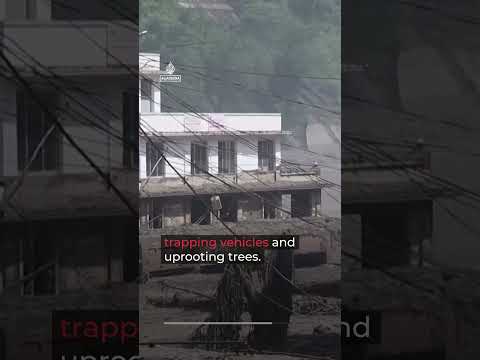
- The collapse triggered a huge release of water, mud, rock and ice that thundered down valleys and swept down the Lhende Khola, Bhote Koshi and Trishuli rivers.
- Rescue operations were hampered by damaged infrastructure and high river levels; helicopters could not land in affected areas of Syapru Besi and Timure in the Rasuwa region.
- Officials reported 826 people missing in Nepal, including 579 tourists from two dozen countries, and 558 missing in Tibet's Gyirong county.
- The massive glacial collapse has killed at least 165 people, with more than 1,000 missing.
- Survivors described the terrifying force of the flood: Keshav Prasad Baral, 68, said his wife was swept away by mud, and Bibek Kumal was saved by clinging to a mango tree.
- A hydrologist warned that mud and water moving at high speeds forms a lethal combination like liquid concrete that cannot be outrun.
A glacial collapse in the Himalayas has led to a devastating toll, with at least 165 confirmed dead and over 1,000 missing across Nepal and Tibet. The incident occurred on Wednesday morning when a massive glacier sheared off in Nepal's Langtang national park, approximately 60km from Kathmandu.18
The United States Geological Survey reported that the tremor caused by the collapse registered a magnitude of 5.2. This event unleashed a torrent of mud, rock, and ice, which swept down the Lhende Khola, Bhote Koshi, and Trishuli rivers, creating a lethal combination described by hydrologist Hatim Sharif as “like liquid concrete.”312
Survivors recounted harrowing experiences. Keshav Prasad Baral, a 68-year-old survivor, described the moment the mudslide hit his home, stating, “I tried to grab my wife’s hand... but she was swept away.” Another survivor, Bibek Kumal, recalled the chaos, saying, “A wall of water came thundering down as if it was an earthquake.”91011
Rescue operations have faced significant challenges due to infrastructure damage and elevated river levels, with helicopters unable to land in the affected areas of Syapru Besi and Timure, which house around 50,000 residents.45
“The collapse at 8.37am on Wednesday sent a torrent down the Lhende Khola, Bhote Koshi and Trishuli rivers, with the US Geological Survey registering a magnitude 5.2 tremor. Rescue efforts were hampered as helicopters could not land in Syapru Besi and Timure in the Rasuwa region.”



 The Guardian



