- Seven of France's leading candidates locked horns on Thursday in their first debate, eight months ahead of an increasingly tight and crowded election to succeed President Emmanuel Macron.
- The debate, held at Roland Garros, focused on the economy, pensions, and public debt, with candidates differing wildly on solutions.
- Mass protests against President Macron's pension reform led the National Assembly to vote to suspend the reform until January 2028.
- MEDEF leader Patrick Martin called for shattering the 'straitjacket' suffocating France, criticizing government control.
- A new Ifop-Fiducial poll projected that hard-left Mélenchon could make the second round against Le Pen, who is currently leading in first-round polls.
- The debate comes less than eight months ahead of the 2027 election to choose France's new leader, with centrist incumbent Macron having served the maximum two consecutive terms.
- Candidates from across the political spectrum, including Le Pen and Mélenchon, expressed sharp disagreements on economic policies and pension reforms.
In a heated debate on Thursday, seven candidates for the French presidency clashed over pressing issues like the economy, pensions, and public debt, just eight months before the election.
Le Pen, seeking the presidency for the fourth time, proposed a €125 billion cost-cutting plan, emphasizing the need for drastic measures to address France's financial woes. She stated, "We must reduce France's contribution to the EU by €5 billion" and criticized the EU's regulatory norms, asserting, "We want to be the top student in the class."7
Mélenchon, representing the hard-left, countered by advocating for wage increases to prevent recession, declaring, "That is your responsibility" to business leaders. He also criticized Macron's tax policies, claiming they equated to the entire deficit.
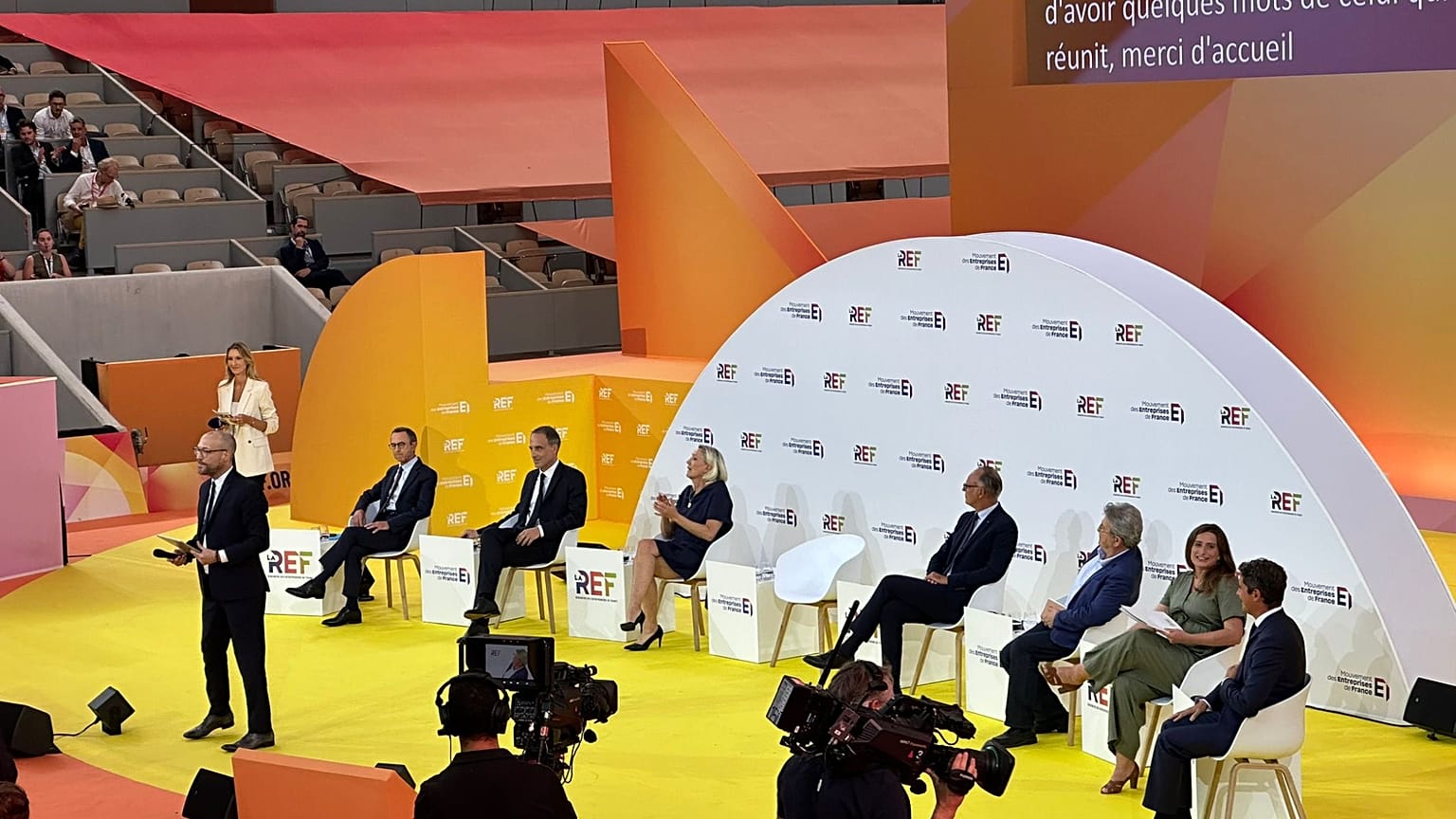
The debate, hosted by MEDEF, highlighted the ideological rifts among candidates. Philippe, a centrist, warned against Mélenchon's proposals, calling them "dangerous" and suggesting that France must work longer to address its debt.
Glucksmann, a newcomer from the centre-left, challenged Le Pen's anti-EU stance, stating, "The main challenge for the next president is to bang his fist on the table in Brussels."
As the election approaches, the candidates' differing visions for France's future are becoming increasingly clear, with polls indicating a potential runoff between Le Pen and Mélenchon, should the moderate vote split.
“Le Pen announced a €125 billion cost-cutting plan, while Mélenchon urged wage hikes to avert recession. Centrist hopefuls Philippe and Attal, both former premiers, accused Mélenchon of dangerous debt policies, and Glucksmann mocked them for lecturing on debt.”
 Euronews.com