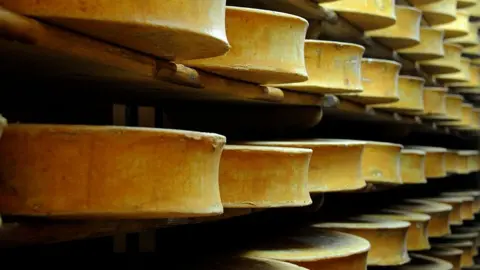
- France has temporarily relaxed rules for making some of its best-known cheeses after the summer drought drastically reduced the amount of grass available to feed milk herds.
- Government decrees to grant dispensations to manufacturers of Abondance, Beaufort, and Comté cheeses appeared on Wednesday.
- Producers of Comté, Beaufort, and Abondance will be temporarily allowed to feed cows more imported fodder and grain, a shift from the usual strict requirements on where and how animals graze.
- The National Institute of Origin and Quality (INAO) says more protected cheeses, including Reblochon, Cantal, and Roquefort are likely to get similar relief after what it calls a 'historic' drought that has dried out grasslands in 95% of mainland France.
- Farmers have reported sharply lower milk yields and, in some cases, halted production.
- Agriculture minister Annie Genevard plans crisis talks next week before announcing emergency measures.
- Drought and repeated heatwaves have dried out grazing pastures across France, reducing grass availability.
- Growth of permanent grasslands was 33% below the 30-year average as of Aug. 10.
France has relaxed strict regulations on iconic cheeses like Comté, Beaufort, and Abondance due to a historic drought that has dried out 95% of mainland France's grasslands, leading to lower milk yields and halted production for many farmers.
The National Institute of Origin and Quality (INAO) announced that producers can now supplement their cows' diets with imported fodder and grain, a significant shift from traditional grazing practices. Growth of permanent grasslands was reported to be 33% below the 30-year average as of August 10, exacerbating the crisis.48
Farmers like Hubert Genty, who produces Neufchâtel cheese, have reported drastic reductions in milk production, stating, “There really is no grass left to eat, this grass is totally scorched and has no value.” His wife, Angélique, noted a drop in cheese production from 600-700 to 400-450 cheeses a day due to low milk yields.
The government has also indicated that other cheeses, including Reblochon and Cantal, may receive similar waivers. About 70% of salers cheese producers paused production over the summer, highlighting the widespread impact of the drought. Agriculture Minister Annie Genevard is expected to hold crisis talks next week to discuss further emergency measures for farmers.6
The derogations are permitted under French and European law during periods of exceptional weather, with similar measures implemented after the dry summer of 2022.
“The INAO has approved temporary changes for other protected products, including Calvados, cider, and Reblochon, as grassland growth fell 33% below average. Farmers like Hubert Genty report scorched grass and reduced milk output, with some producers halting production.”
 BBC
BBC The Guardian