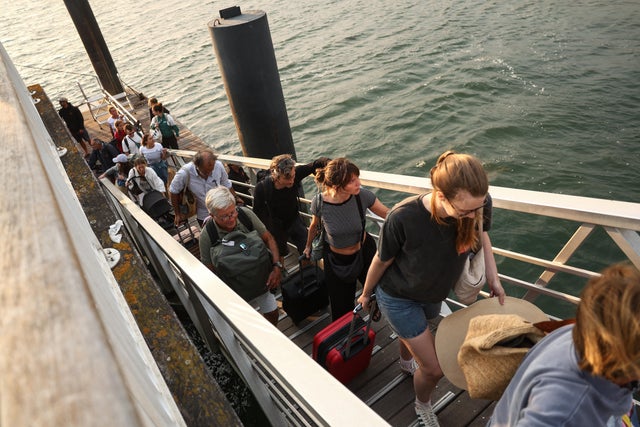
- French authorities ordered on Friday the total evacuation of the Cap Ferret peninsula, a tourism hotspot on the Atlantic Coast, sending boats to remove people from an area threatened by a major wildfire.
- The fire has already devastated 8,700 hectares and is still raging.
- Two firefighters died on Tuesday while tackling the blaze near Bordeaux's airport.
- On Thursday, a new fire started near Biscarosse, just 40 kilometres south of Cap Ferret, burning 2,500 hectares.
- French President Macron warned the situation is 'very intense' and requested EU assistance.
- Spain declared a national emergency as wildfires near Madrid forced evacuation of over 10,000 people.
- The EU activated its civil protection mechanism, deploying water-bomber aircraft to France and Spain.
- Across Europe, three heat waves in succession this season have intensified drought, strained water supplies and left vegetation tinder-dry, helping wildfires scorch more land already this year than the annual average of the past two decades.
- More than 40,000 people have been or are currently being evacuated due to this fire.
- Evacuees have been told to leave the area before 10am, using hundreds of mobilised boats or the only road linking the area with the mainland.
- In Spain, two separate blazes were raging out of control within 62 miles of Madrid, with some residents of the Spanish capital waking up to the smell of smoke.
- Spain's prime minister Pedro Sánchez responded to the wildfires ravaging parts of the country and neighbouring France, amid heightened warnings about their further spread.
French authorities have ordered the total evacuation of the Cap Ferret peninsula as wildfires continue to rage across southwestern France, devastating over 8,700 hectares and forcing 40,000 people to flee. The evacuation order highlights the severity of the situation, with many tourists affected during the peak summer season.
The fire, which began on Tuesday in Saumos, has prompted the mobilization of hundreds of boats to evacuate residents and tourists from the area. Sophie Brocas, the prefect for the Nouvelle Aquitaine region, stated that evacuees could leave from piers in four villages between 7 a.m. and 10 a.m. local time.
In response to the escalating crisis, French President Emmanuel Macron has requested assistance from the European Union, activating the bloc's civil protection mechanism. This will bring in reinforcements, including two Croatian Canadair aircraft and two Portuguese Air Tractor planes, to help combat the fires.

The situation is dire, with another wildfire near Biscarosse also out of control, having already devastated 2,500 hectares and leading to the evacuation of over 23,000 people. The cumulative impact of these wildfires has resulted in more than 10,000 hectares affected across the region, with authorities warning that the fires are not yet under control.
As the fires rage, the region faces a critical challenge, with Macron emphasizing that the crisis remains “very intense.” The situation is compounded by extreme weather conditions, including heat waves that have exacerbated drought and increased the risk of wildfires across Europe.
“Two firefighters died on Tuesday while tackling the blaze near Bordeaux's airport; officials reported no new injuries as of Friday. The EU has activated its civil protection mechanism, deploying three water-bomber aircraft from Croatia, Portugal, and the Czech Republic to assist France, while Spain also requested four firefighting planes.”


 The Guardian
 BBC
BBC CBS News



