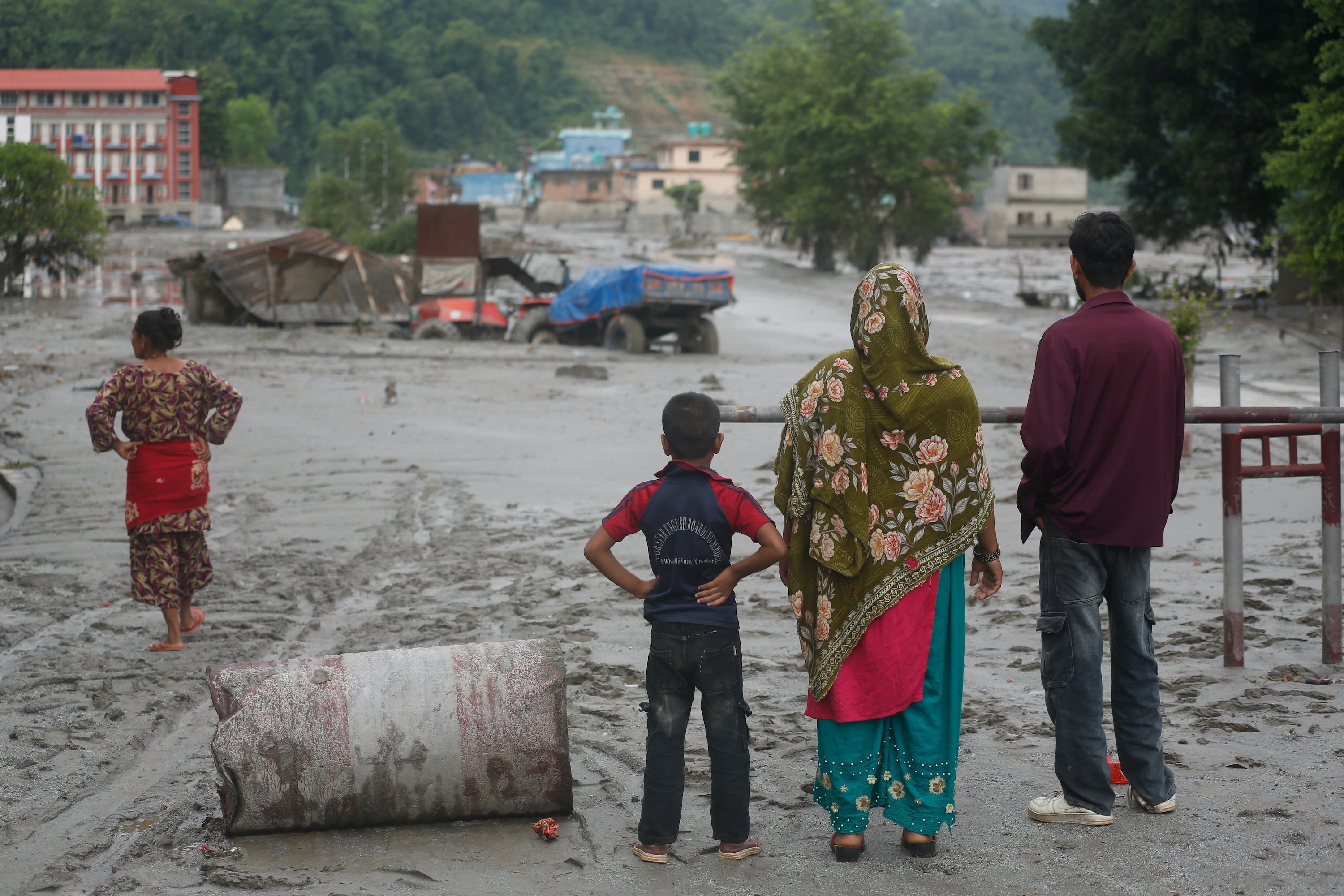
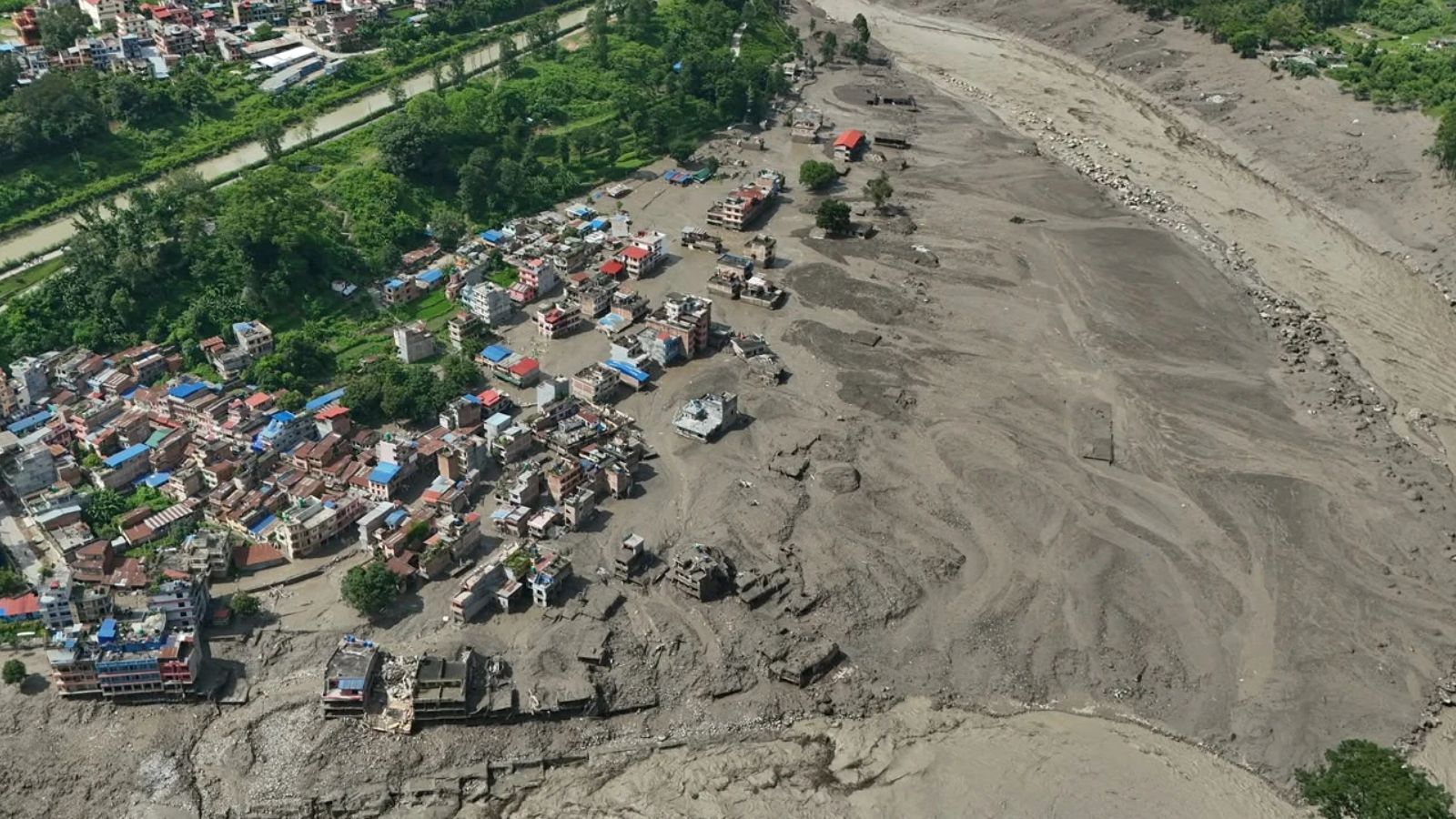
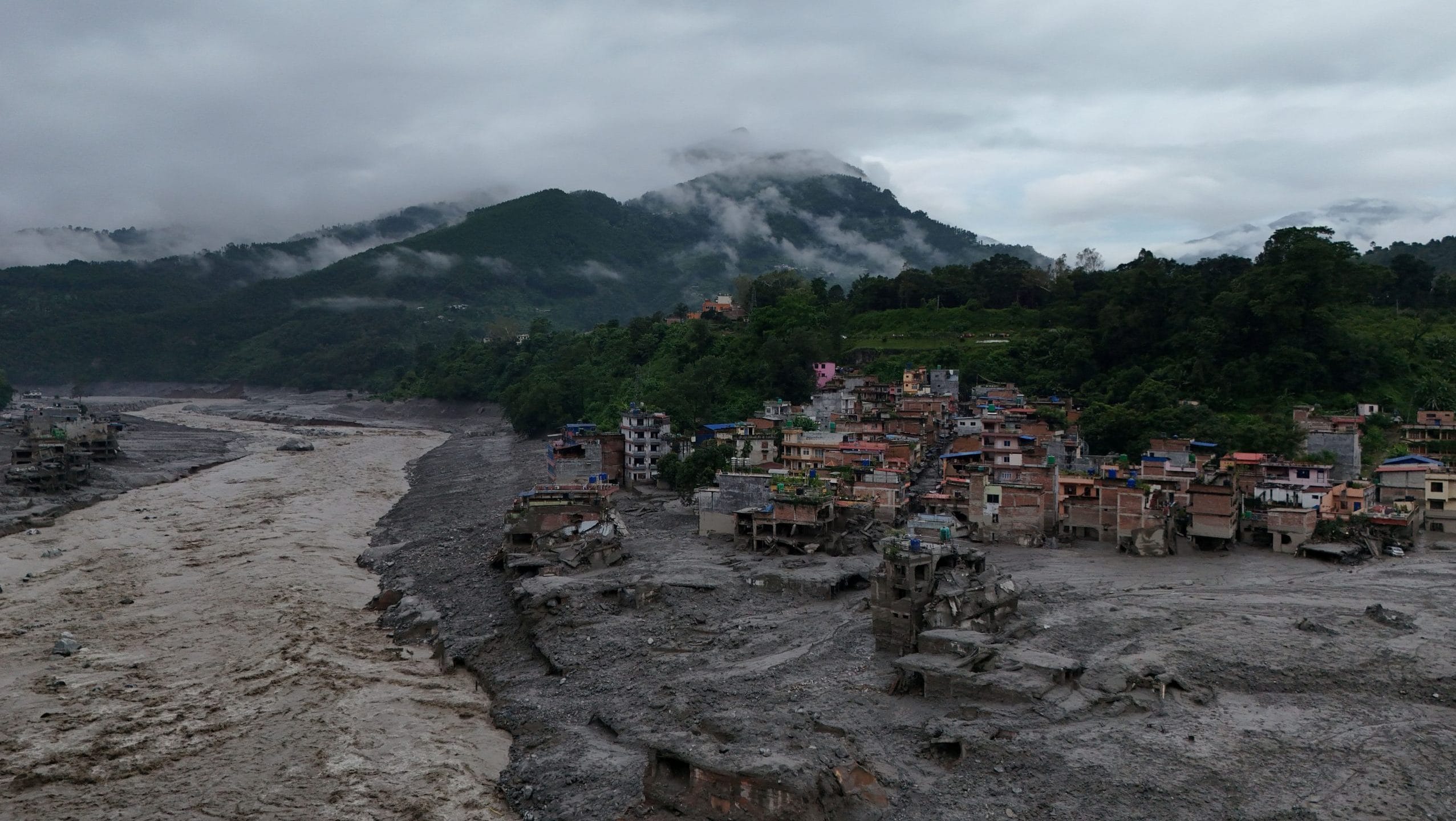
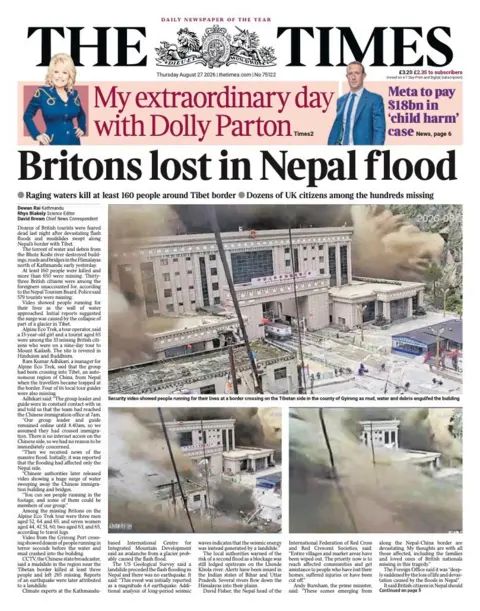
- A devastating flash flood ripped through border communities of Nepal and Tibet, raising concerns about the impact of the climate crisis on mountain regions.
- Satellite imagery suggests a glacier collapse high in the Himalayas was the primary cause of the deadly torrent along the Bhotekoshi River.
- Initially, a magnitude 4.4 earthquake was blamed for the collapse, but it is now thought to have been caused by a huge wall of ice crashing onto Langtang Lirung, registering a magnitude of 5.2.
- The ice-rock avalanche pushed debris into the Lhende Khola River, causing water levels downstream to rise by 7-9 metres within 30 minutes.
- Scientists are examining the mechanics of the disaster, noting that many glaciers and permafrost are weakened by global heating.
- Two days before the collapse, ground temperature hit its highest point in two years, according to Dr Hamish Pritchard.
- The Intergovernmental Panel on Climate Change had warned that every increment of warming will multiply future hazards from cryosphere regions.
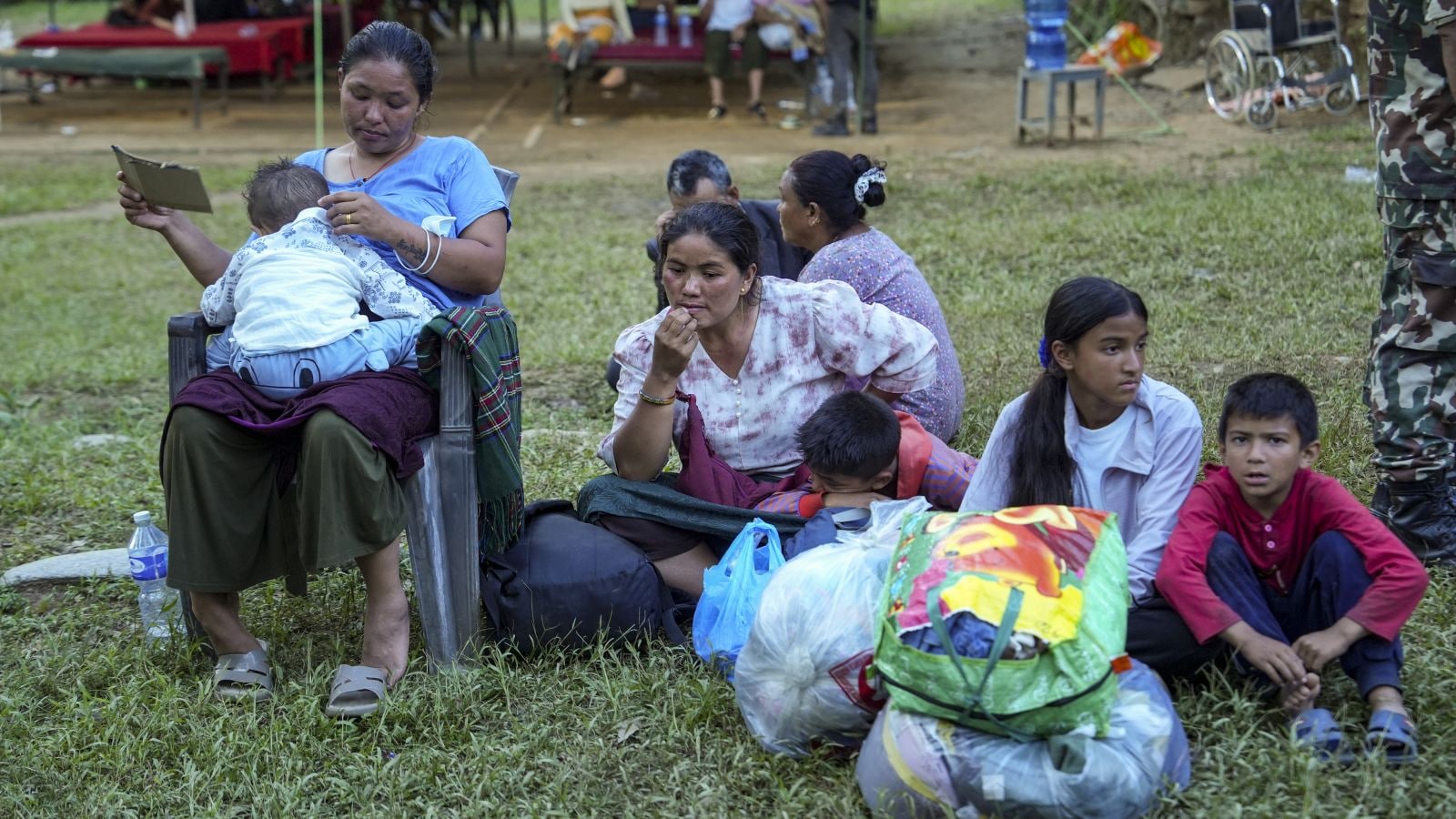
Experts warn that the recent flash flood in Nepal, which has resulted in at least 360 deaths and 1,400 missing, underscores the destabilizing effects of the climate crisis on mountain regions.
Satellite imagery indicates that a glacier collapse was the primary cause of the disaster, which unleashed a torrent of mud, water, and ice along the Bhotekoshi River.2
Initially, a magnitude 4.4 earthquake was blamed for the collapse, but it is now believed that a massive wall of ice crashing down on the north slope of Langtang Lirung, a 7,000-metre (23,000ft) mountain, was responsible, registering an impact of 5.2.3
The ice-rock avalanche pushed debris into the Lhende Khola River, a tributary of the Bhotekoshi River, causing water levels downstream to rise by 7 to 9 metres within 30 minutes, according to the International Centre for Integrated Mountain Development.45
Scientists are investigating the mechanics of this disaster, noting that many glaciers and permafrost worldwide are being weakened by global heating from fossil fuel combustion.6
The detachment of the glacier wall occurred amid unusual heat, with ground temperatures hitting their highest point in two years just two days prior, as reported by Dr. Hamish Pritchard of the British Antarctic Survey.78
The Intergovernmental Panel on Climate Change has warned that as temperatures rise, previously stable ice-bound landmasses will become increasingly unstable, leading to more disasters like this.
“Satellite imagery suggests a glacier collapse high in the Himalayas triggered the deadly torrent along the Bhotekoshi River, with water levels downstream rising 7-9 metres in 30 minutes. The Intergovernmental Panel on Climate Change had warned that every increment of warming will multiply future hazards from cryosphere regions.”




 The Guardian