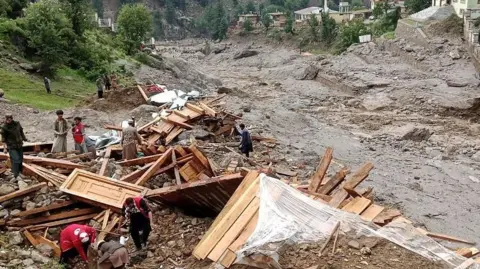
- Flash floods caused by torrential rain in eastern Afghanistan on Monday have killed at least 20 people and left more than 100 missing.
- Parun, the capital of Nuristan province, suffered the brunt of the damage, with the city's mayor among those missing.
- More than 80 residents have also been wounded.
- Officials from the provincial disaster management department have launched search-and-rescue operations, including efforts to recover bodies and locate the missing.
- The Afghanistan National Disaster Management Authority (ANDMA) reported that at least 20 bodies have been recovered.
- The recent flood completely destroyed the municipality of Parun.
- Residents had been searching through the debris without proper equipment.
- The Taliban's meteorology department has warned of heavy rain and flooding to continue in 10 of the country's 34 provinces through Wednesday.
- Deforestation and illegal logging in Nuristan and other provinces have worsened flash floods by reducing the land's ability to absorb heavy rainfall.
- Afghanistan is among the nations most vulnerable to the extreme impact of climate change.
Flash floods in eastern Afghanistan have resulted in at least 20 fatalities and left over 100 individuals missing, particularly affecting the city of Parun in Nuristan province. The floods, triggered by torrential rains, have also injured more than 80 residents.1237
According to the Afghanistan National Disaster Management Authority (ANDMA), the floods struck on Monday, causing extensive damage to homes and businesses. The mayor of Parun is among those reported missing, and local officials have initiated search-and-rescue operations to locate the missing and recover bodies.45
Local NGO head Ashiqullah Safi stated that the flood had “completely destroyed the municipality.” Residents are currently sifting through debris without proper equipment, as large boulders litter the area.6

The Taliban's meteorology department has warned of continued heavy rain and flooding across 10 provinces, exacerbating the situation. Afghanistan's vulnerability to climate change, coupled with deforestation and illegal logging, has worsened the impact of such natural disasters. The head of the environmental protection agency noted that environmental issues have “contributed to a humanitarian crisis.”89
This year's monsoon season has already caused chaos across South Asia, with significant casualties reported in neighboring countries like India and Nepal, highlighting the broader regional impact of extreme weather events.
“More than 80 residents were wounded, and Taliban officials warned of 'severe financial and human losses' as search teams without proper equipment comb through debris. The floods come amid heightened vulnerability to climate change, with deforestation in Nuristan worsening the impact.”
 BBC
BBC



