- Formula 1 faced a farcical start to the Bahrain Grand Prix in Malaysia on Sunday when an FIA software glitch left cars stranded around the Sepang circuit on a soaking wet formation lap before the start.
- The issue involved a wet-weather mode in the common software used by all teams and power unit suppliers, which trims electrical power from 350kW to 250kW in certain sections of the track.
- It was only when cars were running slowly at low rpm on the wet formation lap that issues began to arise, with front row men Max Verstappen and Lewis Hamilton the first to report a problem.
- Drivers reported throttle pedal failures and lack of power, with some stopping on track, leading to the first race start attempt being aborted.
- After the first attempt to start the race was aborted, all the cars managed to return to the pitlane under their own power, amid some confusion over what was happening.
- The FIA issued a software update to teams, overriding power reductions in affected sectors, which took about 20 minutes to implement.
- Race restarts after about 20 minutes; FIA's Tombazis explains the bug and apologizes for the delay.
- The bug was triggered when cars ran at ultra-low speeds on the formation lap, causing a sort of sleep mode for the power units.
- Tombazis admitted that the FIA did not manage to test the software as extensively as they would have liked due to very little wet running this year.
- The software was developed collaboratively by the FIA and the teams over several years, and the bug was an unforeseen error.
- Tombazis acknowledged that the FIA will have to do better in the future to avoid similar issues.
A software bug in the FIA's system caused a chaotic start to the Bahrain Grand Prix in Malaysia, with cars stalling on a wet formation lap. The glitch, triggered by low speeds, put power units into a sleep mode, affecting drivers like Max Verstappen and Lewis Hamilton.
The issue arose when cars operated in wet-weather mode for the first time, reducing electrical power from 350kW to 250kW. As cars slowed to ultra-low speeds, a bug prevented power from being redeployed, leading to a standstill. Hamilton described the experience, stating, “I had to stop on track and stop the car and engine and restart it.”29
FIA single-seater director Nikolas Tombazis acknowledged the problem, explaining, “We didn't manage to test the software as extensively as we would have liked... a combination of circumstances caused this bug to kick in.” The rushed fix took about 20 minutes, with Tombazis admitting, “It was a bit of a rush job.”
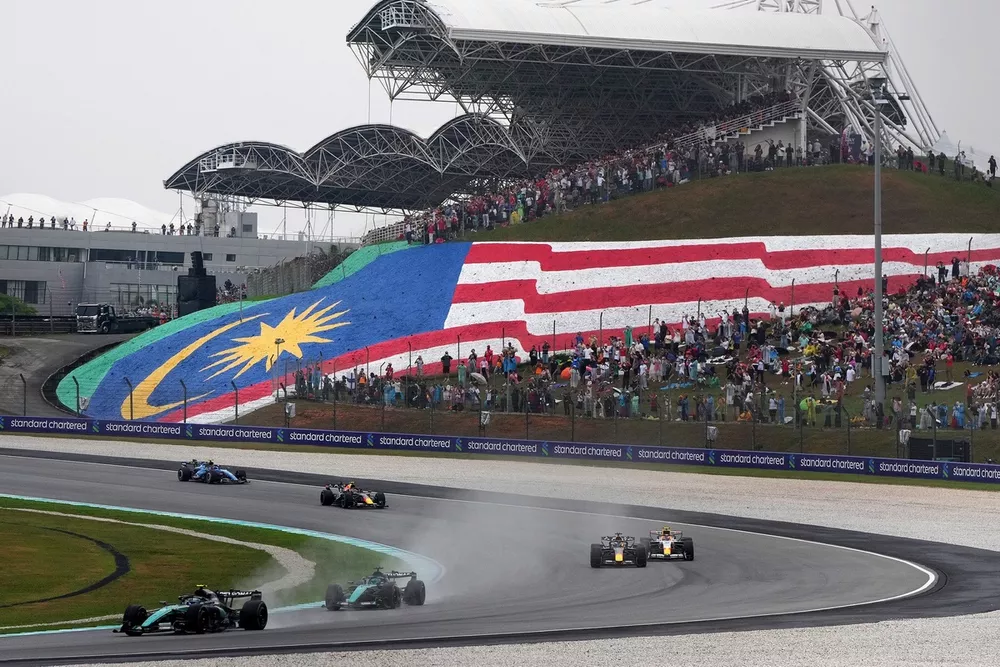
The FIA's software, developed collaboratively with teams, had been tested but not under the specific conditions that led to the bug. Tombazis stated, “What caught us out was the fact that cars went in that very, very low speed, which was not normally contemplated.” He assured that the FIA would strive to prevent such issues in the future, saying, “We will do our best to avoid it, of course.”
The incident raised concerns about the reliability of the FIA's software, with drivers expressing shock at the throttle control issues experienced during the formation lap.
“The bug was triggered when cars slowed to very low speeds on the formation lap, causing a loop that prevented power redeployment. Tombazis admitted the software wasn't tested in those conditions, and the update overrode power reductions in affected sectors, taking about 20 minutes to install.”