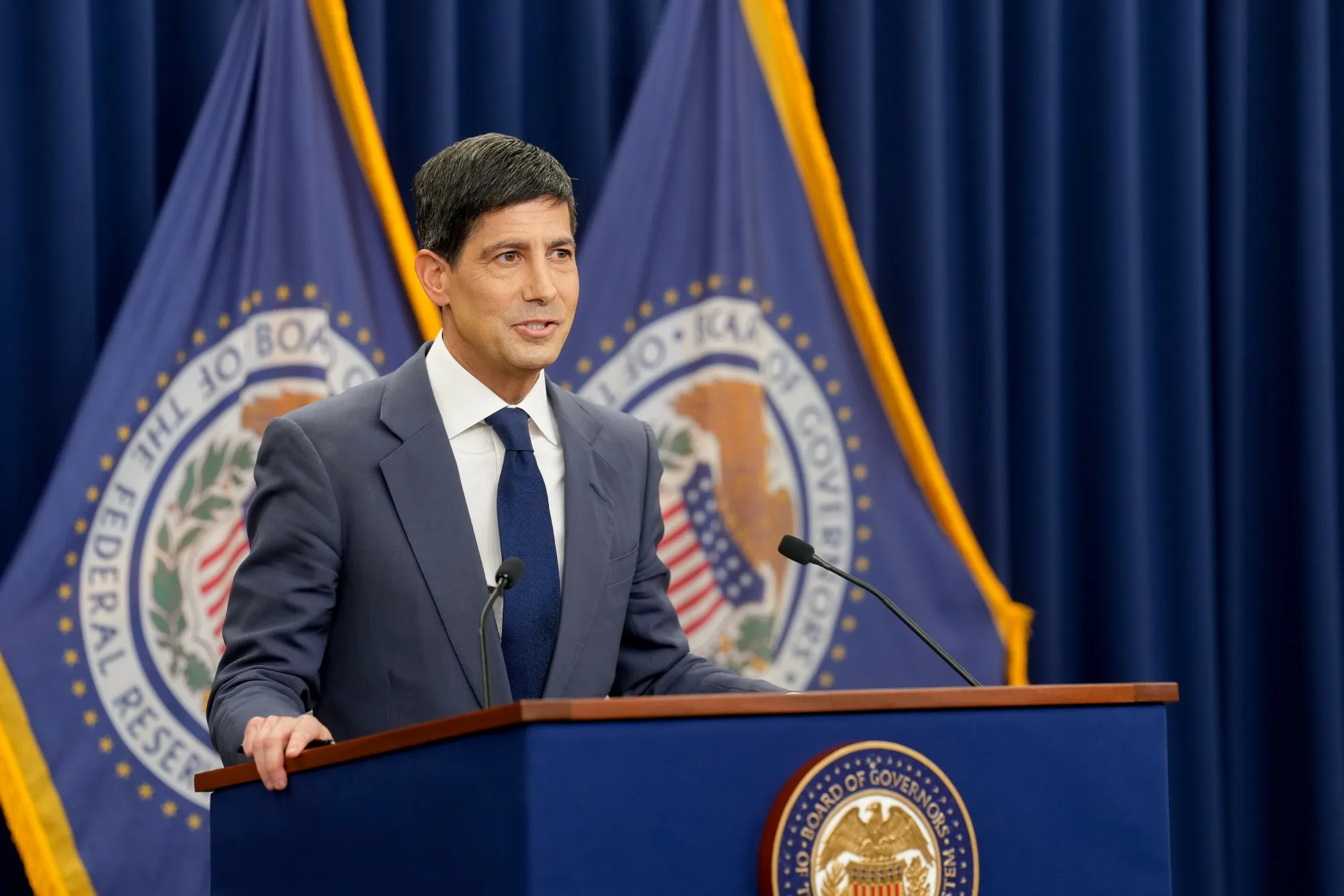
- Kevin Warsh took over as chair of the Federal Reserve in May.
- During a news conference on June 17, Warsh spoke about the Fed's approach to inflation management.
- Warsh testified before the Senate Banking Committee on July 15, 2026, delivering the semiannual monetary policy report.
- Warsh is set to helm the rate-setting meeting on July 28-29.
- Inflation does not appear to be headed sustainably back to 2%, according to Lorie Logan, president of the Federal Reserve Bank of Dallas.
- Warsh's communication style is more restrained compared to his predecessors.
- The yield on the 10-year Treasury note recently topped 4.7%, the highest in about 18 months, influenced by rising borrowing costs.
- James Bullard noted that while Warsh's rhetoric has been effective, markets will demand action.
- Christopher Waller stated that merely staring at inflation is not a viable option.
- For the first time, business leaders are calling for higher rates, according to Beth Hammack, president of the Cleveland Fed.
Federal Reserve Chair Kevin Warsh is facing mounting pressure to combat inflation as borrowing costs rise, with the yield on the 10-year Treasury note recently exceeding 4.7%, the highest level in 18 months. Since taking office in May, Warsh has adopted a more restrained communication style, focusing on the Fed's commitment to returning inflation to 2% without detailing specific measures.13567
Lorie Logan, president of the Federal Reserve Bank of Dallas, noted, “Unfortunately, inflation does not appear to be headed sustainably back all the way to 2%,” highlighting the challenges ahead. Meanwhile, James Bullard, a former president of the St. Louis Fed, remarked that while Warsh’s rhetoric has been effective in establishing credibility, “markets are going to ask, ‘Well, what have you done for me lately?’” This sentiment underscores the urgency for decisive action.8
Christopher Waller, a key member of the Fed’s governing board, emphasized in a July 13 speech that “sternly staring at inflation until it melts before our withering gaze is not an option.” Additionally, Beth Hammack, president of the Cleveland Fed, reported that business leaders are now calling for higher rates, a notable shift from their usual preference for cheaper borrowing. As Warsh prepares for his second rate-setting meeting on July 28-29, the pressure to act intensifies.4910
“Warsh's commitment to reducing inflation to 2% comes amid rising borrowing costs, with the yield on the 10-year Treasury note recently topping 4.7%, the highest in 18 months. Additionally, business leaders are now calling for higher rates, a notable shift from their usual support for cheaper borrowing.”
 AP News



