
- Marine One lifted off from the Ellipse near the White House at about 2:33pm local time on Tuesday, en route to Joint Base Andrews ahead of a presidential trip to Los Angeles.
- A video showing Marine One flying within less than a mile of a passenger aircraft over Washington went viral on social media.
- The FAA said its preliminary safety review found a momentary loss of separation between Marine One and a passenger jet, after which the aircraft moved apart.
- According to Reuters, air traffic controllers had not paused commercial departures at Reagan National as required under the policy adopted after a crash last year.
- The near-miss revives scrutiny of air traffic protocols at Reagan National following the 2025 collision, which led to permanent restrictions on mixed helicopter and commercial traffic and a March ban on visual-only separation for helicopters near major US airports.
- A source told Reuters that Envoy Air flight 3742, a regional jet operated for American Airlines bound for Pensacola, Florida, was the aircraft involved.
- Marine One departed from the White House while commercial flights were still operating at the airport, despite safety protocols requiring them to be paused, according to The Wall Street Journal.
- Aerial footage shows a commercial plane passing overhead just moments before Marine One flew through the same area.
- The incident may have involved a loss of standard separation, an air traffic control rule requiring aircraft to remain at least 1.5 miles apart horizontally and 500 feet apart vertically.
- The New York Times reported that the incident may have occurred after air traffic controllers failed to clear nearby aircraft in time, and audio recordings show three attempts to inform controllers of the departure went unheard.
The FAA's preliminary review of an incident involving Trump's Marine One revealed a momentary loss of separation from a commercial jet, raising alarms about air traffic protocols at Reagan National Airport. The incident occurred on Tuesday as Marine One departed for Joint Base Andrews.123456
According to the FAA, the air traffic controller maintained contact with both pilots during the event, ensuring that Trump was never in danger. A White House spokesman emphasized, “Marine One flights are piloted by some of the best aviators in the world, and at no point was the president in harm's way.”
The incident has drawn attention due to a previous crash in January 2025, which killed 67 people and led to stricter regulations on helicopter and commercial traffic at the airport. Following the crash, a ban on visual-only separation for helicopters near major U.S. airports was implemented.
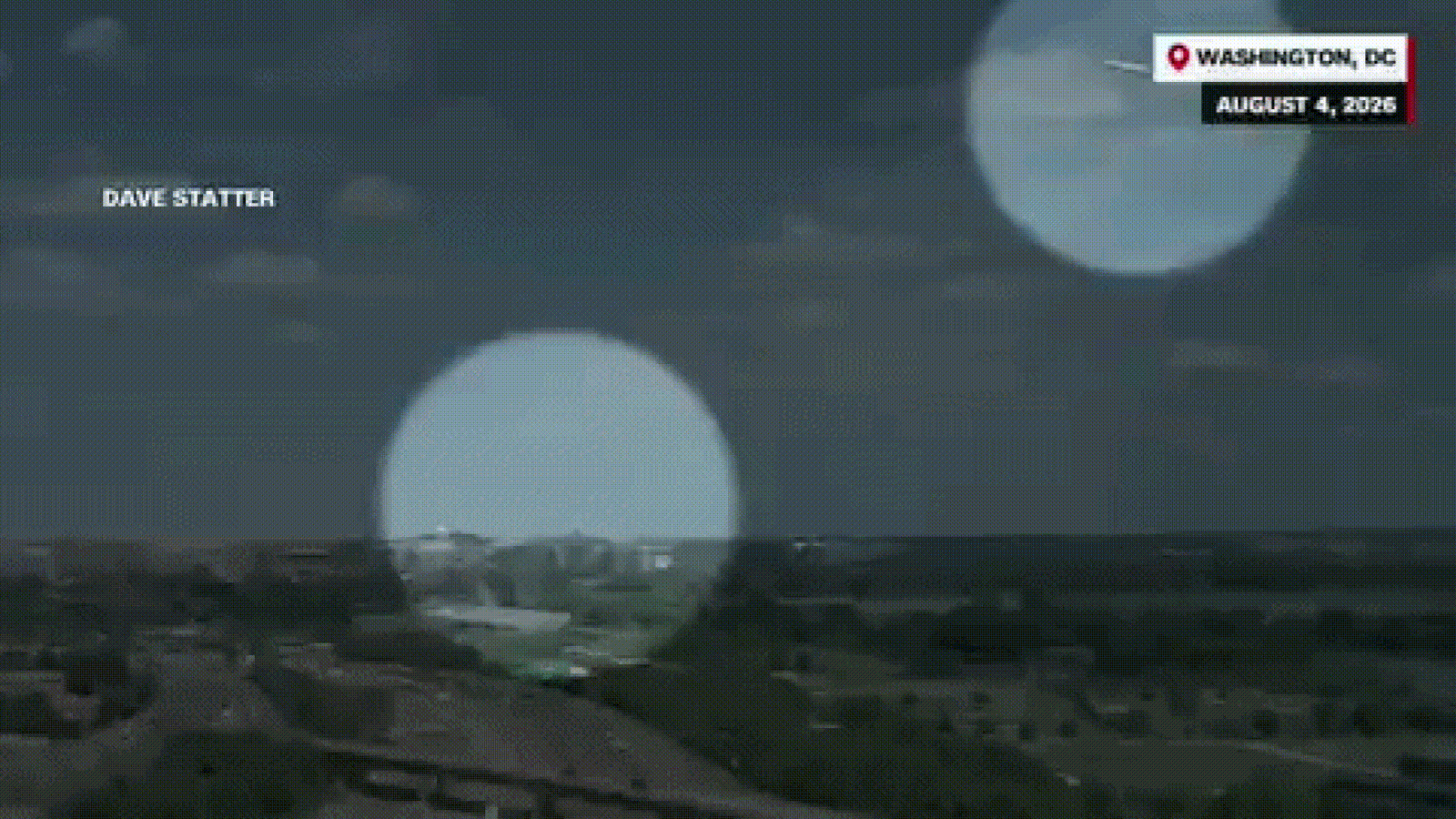
Reports indicate that air traffic controllers did not pause commercial departures as required, which may have contributed to the near-miss. “The President was never in danger. We are continuing to review the incident and will implement any appropriate corrective actions based on our findings,” the FAA stated.
The National Transportation Safety Board (NTSB) is also investigating the incident, which has sparked renewed scrutiny of air traffic safety protocols at Reagan National Airport.
Before takeoff, Marine One's crew attempted to notify controllers of their departure, but the transmissions went unheard, leading to the loss of separation.
“The near-miss occurred as Marine One departed from the White House while commercial flights were still operating at Reagan National, despite protocols requiring a pause. Air traffic controllers reportedly failed to clear nearby aircraft in time, with three attempts to inform them going unheard.”




