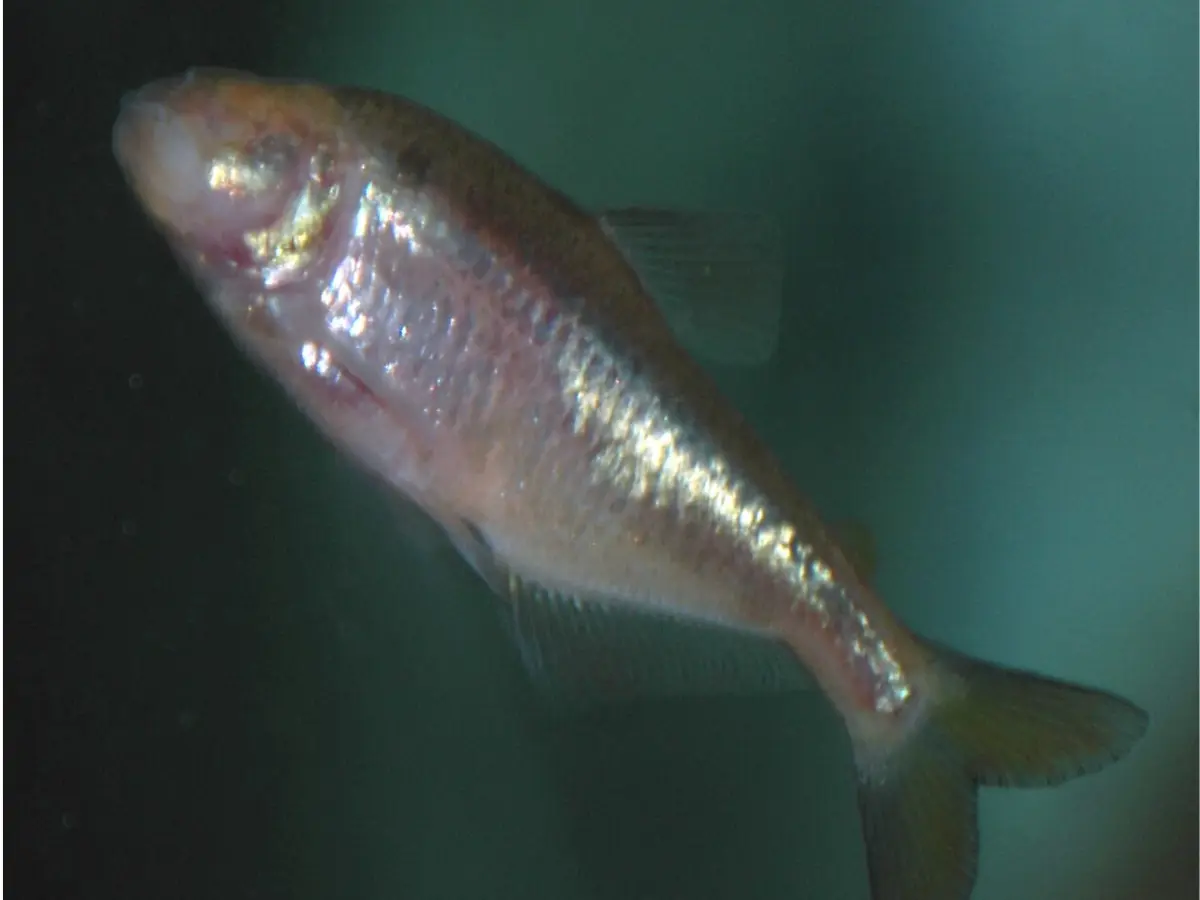
- Demogorgonichthys arcanus, or the 'demon cavefish', was discovered in Bobcat Cave beneath Alabama's Redstone Arsenal, a NASA rocket hub, after being monitored for over 30 years without detection.
- Only a handful of the ghostly fish were spotted between 2019 and 2025 during surveys published in Scientific Reports.
- The fish split from its closest ancestors over 11.6 million years ago and is not related to the Southern Cavefish, despite living in the same pools.
- Researchers warn the fish is critically endangered and its habitat is contaminated with toxic remnants of chemical weapons and explosives.
- Bobcat Cave has been monitored quarterly for over 30 years, yet the demon cavefish was never seen before.
- The Southern Cavefish (Typhlichthys subterraneus) also has no eyes, but the two species are not related.
- The contamination in Bobcat Cave stems from an old industrial zone on the base where the military historically disposed of weapons materials.
- The Redstone Arsenal was first opened in 1941 and is known as the birthplace of NASA.
Scientists have discovered a new species of fish, Demogorgonichthys arcanus, known as the 'demon cavefish,' in Alabama's Bobcat Cave, located beneath NASA's Redstone Arsenal.1211
This eyeless, colorless fish, measuring just two inches long, has eluded detection for over 30 years despite regular monitoring.
Matthew Niemiller, lead author of the study, expressed surprise at the find, stating, 'This is one of the last places we'd have bet on it.'

The cavefish's name references the mythological demogorgon and the term 'arcanus,' meaning secret.
Researchers noted that the demon cavefish shares its habitat with the Southern Cavefish (Typhlichthys subterraneus), yet they are not closely related.9
Each species independently adapted to the cave environment, losing their eyes and pigmentation over millions of years, a phenomenon known as convergent evolution.
The demon cavefish lacks part of the rhodopsin gene, which is related to light sensitivity, allowing it to thrive in deeper waters.

Jonathan Armbruster, a co-author of the study, suggested that the fish may have been living in the aquifer all along.
However, the species is critically endangered, as it exists only in this single cave, which is threatened by environmental changes and contamination from military activities.67
Niemiller emphasized the importance of protecting this unique habitat, stating, 'The central challenge is that the threats come from outside the cave.'
“The fish, which split from its closest ancestors over 11.6 million years ago, shares its pools with the unrelated Southern Cavefish, a case of convergent evolution. Its habitat is contaminated with trace metals like cadmium and lead, and experts warn it is critically endangered.”
 Daily Star
 the-sun.com