- The unprecedented pact, announced by U.S. President Donald Trump and confirmed by Venezuela's interim President Delcy Rodriguez, will put 65 billion barrels of recoverable oil under Washington's control, surpassing total U.S. proved oil reserves of 46 billion barrels.
- The agreement did not pass through a competitive process and its negotiation remained secret until last week, amid a sweeping reform of Venezuela's primary hydrocarbons law.
- Experts and lawyers question the deal's legality and execution, calling for contract transparency.
- The U.S. has not disclosed which companies will operate the oilfields, despite Trump's mention of "a partnership with private business."
- Experts doubt the deal's legality, especially since the U.S., not Venezuela, is set to select the model and companies to operate the fields.
- Critics argue the deal weakens Venezuela's institutional framework and that announced taxes are incredibly low.
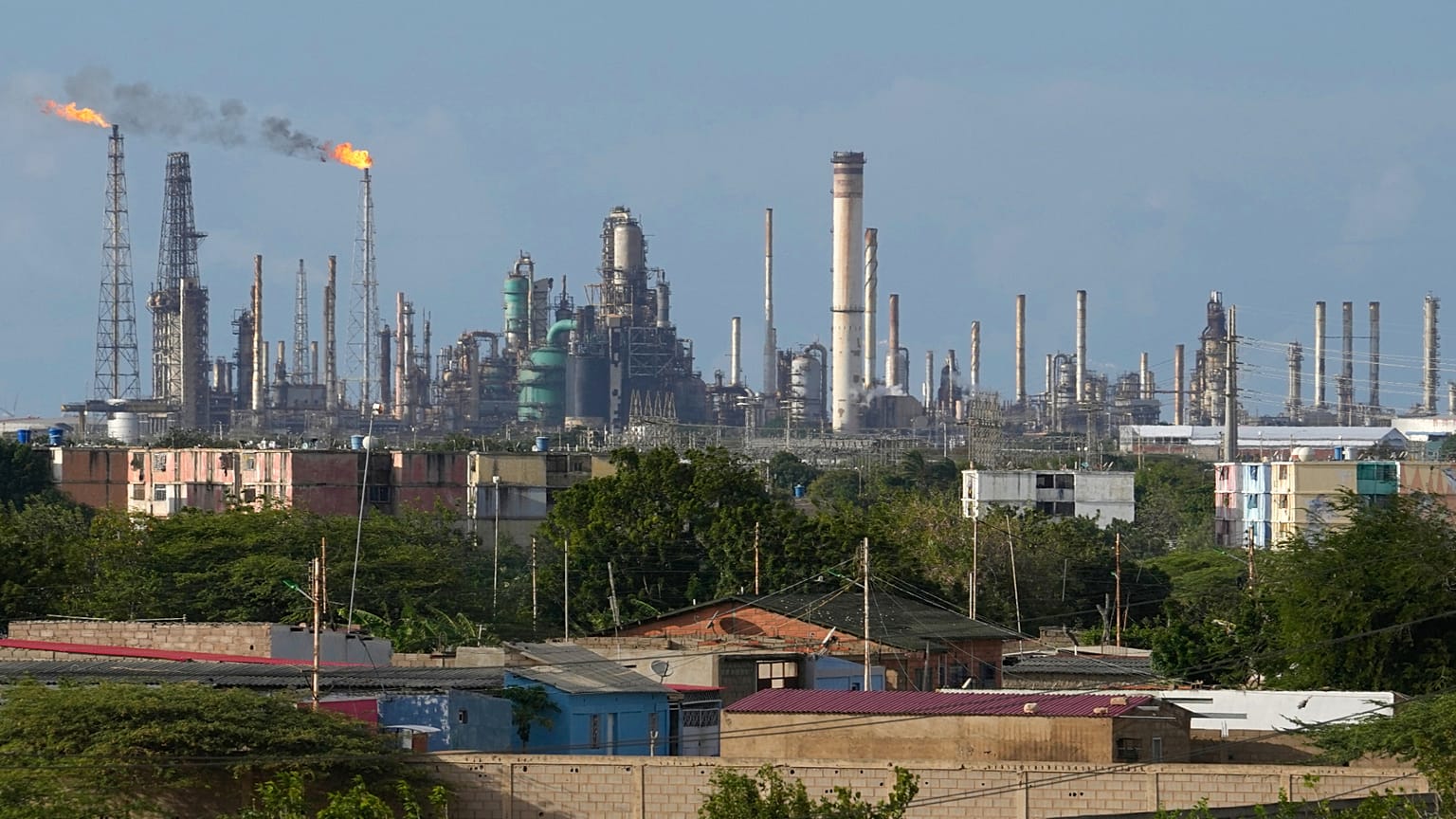
- The 65 billion barrels will come from eight large blocks in the Orinoco Belt and areas across Lake Maracaibo, with proved reserves of 63.7 billion barrels calculated using a 20% recovery factor.
Experts and lawyers are raising concerns over the legality and transparency of a U.S.-Venezuela oil deal that grants Washington access to 65 billion barrels of Venezuela's crude reserves, a volume exceeding total U.S. proved reserves of 46 billion barrels.137
The agreement, announced by U.S. President Donald Trump and confirmed by Venezuela's interim President Delcy Rodriguez, has been criticized for its lack of competitive bidding and transparency. Juan Carlos Apitz, head of Central University of Venezuela's law faculty, noted, “Despite being formally recognized by the U.S., the agreement can be brought to court in the future.”
Concerns have also been raised about the U.S. selecting the operational model and companies, which could undermine Venezuela's already fragile institutional framework. Luisa Palacios from Columbia University stated, “If the goal was to try to reduce the risk of investing in Venezuela, the United States might be doing the exact opposite with this transaction.”
The deal is expected to increase Venezuelan oil shipments to the U.S., which currently accounts for about 60% of total exports. Trump emphasized that the new Venezuelan barrels would aid the U.S. Strategic Petroleum Reserve, which recently fell to 290 million barrels, near a 44-year low.
“The pact, announced by Trump and confirmed by Venezuela's interim President Delcy Rodriguez, puts 65 billion barrels of recoverable oil under Washington's control, surpassing U.S. proved reserves of 46 billion barrels. Critics, including Columbia's Luisa Palacios, warn it weakens Venezuela's institutional framework, while the U.S. has not disclosed which companies will operate the fields.”