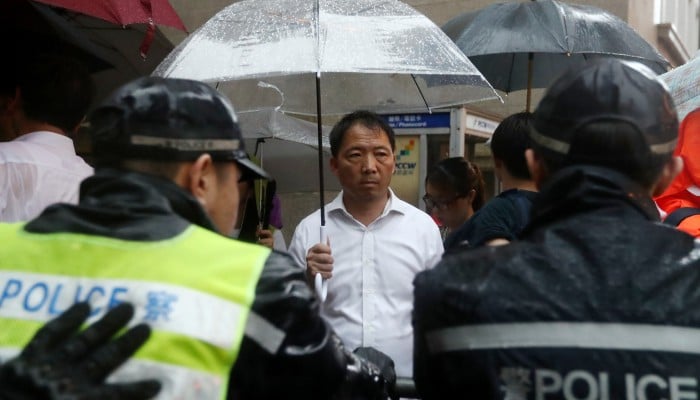
- Wu Chi-wai, former chairman of the Democratic Party, was released from prison on 30 June 2026 after serving a four-year-five-month sentence for subversion.
- Upon arrival in the UK, Wu was initially refused entry at Heathrow Airport, where he was informed that his BN(O) passport would be confiscated and he would be deported within seven days.
- Hong Kong Watch expressed deep concern over the deportation threat to Wu, labeling him a political prisoner among the Hong Kong 47.
- After a 10-hour detention, Wu was eventually allowed to enter the UK under temporary admission, with the Home Office citing an administrative paperwork issue.
- Wu was arrested in a security sweep that followed the 2020 National Security Law implementation, charged in 2021, and pleaded guilty the following year.
- The National Security Law, introduced on 30 June 2020, criminalized secession, subversion, terrorism, and foreign collusion.
- Wu holds British National (Overseas) (BN(O)) status, allowing him to apply for residence in the UK without going through the standard overseas asylum process.
Wu Chi-wai, the former chairman of Hong Kong's Democratic Party, has entered the UK under temporary admission after a tumultuous arrival at Heathrow Airport. Initially, he was denied entry and threatened with deportation back to Hong Kong, where he fears persecution due to his pro-democracy activism.1267
Wu, aged 63, recently completed a four-year and five-month prison sentence for conspiracy to commit subversion, a charge stemming from his involvement in organizing an unofficial primary election in 2020. His release in June 2023 followed a significant crackdown on dissent in Hong Kong, where many opposition figures have faced similar fates.
Upon arrival, Wu was informed by an immigration officer that his British National (Overseas) passport would be confiscated and that he would be deported within seven days. However, after a 10-hour detention, he was granted temporary admission, although the threat of deportation remains pending review.10

The Home Office described the situation as an administrative issue with Wu's paperwork, asserting their commitment to supporting the Hong Kong community in the UK. Wu's case has drawn attention to the broader implications of the Hong Kong National Security Law, which has been criticized for its chilling effect on freedoms and the safety of pro-democracy advocates.9
As Wu seeks asylum, advocates emphasize the need for the UK to protect individuals like him, who have faced persecution for their political beliefs. “After four years in prison for the ‘crime’ of helping organise a primary election, Wu Chi-wai deserves safety, dignity, and the chance to continue speaking for the people of Hong Kong from British soil,” said a spokesperson from Hong Kong Watch.5
“Hong Kong Watch expressed deep concern over the deportation threat facing Wu, a political prisoner among the Hong Kong 47. The Home Office described the initial refusal as an administrative paperwork issue, while Wu remains in the UK under temporary admission with a pending deportation review.”
 South China Morning Post
 Hong Kong Free Press HKFP



