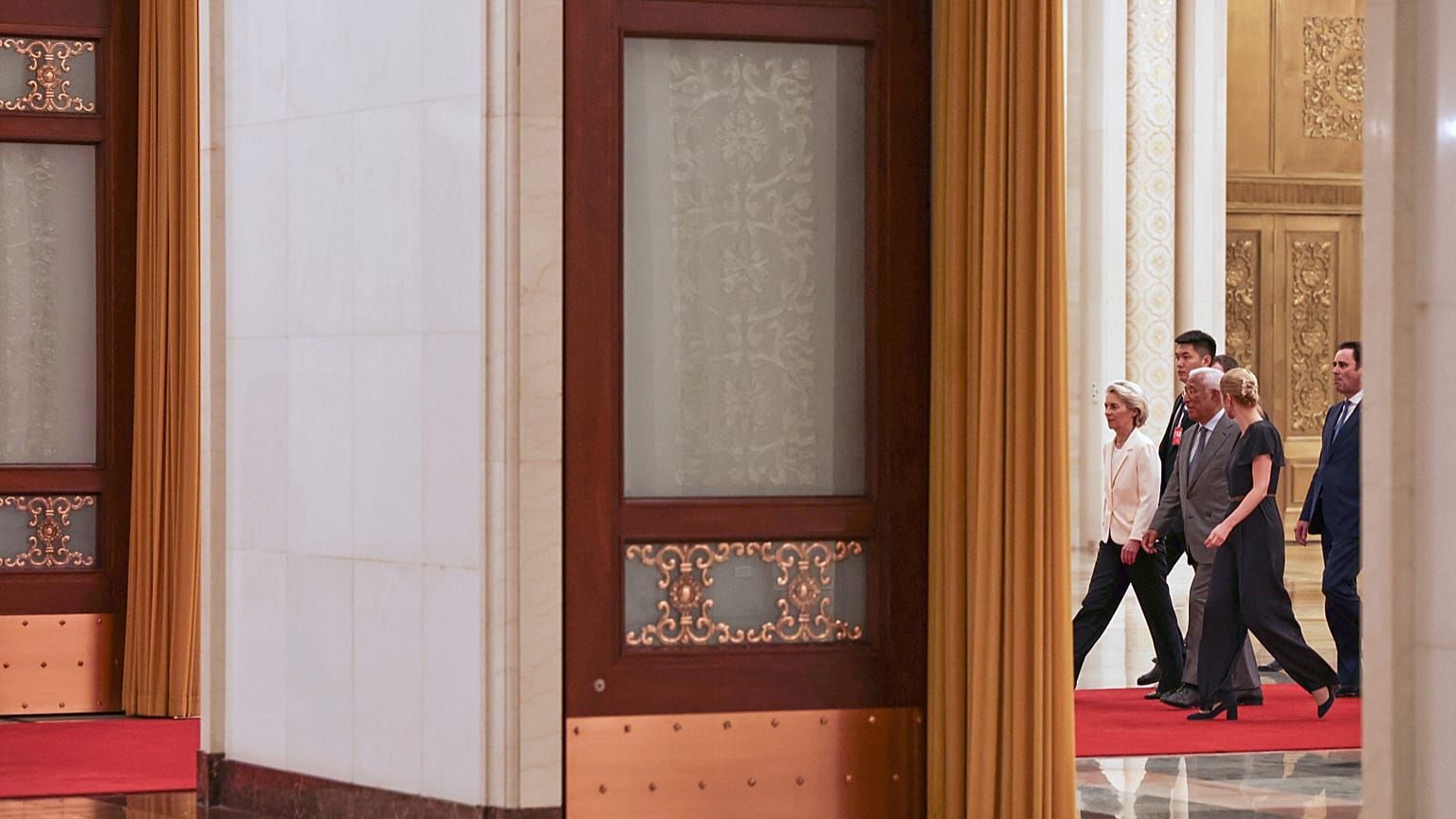
- EU is walking a tightrope between the world's major hegemons, China and the US, as it navigates complex trade relations.
- Kallas questions US rationale for imposing new tariffs on EU goods, stating that the allegations of shortcomings in the bloc's forced labour controls are unfounded.
- New tariffs of 10% and 12.5% were imposed by the Trump administration on EU goods, which Kallas described as a 'negative surprise'.
- EU will seek clarification from Washington regarding the new tariffs, as Kallas emphasized that the bloc had honored commitments under a transatlantic trade agreement.
EU foreign policy chief Kaja Kallas has raised concerns over the U.S. decision to impose new tariffs of 10% and 12.5% on European goods, citing unfounded allegations regarding the EU's forced labour controls.
Kallas stated, "We had a deal with America and we have kept to that deal... that's why this is a negative surprise that this agreement is not kept." The tariffs were introduced as a replacement for a temporary 10% global tariff that expired, catching the EU off guard.
Kallas emphasized that the EU had not anticipated being included in the U.S. action, remarking, "Who can keep track of the tariffs going on and off? No, we were not expecting this." The EU's top trade negotiator, Bernd Lange, described the measures as “crazy”, reflecting the bloc's frustration with the ongoing trade tensions.
The EU is currently navigating a complex landscape, balancing relations with both the U.S. and China, as it seeks to maintain its trade commitments while addressing the challenges posed by these major economies.
Kallas's comments highlight the EU's commitment to fair labor practices, contrasting them with U.S. allegations, stating, “If you compare our labour laws to the ones of the United States, we have paid vacations, we have very good labour conditions for our employees.”
“Kallas said the EU had not expected to be included in the US action, calling the new tariffs, ranging from 10% to 12.5%, a 'negative surprise.' She emphasized the bloc had honored commitments under last year's transatlantic trade agreement, questioning the rationale behind Washington's move.”
 Euronews.com



