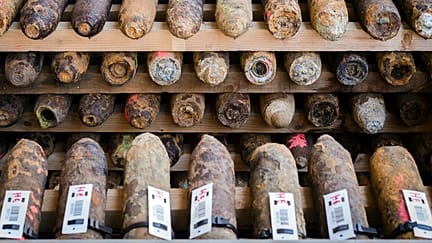
- Devastating wildfires that have ravaged Europe over summer have been unveiling a potentially deadly new threat - unexploded ordnance from World War I and World War II.
- Fires have burned through huge areas of land in western Europe in recent months as the continent has battled scorching temperatures and droughts, and firefighters have faced the additional threat of exploding shells.
- Explosions have been reported in France, Germany, Belgium, and the Netherlands.
- A fire close to the city of Bordeaux in southwestern France has revealed a hoard of what is thought to be World War II-era ammunition, while in the province of Liège in eastern Belgium, local governor Hervé Jamar said emergency services were adapting to account for munitions buried in a fire area and that 'a few sporadic detonations' had been heard recently.
- Firefighters and emergency services are adapting to the threat, with local officials and historians noting the ongoing danger.
- World War I and II left buried munitions across Europe, including in the High Fens area of Belgium and Germany.
- The Battle of the Bulge, one of the bloodiest battles of the Second World War, was fought in and around the High Fens.
- Droughts across Europe have also been churning up military vehicles and weapons from the era, with shrinking rivers revealing German warships, a Wehrmacht motorbike, and more.
- Climate change is now doing the work of unburying and reactivating what was previously stable, according to Sarah Njeri, a peace and conflict scholar.
European wildfires this summer have revealed a hidden danger: unexploded ordnance from World War I and II. As wildfires rage across the continent, climate change is exacerbating conditions that unearth these munitions, leading to sporadic explosions and posing risks to firefighting efforts.2369
Fires have devastated vast areas in western Europe, with scorching temperatures and droughts creating ideal conditions for wildfires. Sarah Njeri, a peace and conflict scholar, noted, “Climate change is now doing the work of unburying and reactivating what was previously stable.” This has resulted in explosions reported in France, Germany, Belgium, and the Netherlands.8
In southwestern France, a fire near Bordeaux uncovered a cache of World War II-era ammunition. In eastern Belgium's province of Liège, local governor Hervé Jamar reported that emergency services are adapting to the presence of munitions, with “a few sporadic detonations” heard recently. The area, known for its dense peat-bog forest, was a battleground during the Battle of the Bulge.4
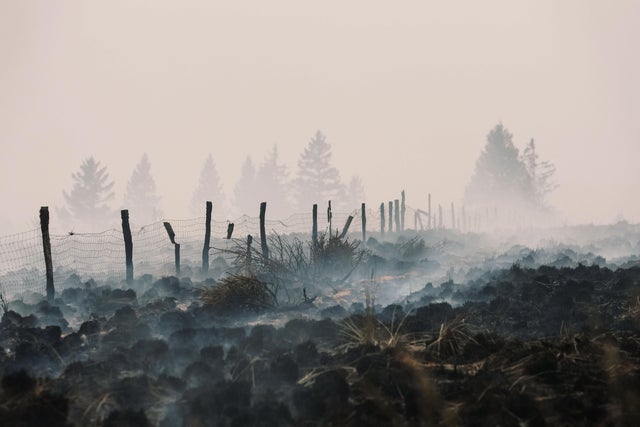
The wildfires have also churned up military vehicles and weapons, with Christina Greene from the University of Arizona stating, “the legacy of war keeps creeping up” due to climate change. The situation underscores that Europe’s “climatic luck” is running out, as the combination of heavy rains and subsequent drought has created a perilous environment for both the land and its inhabitants.
Local historian Bernard Collard emphasized the unpredictability of the situation, stating, “you are not sure where the explosives are.” His experiences highlight the ongoing risks posed by these buried remnants of conflict, as the wildfires continue to expose them.
“In Liège, Governor Hervé Jamar reported 'a few sporadic detonations' and said emergency services are adapting, while a Bordeaux fire revealed around 400 shells, including German and French mortar and anti-tank rounds. Historian Bernard Collard, who scans former battlefields, warns 'you are not sure where the explosives are.'”
 Euronews.com
 CBS News