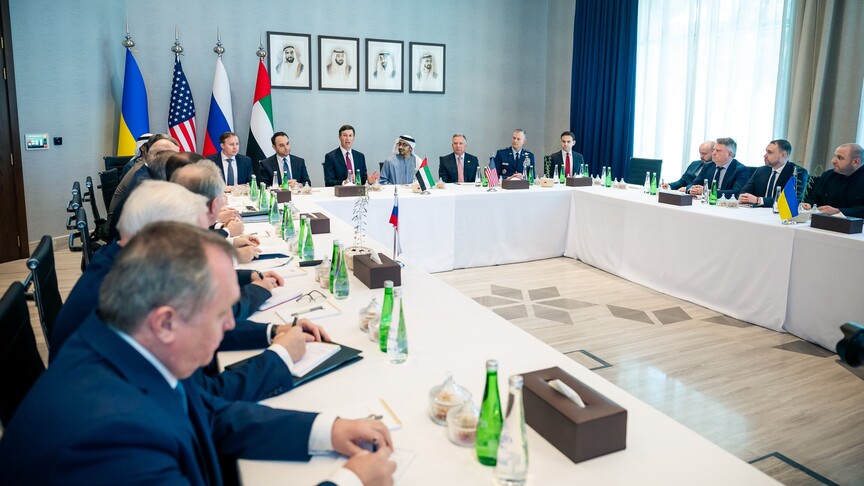
- US envoys, after talks in Moscow with Russian President Vladimir Putin, said that Europe would join future negotiations – but the Kremlin appeared to slam the brakes on that plan, saying no decision had been made.
- EU leaders have broadly agreed on the need for Europe to join the ongoing trilateral negotiations between Washington, Kyiv, and Moscow, as the EU is concerned that a United States-backed process will allow Moscow and Washington to decide the fate of a war that has embroiled the continent.
- German Chancellor Friedrich Merz pleaded for US President Donald Trump to create no surprises during expected talks with Putin in China next week, referencing a 'second Anchorage moment'.
- EU’s top diplomat Kaja Kallas, a former prime minister of Estonia, laid claim to the envoy role, saying: 'I’m the one who is representing Europe' in foreign and security policy.
- Kyiv is eager for support from European allies, but Russia does not want European countries involved in direct negotiations, arguing they are financing and supplying Ukraine’s military effort.
- Kallas also stated: 'I know that the Russians don’t want me', but questioned if there is a say in 'Who is representing Russia?'
- 'We can’t send any person that has no institutional role' like the Americans are sending, Kallas added.
European nations are grappling with representation in Ukraine peace talks, as leaders debate whether to appoint a single envoy or a team.
The EU's top diplomat, Kaja Kallas, asserted her claim to the role, stating, “I’m the one who is representing Europe in the foreign and security policy.”9
However, the Kremlin has pushed back, indicating that “no decision had been made” regarding European involvement in negotiations.1
Concerns are mounting that a U.S.-backed process could marginalize European voices, with German Chancellor Friedrich Merz urging the U.S. to avoid surprises in upcoming talks with Putin.456
“Please, no surprises. Continue to play as part of ‘Team Europe’ and ‘Team Ukraine,’” he emphasized.
The lack of a unified European stance has led to calls for a single representative, as Italian Prime Minister Giorgia Meloni noted, “There are too many different groupings discussing the issue.”
The EU's desire for a cohesive approach is underscored by fears that individual nations engaging in freelance diplomacy could undermine collective efforts.
As the situation evolves, the EU remains committed to finding a way to assert its role in the peace process while navigating the complexities of international diplomacy.
“EU leaders broadly agree on joining trilateral talks, but Russia opposes European involvement, arguing they finance Ukraine's military. Kaja Kallas claims the envoy role, saying 'I'm the one who is representing Europe,' while Merz pleads for no surprises in upcoming Trump-Putin talks.”