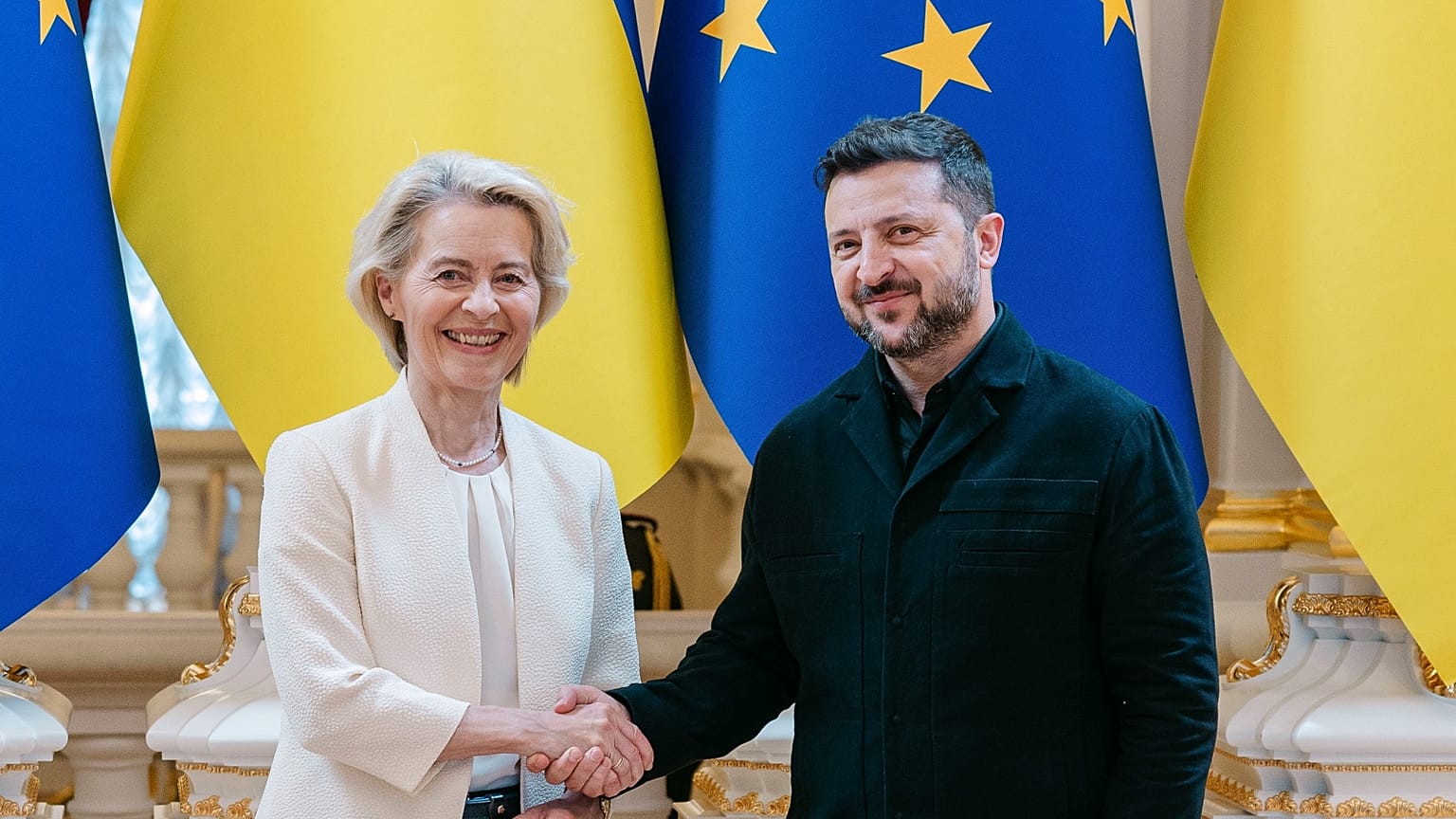
- European Commission confirmed that Ukraine's financial and military needs for 2026 are fully covered, effectively closing the debate over a $27 billion shortfall.
- The Commission stated, "Today, through coordinated joint efforts, we have identified the means to cover Ukraine's budget and defence needs for 2026," as shared by President Ursula von der Leyen.
- Attention now turns to 2027, with the Commission promising to swiftly allocate the loan's second €45 billion half, subject to established conditions.
- The Commission urged allied nations to increase contributions to support Ukraine's ongoing needs.
- In late August, President Volodymyr Zelenskyy warned that essential weapon deliveries were at risk due to a $27 billion shortfall.
- EU officials were initially reluctant to validate the $27 billion figure, considering it unexpected and unexplained.
- The focus shifted to a €90 billion loan, which includes €45 billion for 2026 and another €45 billion for 2027.
- As technical talks continued, Brussels urged Kyiv to advance reforms necessary to unlock the support loan and the Ukraine Facility.
- Ukrainian Finance Minister Sergii Marchenko indicated that the country faces a budget gap of $32.6 billion and $45 billion in military expenditures for 2027.
- Marchenko warned that ongoing Russian attacks threaten to paralyze the Ukrainian economy and cripple tax collection.
- The wartime costs for 2027 could exceed estimates, as noted by economist Oleksandra Myronenko, highlighting the increased need for funding.
The European Commission announced on Thursday that it has successfully identified funds to cover Ukraine's $27 billion budget and defense needs for 2026, addressing concerns raised by President Zelenskyy regarding military support amid ongoing conflict with Russia.1
The Commission's statement confirmed that Ukraine's financial and military needs for this year are fully met, following a month of uncertainty after Kyiv flagged the significant shortfall. "Today, through coordinated joint efforts, we have identified the means to cover Ukraine's budget and defence needs for 2026," the Commission stated.2
This announcement effectively closes the debate that began in late August when President Zelenskyy warned that essential weapon deliveries were at risk due to funding gaps. "We need more money, much more," he had said.5
EU officials had initially been reluctant to validate the $27 billion figure, which they deemed unexpected. Instead, they focused on a €90 billion loan, which includes €45 billion for 2026 and another €45 billion for 2027. The loan facility still has approximately $37 billion available until the end of the year, which EU officials believe is sufficient to maintain Ukraine's stability.6
In response to the Commission's announcement, Zelenskyy praised the "good results" of bilateral consultations regarding future needs, emphasizing the importance of continuous coordination. Ukrainian Finance Minister Sergii Marchenko has warned that ongoing Russian attacks threaten to cripple the economy, necessitating further financial support.10
The Commission also indicated that it would begin work on identifying additional budgetary and defense needs, urging allied nations to increase their contributions in light of Ukraine's significant challenges.
“The EU pointed to its €90 billion loan, with €45 billion for 2026 and €45 billion for 2027, and roughly $37 billion still available until year-end. Ukrainian Finance Minister Sergii Marchenko warned of a $32.6 billion budget and $45 billion military shortfall in 2027, as Russia's attacks threaten to paralyse the economy.”
 Euronews.com





![Andy Burnham says rejoining EU is an option; Spain and France welcome UK back, with Sanchez saying "We would open our arms [to Britain]"](https://www.reuters.com/resizer/v2/LYGLJPOEO5NYLMYMOQSC2YBOXA.jpg)






