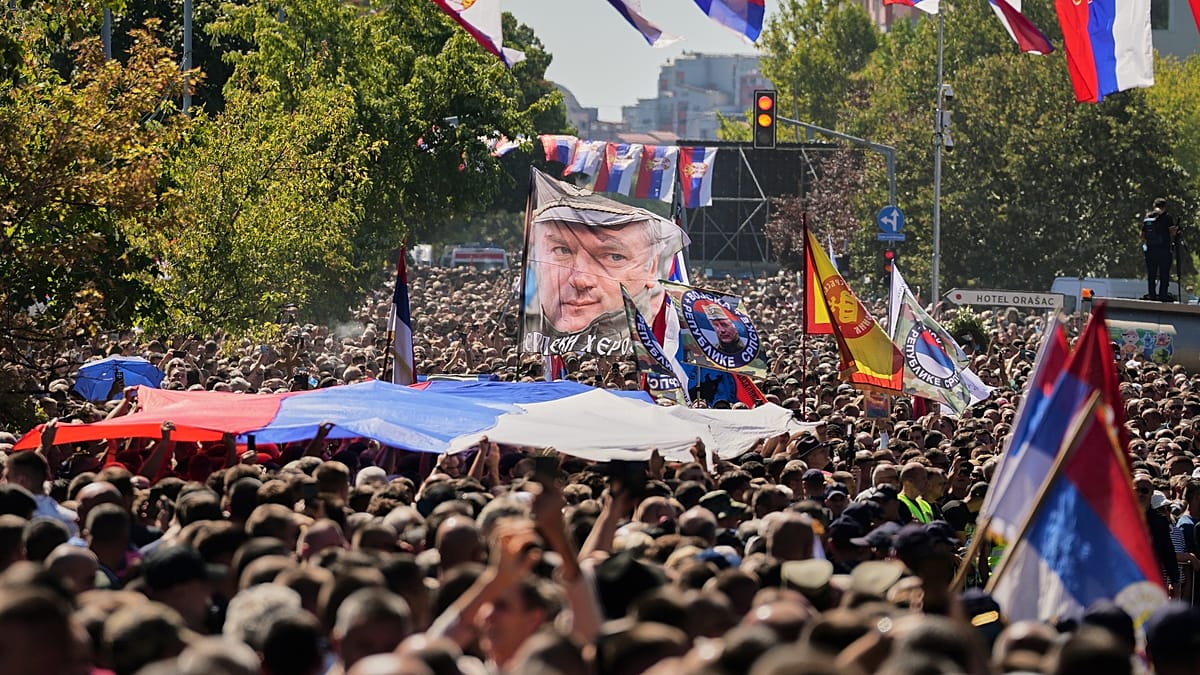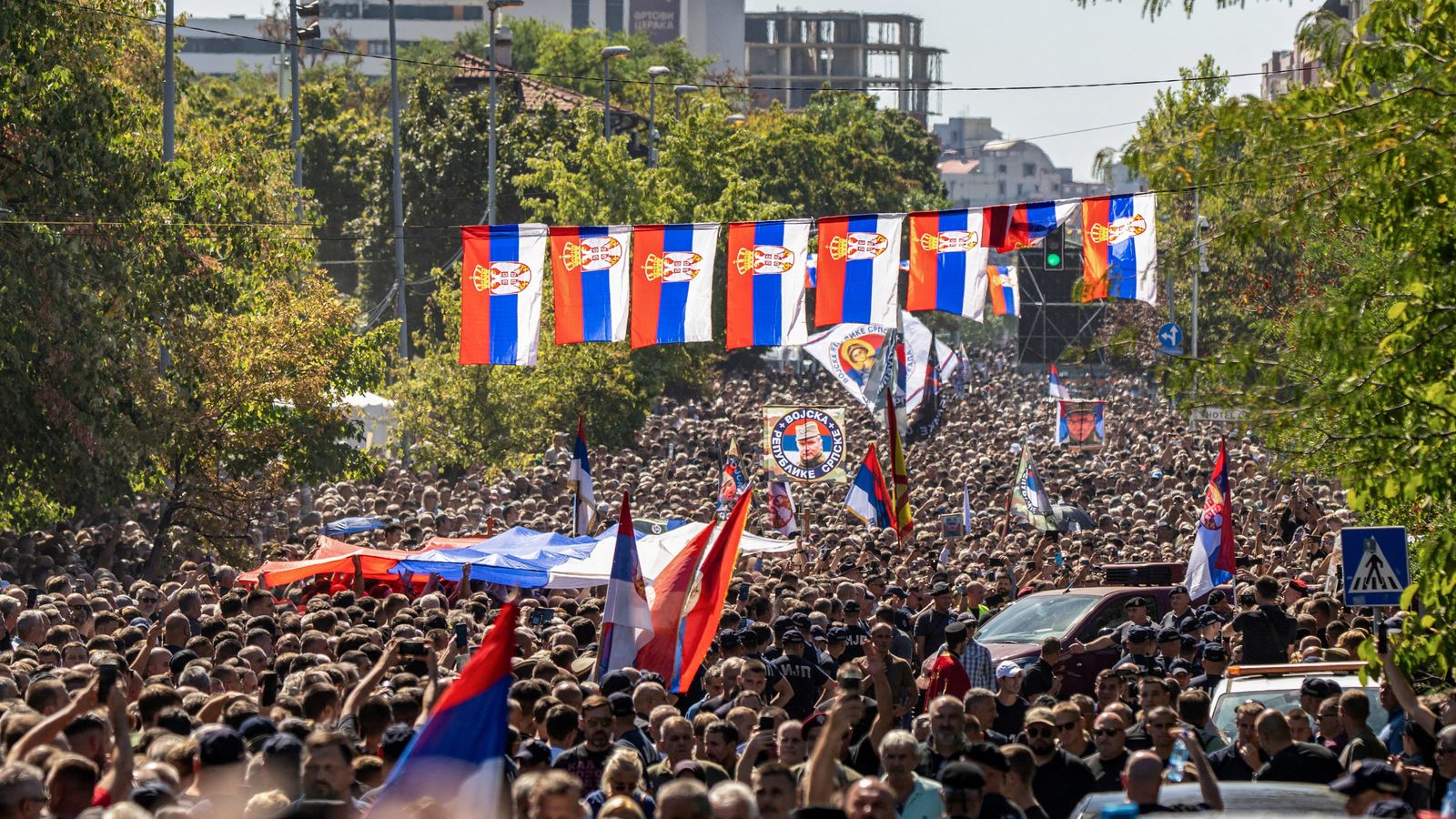
- Ratko Mladić's lavish public funeral took place, attended by senior Serbian officials.
- European Commission President Ursula von der Leyen described the images of Mladic's funeral as "shocking" and said the presence of some senior Serbian officials there "demonstrate a failure to confront a dark chapter in Europe's recent history" and could undermine Belgrade's plans to join the EU.
- The UK's special envoy to the Western Balkans, Dame Karen Pierce DCMG, summoned the Serbian charge d'affaires to condemn the involvement of Serbian state and military officials in the funeral.
- Bosnia expelled two Serbian diplomats, military attache Milan Dulanovic and intelligence adviser Danko Maksimovic, giving them 48 hours to leave.
- The UK's minister for Europe, Lord Wood of Anfield, said: "Glorification of a convicted war criminal directly undermines trust, fuels division and is incompatible with the process of reconciliation within Bosnia and Herzegovina and the region."
- Lord Wood added: "The thoughts of the UK Government are with Mladic's victims and their families. They deserve respect, compassion and accountability, not efforts to rewrite proven history. Political leaders and public institutions have a responsibility to look to the future, not to the past, and to act in ways that support regional reconciliation, not to reopen old wounds."
The UK's special envoy to the Western Balkans, Dame Karen Pierce DCMG, summoned a Serbian diplomat to express condemnation over the involvement of Serbian officials in the funeral of Ratko Mladic, known as the 'Butcher of Bosnia'.34
Mladic, who died in August while serving a life sentence for genocide and war crimes, was honored with a lavish public funeral that has drawn international outrage.
European Commission President Ursula von der Leyen described the images from the funeral as "shocking" and warned that the presence of Serbian officials could undermine Belgrade's aspirations to join the EU.2
Lord Wood of Anfield, the UK's minister for Europe, emphasized that glorifying a convicted war criminal undermines trust and fuels division, stating, "They deserve respect, compassion and accountability, not efforts to rewrite proven history."5
In a related diplomatic fallout, Bosnia expelled two Serbian diplomats from Sarajevo, with Foreign Minister Elmedin Konakovic stating they had 48 hours to leave the country. This expulsion reflects the heightened tensions in the region following Mladic's funeral, which many view as a provocative act that could hinder reconciliation efforts in Bosnia and Herzegovina.
The UK government reiterated its commitment to supporting regional stability and reconciliation, urging political leaders to focus on the future rather than reopening old wounds.
“Bosnia expelled two Serbian diplomats, military attache Milan Dulanovic and intelligence adviser Danko Maksimovic, giving them 48 hours to leave. UK minister Lord Wood said glorification of a convicted war criminal 'directly undermines trust' and is incompatible with regional reconciliation.”