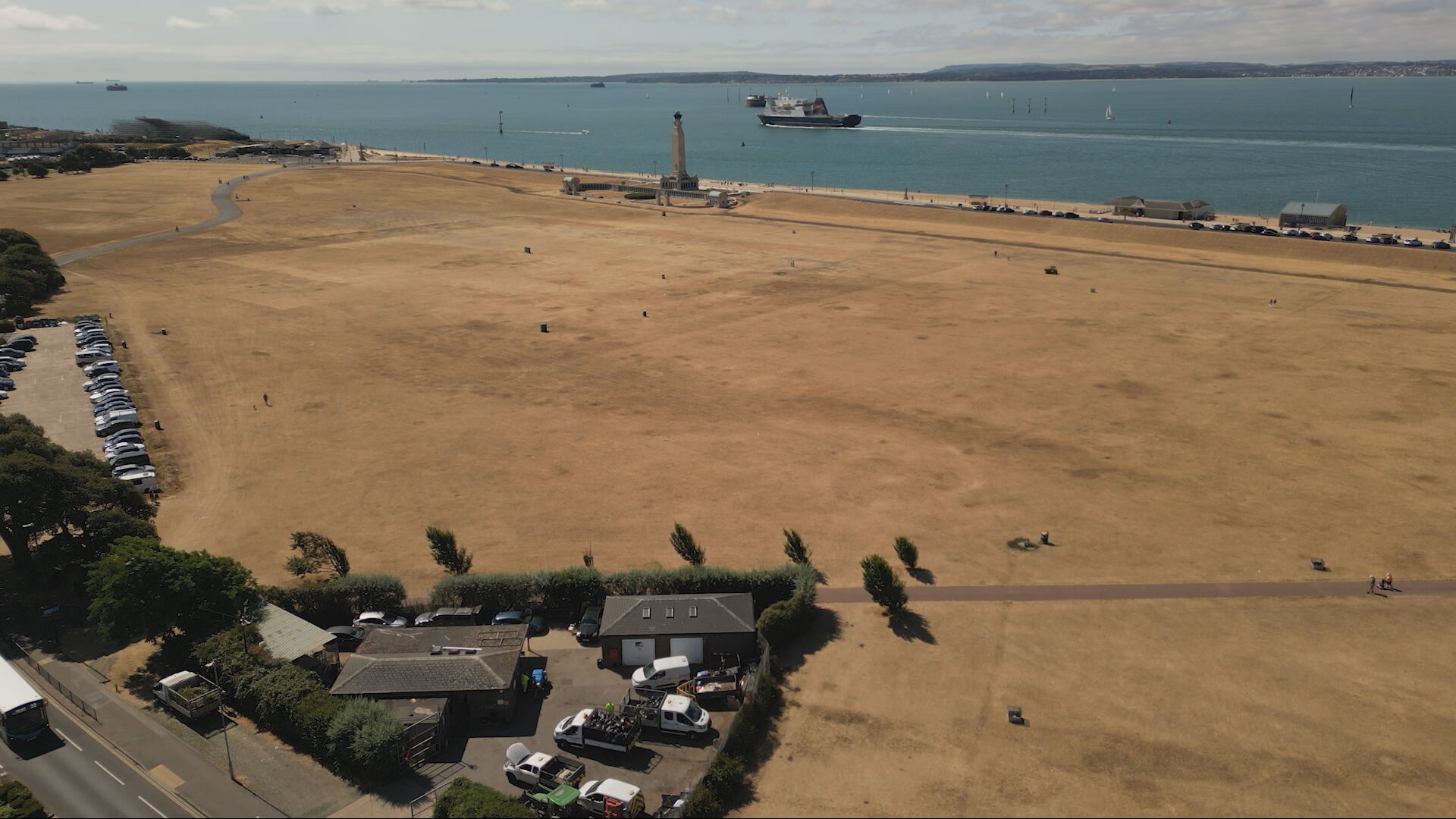
- Half of England currently has official drought status for a second consecutive year, and a third consecutive year of extreme dry weather is not unlikely amid a fourth heatwave and wildfires in Suffolk and the Cairngorms.
- The UK's National Risk Register, updated earlier this month, sets out a reasonable worst-case drought scenario and says there would need to be public water supply restrictions, with severe drought in parts of southern and eastern England.
- Government emergency planning documents say continued heatwaves could lead to water rationing, danger to critical national infrastructure and a risk of civil disorder.
- In the worst case, restrictions could move from hosepipe bans to rationing, when supplies to homes and businesses would be turned off or limited at certain times of the day under emergency drought orders.
- The Environment Agency warns England could face a water shortfall of up to five billion litres a day by 2055, almost enough to fill Wembley Stadium 4.5 times every day; the government says it is investing in nine new reservoirs by 2050.
- The risk register warns of significant losses to the UK economy, severe environmental damage, increased fire risk and a reduced ability to fight fires due to water scarcity.
- Common consequences of a severe drought scenario include human and animal health impacts, physical and mental health casualties and fatalities, plus possible localised civil disorder.
- Critical national infrastructure including energy, transport, hospitals, emergency services and telecommunications would be impacted by water restrictions or loss of supply, and data centres are described as highly electricity-intensive and water-dependent.
Drought conditions across half of England have raised alarms about potential water rationing, as the country faces its fourth heatwave this summer. The Government's emergency planning documents warn of severe impacts on public health, infrastructure, and the economy if the situation escalates.126
The National Risk Register outlines a reasonable worst-case scenario, predicting that large parts of southern and eastern England will experience severe drought, with neighbouring Midlands and southwest areas also affected. The document states, “there would need to be public water supply restrictions.”345
Current measures include hosepipe bans, already in place in some regions, which could escalate to rationing where supplies to homes and businesses are turned off or limited during emergencies. The document warns of “significant losses to the UK economy” and “serious impacts on industry, agriculture and businesses.”7111213

The drought's consequences extend beyond economic concerns, with potential “human and animal health impacts” including casualties and mental health issues. The risk of civil disorder may also increase as public behavior changes in response to water scarcity.1415
The Environment Agency has projected a water shortfall of up to five billion litres a day by 2055 if no action is taken to address drought, climate change, and population growth. To combat this, plans are in place to invest in nine new reservoirs by 2050, which will provide an additional 700 million litres of water a day across the country.8910
“The UK's National Risk Register, updated this month, sets out a reasonable worst-case scenario requiring public supply restrictions and warns of civil disorder. The Environment Agency separately projects a shortfall of up to five billion litres a day by 2055, roughly enough to fill Wembley Stadium nearly 4.5 times daily.”