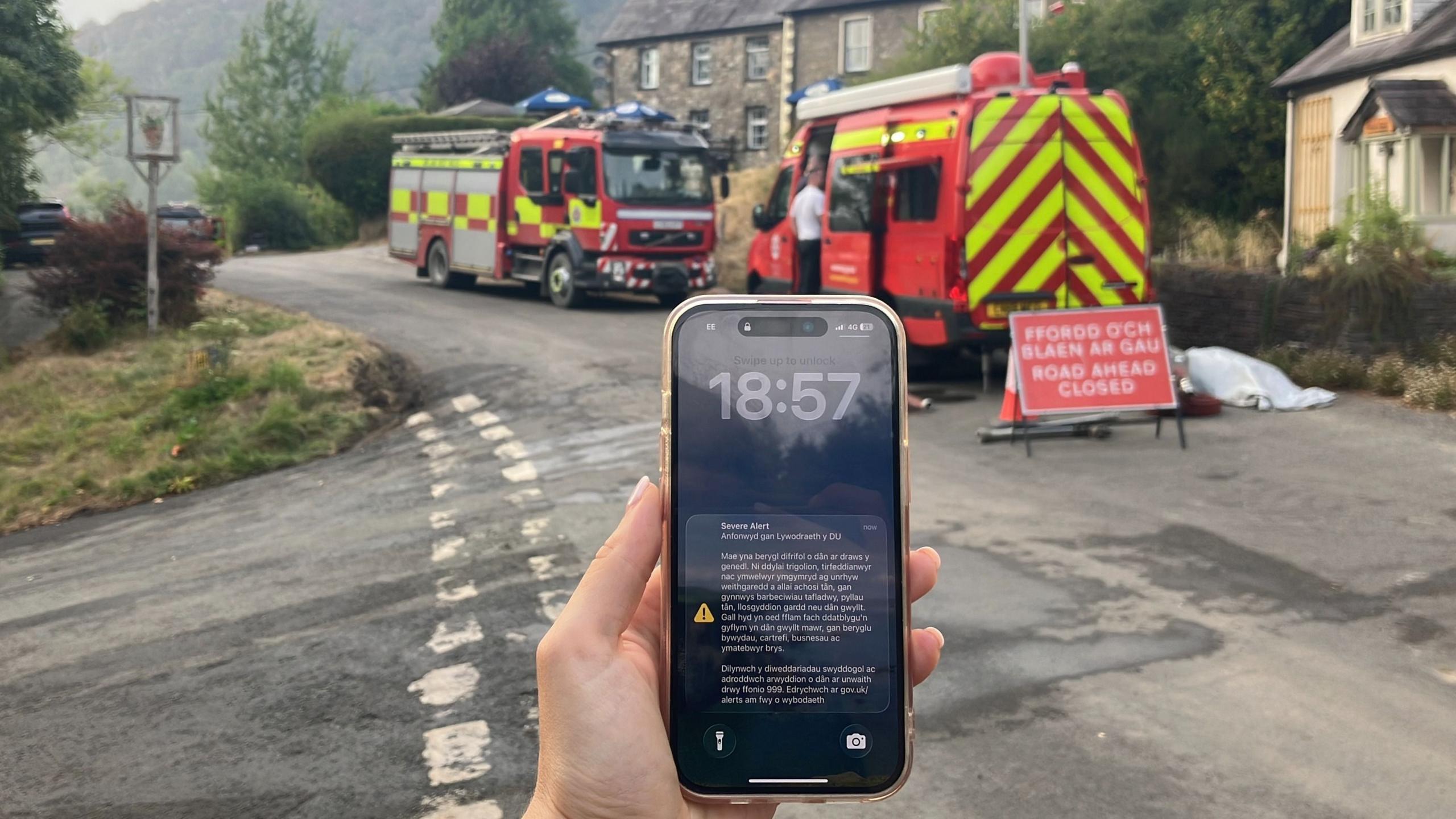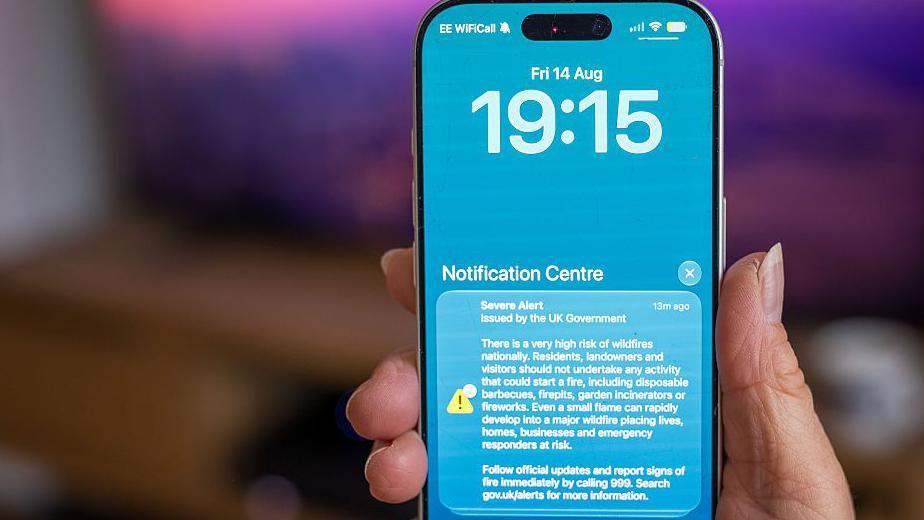
- Emergency government phone alert warning of wildfires across England and Wales put domestic abuse victims at risk, according to campaigners.
- Charities and survivors criticized the lack of advance warning, which meant little chance to protect those hiding secret phones in domestic abuse situations.
- A government spokesperson said the alert was sent "after a direct request from fire and rescue services" and that it was working closely with domestic abuse charities for tests of the alert system.
- Women's Aid, the national charity aiming to end domestic abuse, is calling for more forewarning of alerts wherever possible.
- Veronica Oakeshott, head of external affairs at Women's Aid, said survivors frequently use second phones to access lifesaving support and urged the government to forewarn the public when possible.
- Padua Eaton, 29, a survivor who set up support group The Harborough Doves, said her "heart dropped" when she received the alert, and that the alarm could have alerted abusers immediately.
- Eaton criticized the government's short notice and urged ministers to look into silent notifications, warning that frequent alarms could make victims no longer feel safe keeping these phones.
- Maggie Evans, director of frontline services at abuse prevention charity Hourglass, echoed concerns and called for consultation with organisations supporting the most vulnerable before future alerts, noting there was "no meaningful advance warning" and "no targeted safety guidance for victims."
An emergency government alert warning of wildfires across England and Wales has sparked criticism from campaigners, who argue it puts domestic abuse victims at risk. The alert, sent without advance notice, could expose secret phones used by victims to seek help.
Charities and survivors have voiced concerns that the lack of forewarning left little opportunity for victims to protect their hidden devices. Veronica Oakeshott, head of external affairs at Women's Aid, emphasized the importance of keeping these phones concealed, stating, "Survivors of domestic abuse frequently turn to second phones to help them access lifesaving support or flee from abuse."56
Padua Eaton, a domestic abuse survivor, expressed her alarm upon receiving the alert, saying, "My first thought was anxiety at the alarm - many people in domestic abuse relationships have a secret second phone in order to keep communication with friends or professionals and this alarm would have alerted abusers immediately."78
Eaton criticized the government's communication strategy, arguing that informing the press just 15 minutes before the alert was insufficient. She suggested implementing silent notifications to protect victims, warning that frequent alarms could deter them from keeping their phones hidden.
Maggie Evans, director of frontline services at Hourglass, echoed these concerns, calling for better consultation with organizations supporting vulnerable individuals before future alerts. She noted the absence of meaningful advance warning and targeted safety guidance for victims.121314
“Women's Aid head of external affairs Veronica Oakeshott said survivors often use second phones to access lifesaving support, urging the government to forewarn the public when possible. Survivor Padua Eaton said her 'heart dropped' on receiving the alert, warning it could have alerted abusers immediately.”