- El Niño warming of Pacific waters has begun, disrupting global weather patterns.
- Torrential rains hit Chile in July, resulting in the deaths of 13 people and damaging around 4,000 homes.
- Heavy rains have awakened dormant seeds and bulbs of about 200 species in the Atacama Desert.
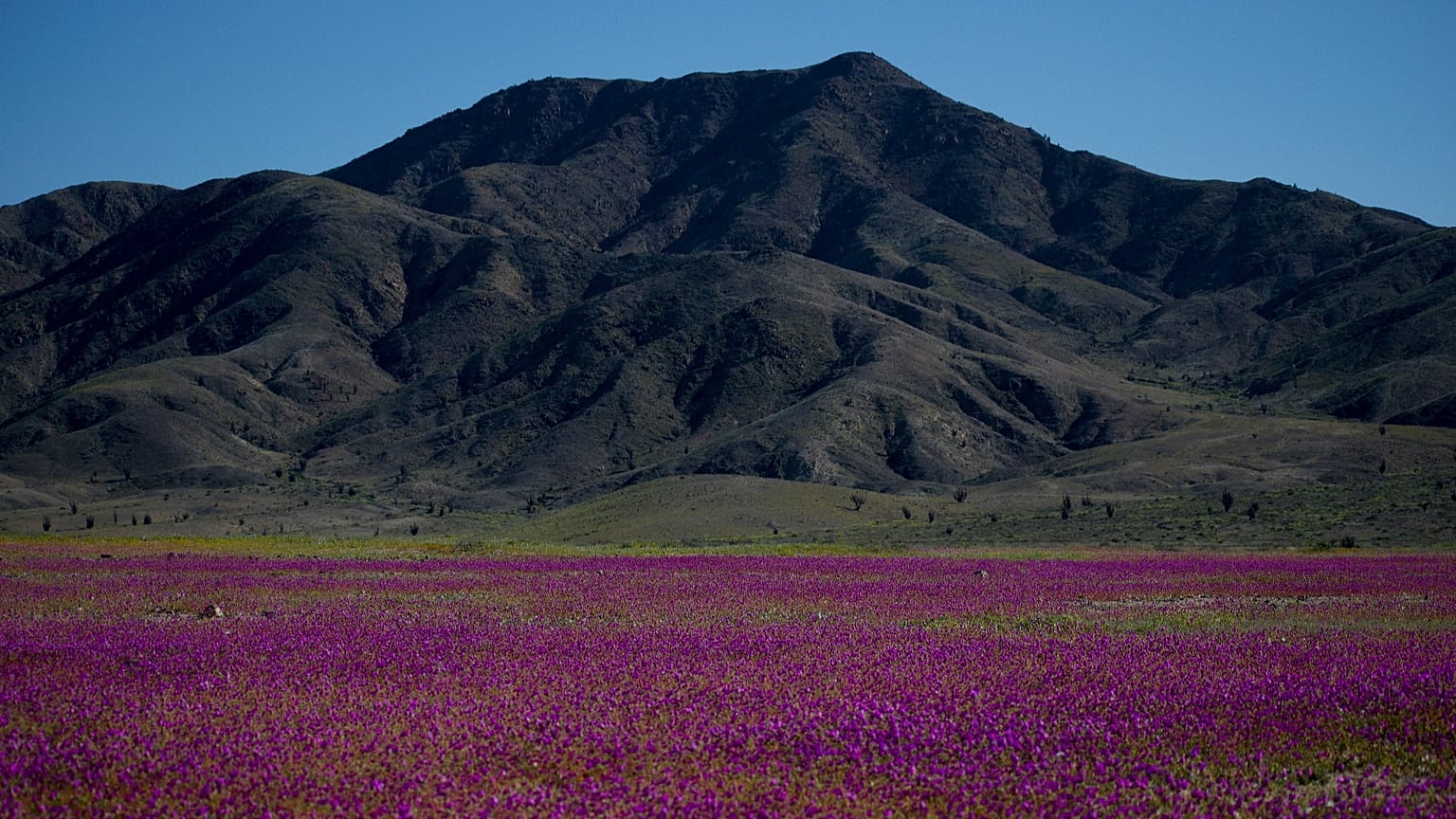
- Violet and white flowers now carpet vast stretches of the Atacama Desert, attracting many tourists.
- According to CONAF, the flowering desert will peak in October, with an estimated 15,000 hectares expected to bloom.
- The Atacama Desert, one of the driest places on Earth, has changed appearance after heavy rains in northern Chile.
- Under the Atacama's soil, seeds and bulbs from around 200 different species lie dormant for long periods, waiting for the right conditions to germinate.
- Rainfall linked to El Niño has allowed many of these dormant seeds to bloom.
- In some areas, rainfall has exceeded 180 millimeters, an amount that 'had never been recorded before'.
- The water has soaked into the sand deeper than usual, encouraging vegetation to appear in the nature reserve about 800 kilometers north of Santiago.
El Niño has brought unprecedented rainfall to the Atacama Desert, leading to a stunning transformation of the landscape.168
Seasonal rainfall has exceeded 180 millimeters (7 inches) in some areas, a record amount, according to Cesar Pizarro, head of Atacama biodiversity for Chile's forestry body CONAF.59
"The flowering desert" phenomenon is expected to peak in October, with estimates suggesting that 15,000 hectares (37,000 acres) will bloom.
The heavy rains have awakened millions of dormant seeds from around 200 different species, carpeting the desert with vibrant violet and white blossoms.37
Pizarro noted that the water has soaked deeper into the sand than usual, encouraging vegetation to flourish in the nature reserve located about 800 kilometers north of Santiago.10

This year's El Niño is predicted to be the strongest in four decades, disrupting global weather patterns and causing extreme weather events.
While the blooming flowers attract tourists, Pizarro expressed concern about potential damage to the natural habitat, urging visitors to stick to established paths and leave pets at home.
"For our country, the flowering desert is a source of pride. It is part of our heritage," he stated, as the desert not only showcases flowers but also supports a diverse ecosystem of insects, birds, and mammals.
The torrential rains have also had devastating effects, killing 13 people and damaging around 4,000 homes in July.2
As the spectacle unfolds, the Atacama Desert stands as a testament to nature's resilience and beauty, drawing visitors from far and wide to witness this rare event.
“The bloom follows July rains that killed 13 people and damaged 4,000 homes, with some areas receiving over 180mm of rain—a record, per CONAF's César Pizarro. The spectacle is expected to peak in October, covering 15,000 hectares, and officials anticipate large tourist crowds.”
 euronews.com