- Cirebon's salt production reached nearly 600 metric tons in July, a significant increase from just 25-30 tons in the same month last year, according to Sudiharjo, an official at the Cirebon Regency Food Security and Fisheries Agency.
- More than half of Indonesia's seasonal zones were experiencing a longer-than-expected dry season by July, which is expected to peak in August.
- The Indonesian weather agency has warned that El Niño could persist into early 2027.
- Dry conditions are expected to continue through October, leading to forecasts of a bumper salt harvest.
- In 2023, during the last El Niño period, Indonesia's salt output was 2.5 million tons.
- Last year, national salt production fell to 1 million tons due to a shorter dry season and La Niña.
El Niño's impact on Indonesia's climate has created a unique situation for salt farmers in West Java, particularly in Cirebon, where production has surged dramatically.
Salt farmers are experiencing a windfall as the drought, which is expected to last until October, has allowed them to harvest nearly 600 metric tons of salt in July, a significant increase from 25-30 tons during the same month last year, according to Sudiharjo from the Cirebon Regency Food Security and Fisheries Agency.
The Indonesian weather agency has indicated that the El Niño phenomenon could persist into early 2027, leading to prolonged dry conditions across the country. This has resulted in more than half of Indonesia's seasonal zones facing a longer-than-expected dry season, which is anticipated to peak in August.234
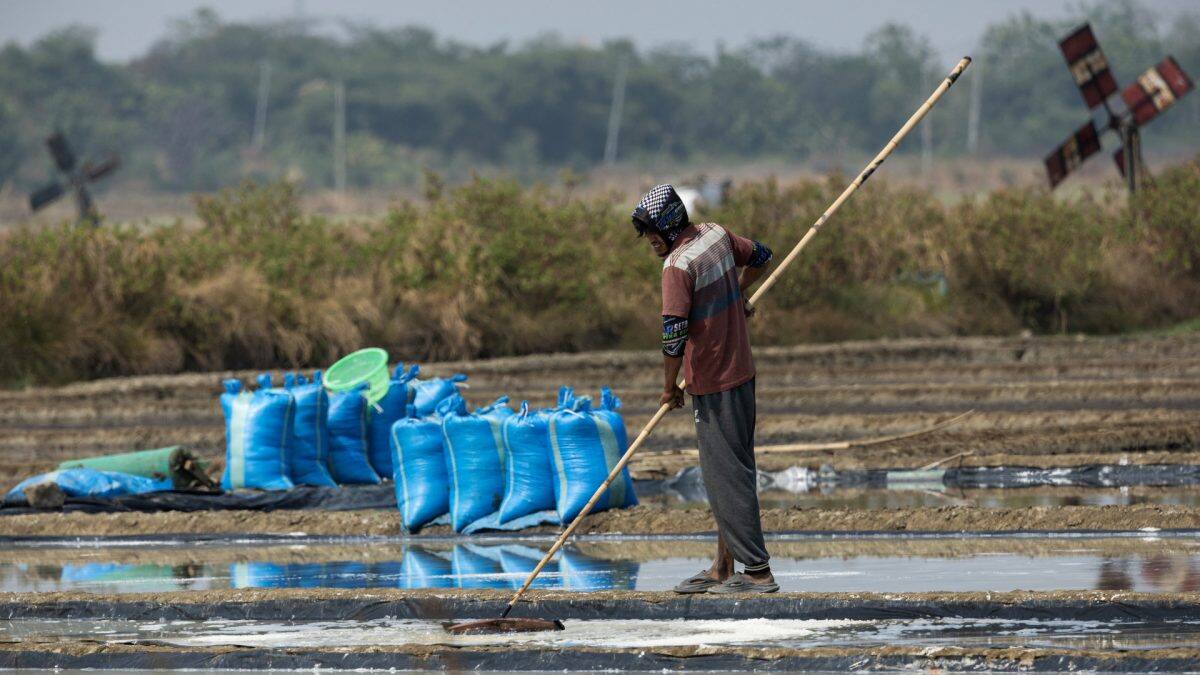
Dadang Darmawan, head of a local salt farmers' group, expressed gratitude for the situation, stating, “For us, El Niño is a blessing and a grace. It's something we should be grateful for.” The dry weather is ideal for salt production, as even brief rain can disrupt the crystallization process, affecting both output and quality.
Nationally, salt production is expected to increase significantly, with the head of the Indonesian Salt Users Industry Association, Cucu Sutara, noting, “Production will definitely increase because the dry weather period is longer.” In contrast, last year saw a decline in production to 1 million tons due to a shorter dry season and the effects of La Niña.
As the El Niño phenomenon continues to intensify, the contrasting fortunes of Indonesia's salt farmers highlight the complex relationship between climate patterns and agricultural output.
“Dadang Darmawan, head of a local salt farmers' group, calls El Niño 'a blessing and a grace,' wishing it would return every year. National production could reach 2.5 million tons, matching 2023 levels, while the weather agency warns the pattern may last into early 2027.”
 Firstpost



