
- Ebola outbreak declared on May 15, 2023, in the Democratic Republic of the Congo (DRC).
- As of now, there are 1,003 cumulative confirmed cases and 254 cumulative deaths reported in the outbreak.
- Contact tracing efforts have only achieved a 55% coverage rate, hampered by ongoing violence.
- Violence in the region, particularly from the ISIL-linked Allied Democratic Forces, has disrupted access to affected communities.
- The outbreak is caused by the rare Bundibugyo strain of Ebola, which has no approved vaccine or specific treatment.
- The case fatality rate (CFR) is reported at 26%, but this may be an underestimation due to unreported deaths before the outbreak declaration.
- At least 2 million people have been forcibly displaced from their homes, complicating the outbreak response.
The Ebola outbreak in the Democratic Republic of the Congo (DRC) has reached alarming levels, with 1,003 confirmed cases and 254 deaths reported since its declaration on May 15.1
The outbreak is primarily concentrated in Ituri province, where violence and mass displacement have severely hampered containment efforts.
Contact tracing has only reached 55% coverage, leaving many potential cases undetected.3
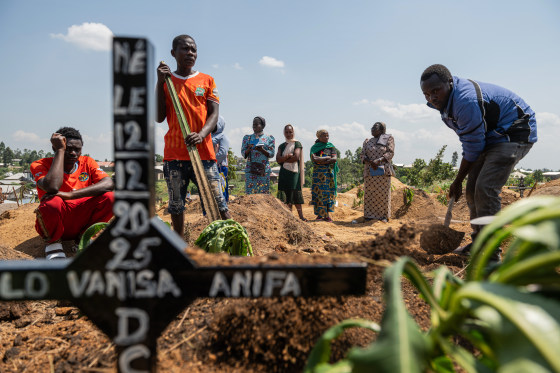
Health officials acknowledge that the current case fatality rate (CFR) of 26% may be an underestimation, as many deaths occurred before the outbreak was officially declared.67
“If you want to control an outbreak, especially an Ebola outbreak, you must know the index case,” said Dr. Jean Kaseya, director general of the Africa Centres for Disease Control and Prevention.
The outbreak is caused by the rare Bundibugyo strain of Ebola, which lacks an approved vaccine or specific treatment.5
At least 2 million people have been forcibly displaced, with over 320,000 refugees living in areas at risk of Ebola.8

Violence from the ISIL-linked Allied Democratic Forces has further complicated the situation, cutting off access to affected communities.4
In the Kigonze displacement camp, where over 20,000 people have sought shelter, officials reported 10 unexplained deaths last week, raising concerns about a potential health crisis.
“If a disease or epidemic were to spread among the thousands of people living at this site, it would be a real catastrophe,” warned Charite Banza, a civil society leader in Ituri.
“The Ebola outbreak in the Democratic Republic of the Congo has now exceeded 1,000 confirmed cases and 254 deaths. Violence and mass displacement are complicating efforts to contain the virus, with only 55% of contact tracing achieved.”


