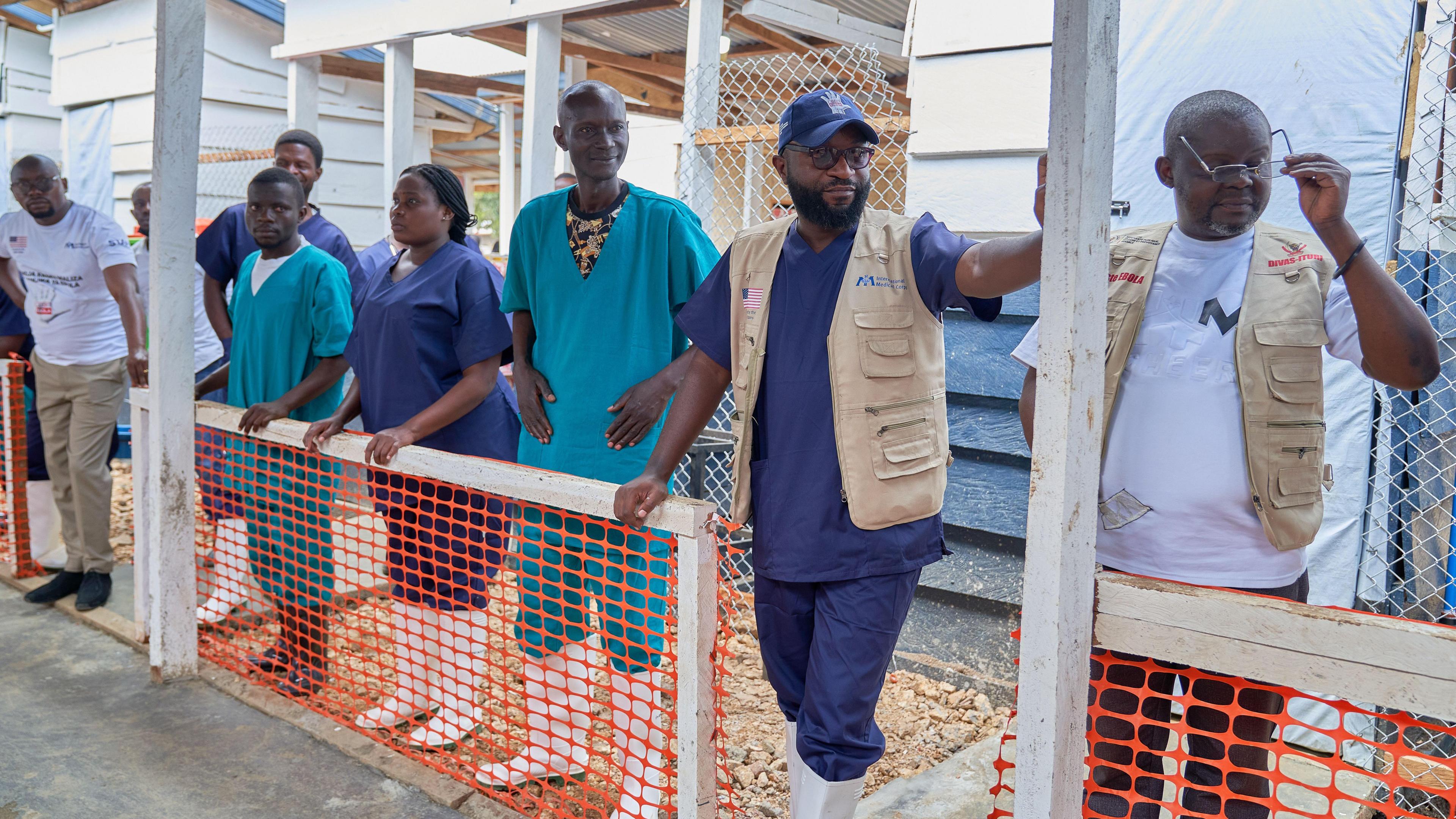
- A total of 2,325 people have been killed by the virus since it was declared on 15 May, surpassing the death toll of the country's 2018-2020 outbreak.
- The current outbreak reached 2,000 deaths in three months, though researchers say it may have been spreading undetected since February.
- Comparatively few cases have been identified outside the country: as of 12 August, 20 cases were confirmed in neighbouring Uganda, while two people were treated in Germany and one case was declared in France.
- The pace of the virus's transmission in DR Congo, where it has spread to six of 26 provinces, has been described as exceptional by the World Health Organization.
- The current outbreak is caused by the Bundibugyo species of Ebola virus, which has no approved vaccines or treatments.
- The outbreak has gained momentum since it was declared on May 15, hindered by weak health infrastructure, the region’s remoteness, and ongoing conflict near the DRC’s borders with South Sudan, Uganda, and Rwanda.
- The case fatality ratio has risen from about 20 percent in early June to 46 percent, meaning nearly one in every two confirmed cases is now deadly.
- World Health Organization Director-General Tedros Adhanom Ghebreyesus said that at its current pace, the outbreak could surpass the West African Ebola outbreak of 2014 to 2016, which killed more than 11,000 people.
- Thomas Parisch, a public health specialist with Doctors Without Borders (MSF), noted that the case fatality ratio should normally fall as contact tracing improves, but instead many cases are detected very late, often after death in the community.
- There is currently no approved vaccine available for the Bundibugyo species that has caused the current epidemic, but several are in development, including one based on technology used to develop the AstraZeneca Covid-19 vaccine.
The Ebola outbreak in the Democratic Republic of Congo (DRC) has reached a staggering death toll of 2,325, making it the deadliest in the nation's history.
The outbreak, declared on May 15, has surpassed the previous record of 2,299 deaths from 2018-2020.6
UN humanitarian chief Tom Fletcher warned that the epidemic is killing someone every 30 minutes, highlighting the urgency of the situation.
As of now, 4,945 confirmed cases have been reported, with 101 new cases detected in the last 24 hours, according to the DRC’s National Public Health Institute.
The outbreak has spread to six of the country’s 26 provinces, and the World Health Organization described the pace of transmission as “exceptional.”4

“Ebola is winning in the Democratic Republic of the Congo. We cannot let the virus outrun our response,” Fletcher stated, emphasizing the need for immediate action.
The case fatality ratio has alarmingly risen from 20% in early June to 46%, indicating that nearly one in every two confirmed cases is now deadly.7
“Normally, as an outbreak progresses, the case fatality ratio should fall,” said Thomas Parisch, a public health specialist with Doctors Without Borders.9
The current outbreak is caused by the Bundibugyo species of the virus, for which there are no approved vaccines or treatments available.510
Weak health infrastructure and ongoing conflicts in the region have severely hindered response efforts, exacerbating the crisis.
“The case fatality ratio has risen to 46 percent, with many cases detected only after death, according to MSF's Thomas Parisch. No approved vaccine exists for the Bundibugyo species, though one based on AstraZeneca technology is in development.”




