- Displaced families began returning to their homes in Hebron on Monday after the Israeli military concluded a 10-day operation that displaced over 3,000 people in the city.
- Schools, universities, and businesses reopened in Hebron following the withdrawal of Israeli forces, according to Hebron's Mayor Yousef Al-Jaabari.
- Despite the withdrawal of Israeli troops, movement restrictions remained at the entrances of the city.
- The military operation was ordered by Israeli Prime Minister Benjamin Netanyahu after a Palestinian attack on two Israeli soldiers at a Hebron checkpoint on October 23.
- Israeli forces imposed closures, forced evacuations, and demolished homes and shops in Hebron neighborhoods during the 10-day operation.
- The operation led to protests in Hebron last week, highlighting the tensions in the area.
- On October 29, the legal rights organization Adalah filed a petition arguing that the measures taken during the operation amounted to collective punishment.

Displaced Palestinians returned to their homes in Hebron on Monday after a 10-day Israeli military operation that resulted in significant displacement and damage. The operation, ordered by Israeli Prime Minister Benjamin Netanyahu, followed the killing of two Israeli soldiers at a checkpoint on October 23.4
Hebron's Mayor Yousef Al-Jaabari reported that 491 families, comprising 3,189 individuals, were displaced during the operation, which also saw the demolition of 15 homes and the closure of 327 shops. The municipality estimated direct economic losses at more than $3.8 million a day, with infrastructure damage exceeding $1.9 million and losses in health and environmental sectors reaching approximately $160,000.
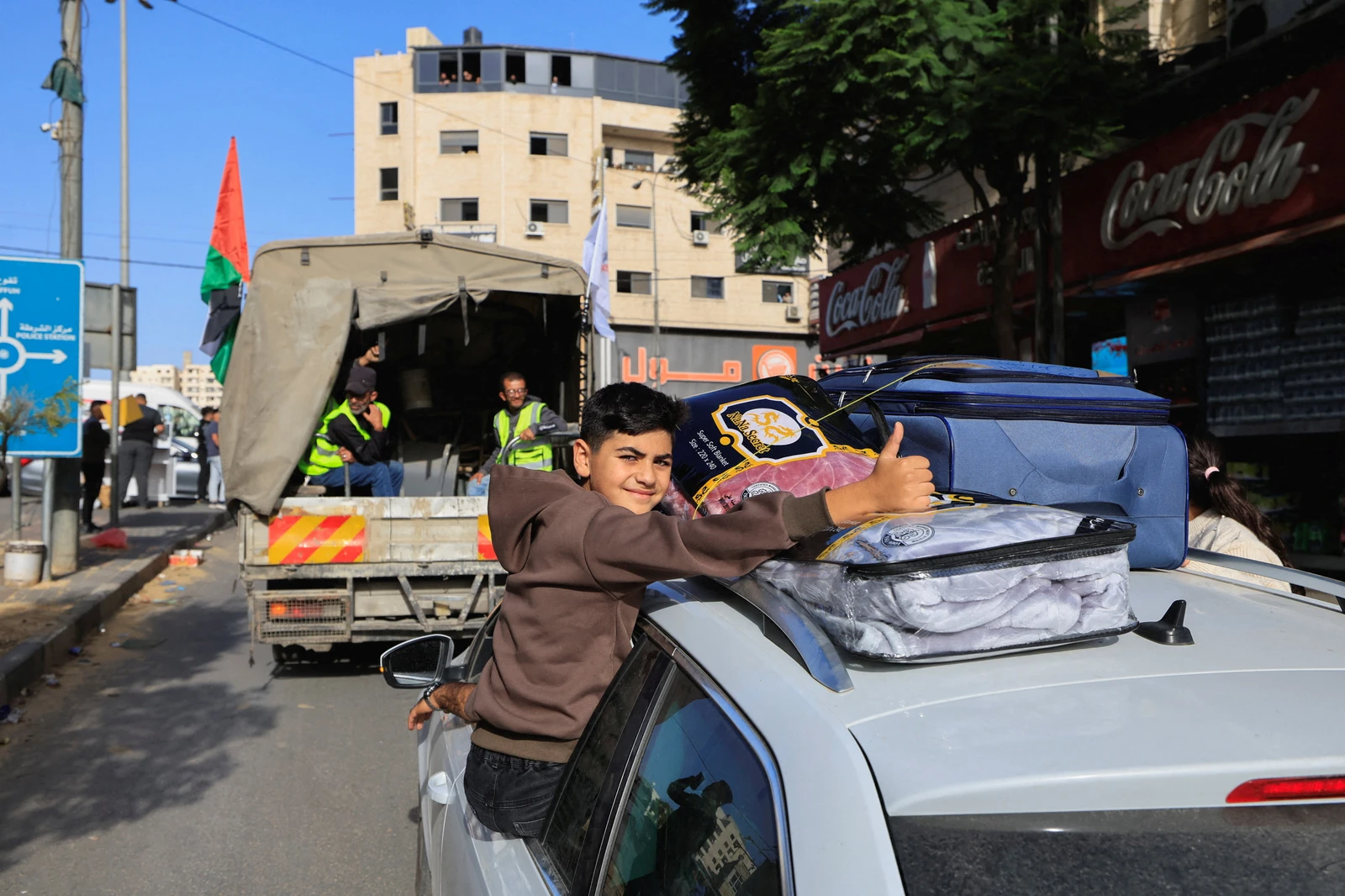
Despite the withdrawal of Israeli troops, movement restrictions remain at the city's entrances. Al-Jaabari noted that life is gradually returning to normal, with students returning to classrooms and businesses resuming operations. However, the memories of the military operation linger, as residents recount traumatic experiences during the raids.3
An Israeli military official confirmed the operation's conclusion, stating that troops conducted thorough searches, detained suspects, and confiscated weapons and military equipment. The operation prompted protests from Palestinians in Hebron, highlighting ongoing tensions in the region.6
“The operation displaced 491 families or 3,189 people, demolished 15 structures, and shut 327 shops, costing over $3.8 million daily in economic losses. Hebron's mayor said life is returning to normal, but restrictions persist at city entrances.”

 Arab News