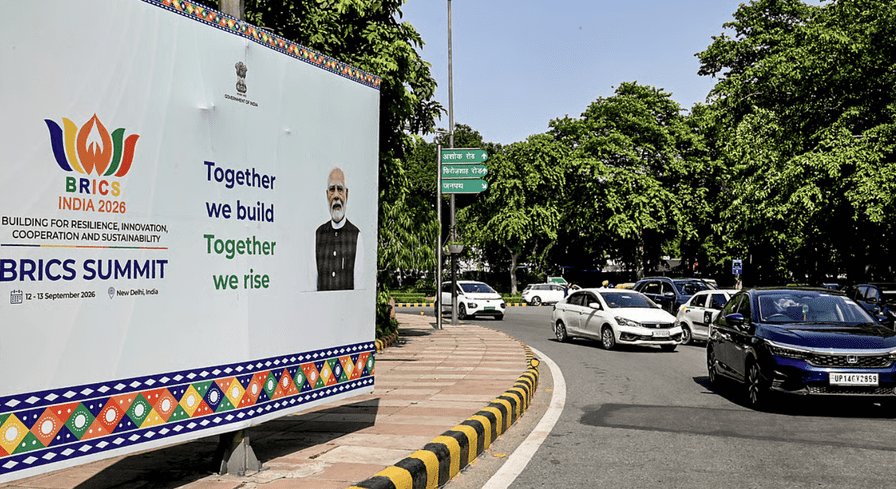
- The BRICS Leaders' Summit is hosted by Prime Minister Narendra Modi with leaders from 32 countries and agencies; possible outcomes include a BRICS Incubator Network, a BRICS Startup Innovation Fund, and a BRICS Logistics Supply-Chain Cooperation Framework.
- These initiatives were discussed by the BRICS Sherpas and will be fine-tuned by leaders on September 12 and 13.
- The BRICS Incubator Network is a 'digital interface/network' to connect National Nodal Agencies, selected incubators, and start-ups across BRICS countries, facilitating registration and linkages with participating incubators and enabling referral of qualified start-ups to incubators in other BRICS countries.
- The BRICS Startup Innovation Fund aims to catalyse financing for early and growth stage startups and foster innovation-driven entrepreneurship in BRICS countries.
- The BRICS Logistics Supply-Chain Cooperation Framework is a voluntary, consensus-based framework to strengthen cross-sector transport logistics resilience and sustainability.
- The framework addresses fragmented supply chains and weak connectivity by promoting technical exchange, knowledge-sharing on cargo and shipping services, localised assembly and manufacturing ecosystems, and capacity-building, while advancing environmentally-sustainable and climate resilient logistics practices.
- This cooperation is especially relevant for movement of goods amid uncertainty due to the partial closure of the Strait of Hormuz.
BRICS leaders are gearing up to finalize key initiatives at their summit in New Delhi, including the BRICS Incubator Network, Startup Innovation Fund, and Logistics Supply-Chain Cooperation Framework.
The BRICS Incubator Network aims to create a digital interface connecting national nodal agencies, selected incubators, and startups across member countries, facilitating registration and referrals.
The Startup Innovation Fund is designed to catalyze financing for early and growth-stage startups, fostering innovation-driven entrepreneurship within BRICS nations.
Meanwhile, the Logistics Supply-Chain Cooperation Framework seeks to enhance transport logistics resilience and sustainability through a voluntary, consensus-based approach. It will address fragmented supply chains and promote technical exchange, knowledge-sharing, and capacity-building, particularly in light of challenges like the partial closure of the Strait of Hormuz.
These initiatives reflect a concerted effort to strengthen economic ties and collaboration among BRICS countries, with discussions led by officials and BRICS Sherpas leading up to the summit.
“The proposed BRICS Incubator Network is a digital interface connecting national nodal agencies, incubators, and startups across member countries. The logistics framework gains urgency amid the partial closure of the Strait of Hormuz, which disrupts goods movement.”


 The Indian Express